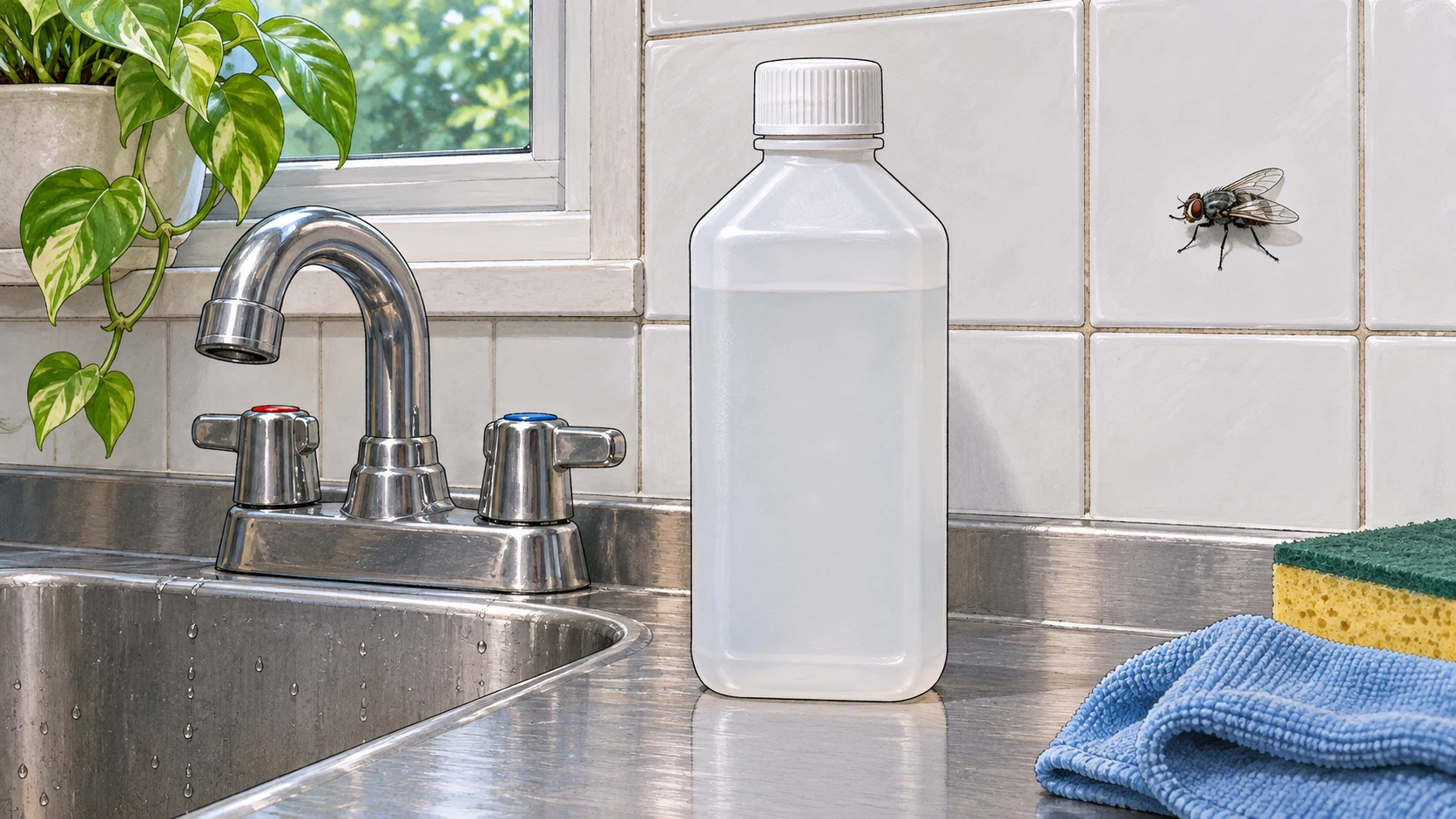
Rubbing alcohol can kill insects when they receive sufficient direct exposure, but using it to deal with a flying house fly is unreliable and introduces an unnecessary fire hazard. Isopropyl alcohol is used to kill and preserve insect specimens when they are immersed in it. That does not establish that a quick application will consistently kill an adult house fly. The more important concern is that rubbing alcohol is highly flammable and can damage certain household materials. We would choose a physical capture method over experimenting with alcohol around furniture, food or electrical equipment.
How Rubbing Alcohol Affects House Flies
Most household rubbing alcohol contains isopropyl alcohol, also called isopropanol. Common formulations contain 70% isopropyl alcohol, although stronger concentrations are also sold.
Alcohol can damage biological tissues and is commonly used to kill and preserve insect specimens. A 70% solution is used for this purpose in insect identification, where adult insects are immersed in a vial rather than briefly exposed to a few droplets.
The insect specimen collection guidance for alcohol preservation describes using rubbing alcohol to kill and preserve most insects before identification. This establishes that sufficient exposure can kill insects, but it does not provide a tested house-fly application rate or prove that a brief encounter produces the same result.
For a house fly, the amount of liquid reaching its body and the duration of exposure matter. A fly that receives only a small amount may remain alive and fly away. We would not treat a quick accidental contact as a dependable killing method.
Why Spraying a House Fly With Rubbing Alcohol Is Risky
The biggest practical objection is fire. Isopropyl alcohol is highly flammable, and its vapors can ignite when they encounter a flame, spark or other ignition source.
This creates an unnecessary hazard when someone attempts to use rubbing alcohol around kitchen appliances, electrical equipment, heating elements or candles. The liquid can also spread across nearby surfaces, leaving flammable residue while it evaporates.
The NIOSH chemical safety information for isopropyl alcohol identifies its flammability, exposure routes and potential irritation to the eyes, nose and throat.
Rubbing alcohol also requires care around children and pets. Swallowing it can cause poisoning, while significant exposure through inhalation or skin absorption can cause adverse effects. Keep the original container closed and inaccessible to children. The Poison Control guidance on rubbing alcohol exposure explains why it must be kept away from flames and used in appropriately ventilated conditions.
Can Rubbing Alcohol Damage Household Surfaces?
Isopropyl alcohol can affect materials that you may not expect to be vulnerable to an ordinary household cleaning product.
Certain plastics, rubber components and protective coatings can deteriorate when exposed to it. Some finishes may become cloudy, softened or damaged, depending on the material and alcohol concentration.
The NIOSH technical information on isopropyl alcohol and material compatibility identifies its potential to attack some plastics, rubber and coatings.
This matters when a fly lands on a television, painted cabinet, finished table or plastic appliance. Applying alcohol to the insect could expose the surrounding material to the same liquid.
Avoid using rubbing alcohol on an unknown surface simply because the product is sold for household disinfection. Follow the material manufacturer’s cleaning instructions instead.
Better Ways to Deal With an Individual House Fly
For one visible house fly, physical removal avoids the chemical and fire hazards associated with rubbing alcohol.
A clear container and a piece of stiff paper can be used to capture a resting fly without killing it. The container confines the insect while the paper closes the opening, allowing it to be carried outside for release when conditions are suitable. This is a practical option when you prefer capturing a house fly without killing it.
A conventional fly swatter is another straightforward option when you need to remove an individual adult. It does not leave flammable liquid or solvent residue on surrounding surfaces. The physical technique for killing a house fly with a fly swatter is more appropriate for this particular task.
Neither approach addresses a continuing source of house flies. Repeated sightings may require a broader assessment of the activity and the conditions supporting it. The evidence-based comparison of what kills house flies helps put individual adult removal into context.
Does Rubbing Alcohol Solve a House Fly Infestation?
Even successfully killing an adult house fly does not remove the eggs and larvae developing elsewhere.
House flies lay eggs in suitable moist organic material, including garbage, animal waste and decaying food. Those immature stages continue developing independently of what happens to the adults inside a room.
Consequently, repeated attempts to kill individual flies can become a frustrating routine when the conditions supporting their development remain unchanged.
House flies also create food-hygiene concerns because they can move between contaminated materials and household food. Their potential to transfer microorganisms makes it sensible to avoid introducing unnecessary chemical residues around dining and preparation surfaces. The household health risks associated with house flies provide additional context.
We would not recommend rubbing alcohol as a routine house fly treatment. Its ability to kill insects under sufficient exposure does not justify the fire risk, possible material damage or uncertainty associated with improvised use. For an occasional adult, choose physical capture. For continuing activity, investigate the source rather than repeatedly treating individual flies.