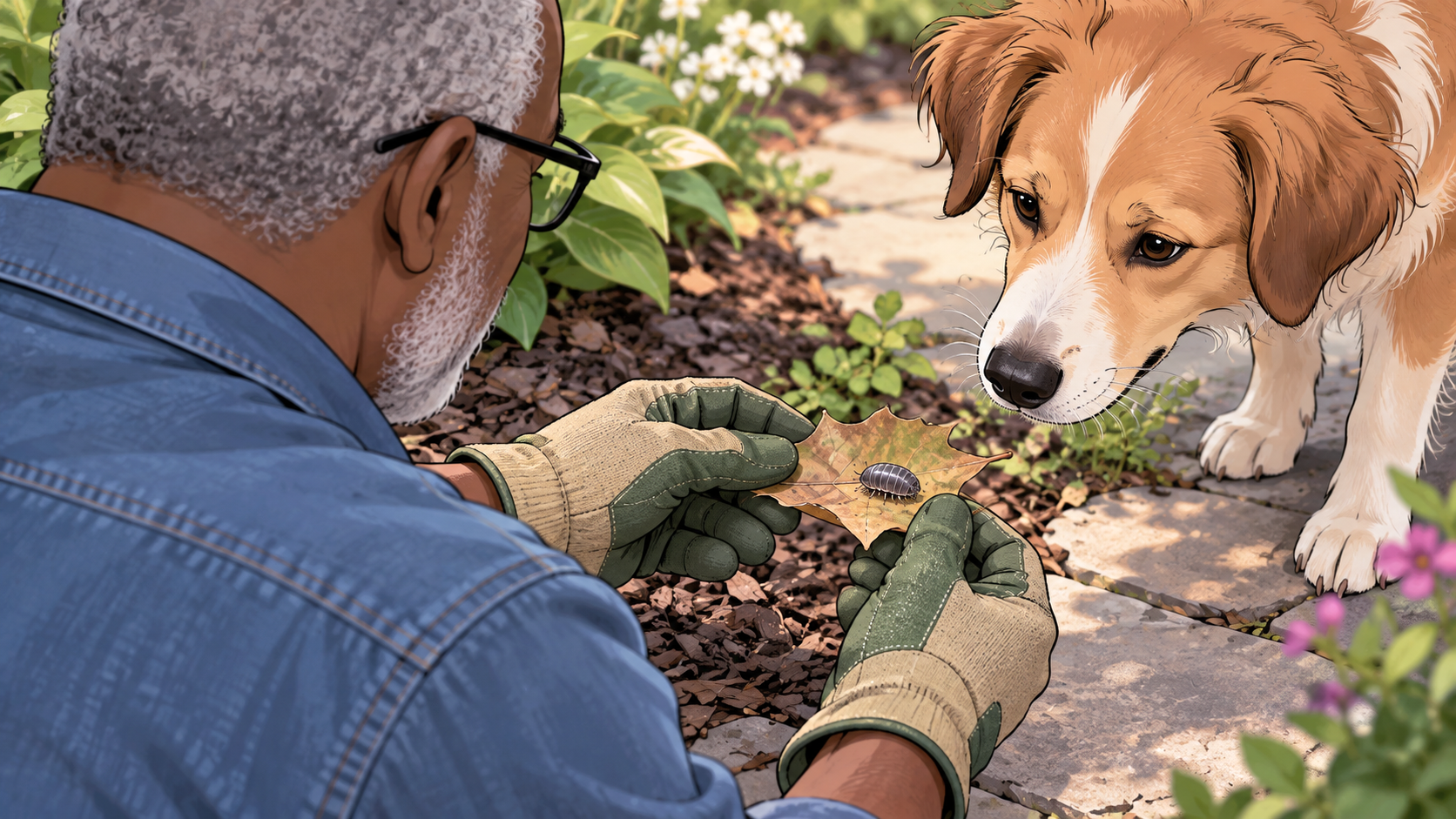
Roly-polies are not poisonous or venomous to humans, dogs, or cats. The common roly-poly (Armadillidium vulgare) does not produce venom, inject toxins, or possess a poisonous defensive secretion that makes ordinary contact dangerous. These small crustaceans are harmless to handle, and their primary response to a threat is to curl into a protective ball. Their appearance can resemble other many-legged animals with chemical defenses, but roly-polies do not share those hazards.
Even indoors, pill bugs are considered nuisance animals rather than a direct health threat. Health Canada’s information on pill bugs and sowbugs identifies them as harmless arthropods that do not sting, bite, or transmit diseases to people.
Do Roly-Polies Release Poison When Threatened?
A roly-poly protects itself through its body structure rather than through a poisonous spray. When disturbed, the common pill bug bends its segmented body inward, drawing its legs and softer underside beneath its hardened outer plates. This defensive movement, called conglobation, makes vulnerable body parts less accessible to predators.
The common pill bug’s physical adaptations include overlapping armored segments that enable this behavior. Some terrestrial isopods possess chemical defenses, but the familiar garden roly-poly should not be confused with animals that discharge irritating substances when threatened.
Millipedes are a particularly relevant example. Many species possess defensive glands that release chemicals capable of irritating human skin or eyes. The University of Florida’s millipede information describes these secretions and the precautions associated with handling millipedes.
A roly-poly has a shorter, oval body with seven pairs of walking legs in adulthood. Millipedes typically have elongated bodies with many segments and two pairs of legs on most trunk segments. Identifying the animal before handling it prevents unnecessary contact with an unfamiliar species.
Are Roly-Polies Toxic if a Dog or Cat Eats One?
Roly-polies are not recognized as poisonous to dogs or cats, and they lack the venom-delivery structures found in certain other arthropods. An animal eating a single pill bug is therefore different from ingesting a genuinely toxic organism. However, the absence of poison does not establish that swallowing an unidentified outdoor arthropod is completely risk-free.
Outdoor pill bugs can encounter pesticides, contaminated soil, and other substances while moving through gardens. An animal that eats a pill bug recently exposed to a pesticide creates a different concern from one that consumes an untreated specimen.
The University of Kentucky’s pill bug identification and management information describes these animals as harmless to people and pets. That assessment concerns the pill bugs themselves, rather than possible contamination acquired from their surroundings.
If a pet swallows an identified roly-poly and behaves normally, there is generally no reason to assume poisoning has occurred. Persistent vomiting, excessive drooling, weakness, or other unusual symptoms warrant veterinary attention. Suspected pesticide exposure requires prompt veterinary advice regardless of whether the animal eaten was naturally poisonous.
Can Touching a Roly-Poly Cause a Rash?
Ordinary contact with a roly-poly does not expose the skin to venom or a known irritating defensive secretion. The animal does not have a stinger, and its mouthparts are adapted for chewing organic material rather than attacking people.
An itchy bump appearing after gardening should not automatically be attributed to a pill bug found nearby. Thrips can bite exposed human skin, while several other small garden arthropods can produce skin reactions. The misconception that booklice bite humans illustrates why identifying the actual animal is more reliable than associating a skin mark with whichever creature happens to be visible.
Soil, plant sap, and other materials encountered while gardening can also cause irritation independently of arthropods. Washing hands after handling outdoor animals and soil is sensible hygiene, particularly before eating or touching the face.
Are Dead or Crushed Roly-Polies Poisonous?
Crushing a roly-poly does not release a dangerous venom or transform the animal into a poisonous substance. Its internal fluids and body tissues can leave a small residue, but there is no need for special chemical treatment after accidentally stepping on one.
Use a damp paper towel to remove the remains from a household surface, then clean the area normally. Wash your hands afterward, as you would after handling other dead outdoor organisms.
A dead roly-poly found near a doorway is also not evidence of a poisoning hazard. These crustaceans depend on humid conditions and frequently die after becoming trapped in dry indoor environments. The University of Maryland’s pill bug identification guidance describes this vulnerability and recommends reducing favorable conditions near building entrances rather than routinely applying pesticides.
Is It Safe to Leave Roly-Polies in the Garden?
Roly-polies can remain in ordinary garden habitats without posing a poisoning risk to people or pets. They contribute to decomposition by consuming dead plant material, and their presence beneath stones, mulch, or fallen leaves is normal.
Their harmlessness also makes pesticide treatment unnecessary when the only concern is whether they are toxic. Where unusually large numbers enter a home, correcting moisture problems and sealing openings is more appropriate than spraying the animals. Springtails that enter houses through damp areas can occur under similar conditions, so reducing excess moisture may address several nuisance arthropods at once.
A roly-poly discovered indoors can simply be collected in a cup and returned to a sheltered outdoor location. There is no reason to kill it out of concern that it might poison someone.