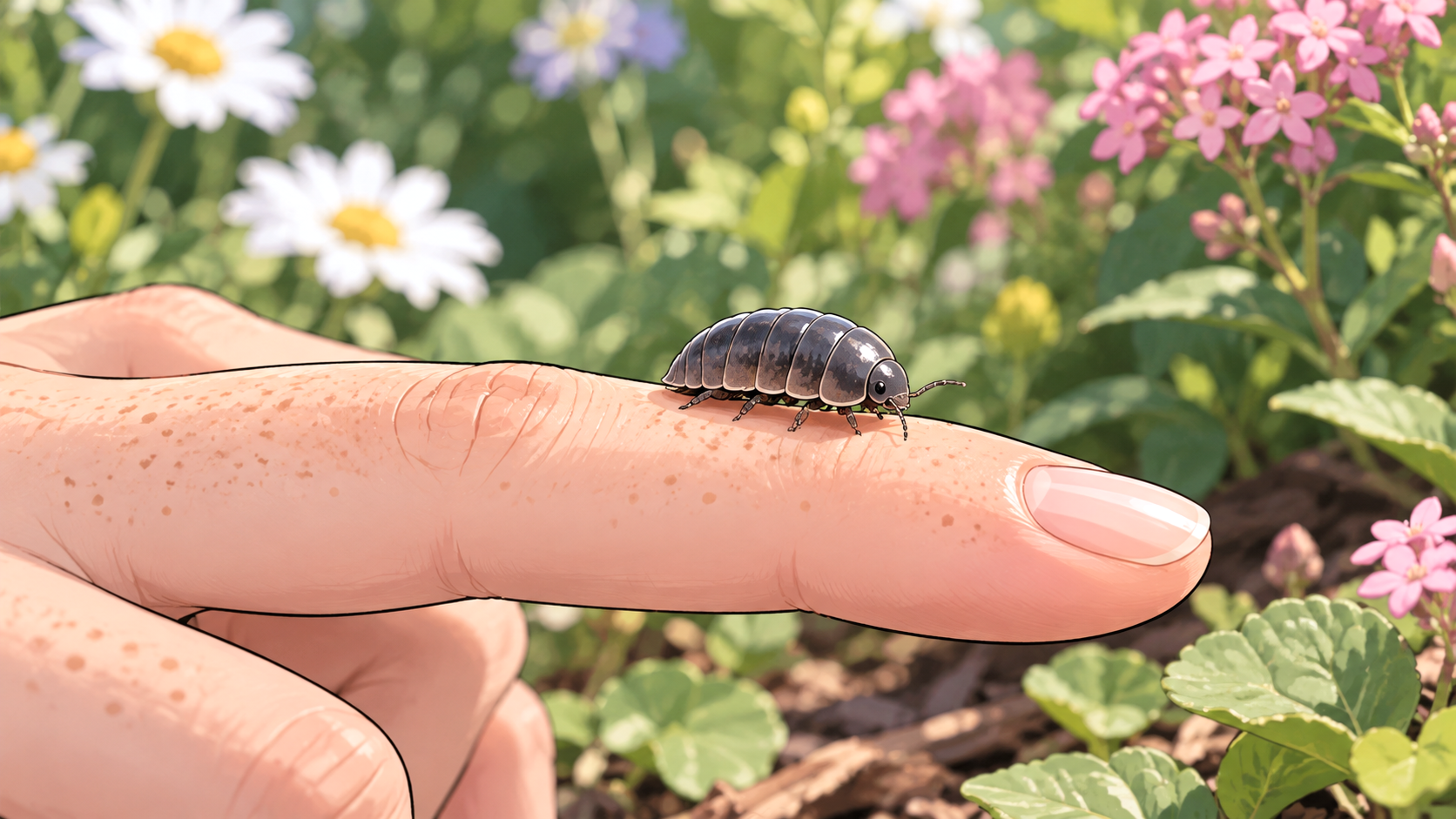
Roly-polies do not bite humans or pets. These small terrestrial crustaceans, commonly called pill bugs, have chewing mouthparts adapted for consuming decaying organic material, but they do not use them to bite people. They also cannot sting, inject venom, or transmit diseases to humans. Even when picked up or disturbed, the common roly-poly (Armadillidium vulgare) presents no biting hazard.
Their harmless nature is documented in Health Canada’s guidance on pill bugs and sowbugs, which identifies both as nonbiting animals that pose no direct health threat.
Why Roly-Polies Cannot Bite People
Roly-polies have mandibles, which are small jawlike structures used to break down food. These mouthparts are suited to feeding on decaying leaves, softened plant debris, and other organic material. They are not adapted for piercing human skin or feeding on blood. The University of Kentucky’s description of pill bug anatomy and feeding identifies them as crustaceans that primarily consume decomposing vegetation.
Their behavior around humans also differs from that of biting arthropods. A disturbed pill bug commonly curls into a protective ball, enclosing its more vulnerable underside beneath overlapping body plates. It may remain motionless until the disturbance ends, then unfold and continue walking. The animal has no defensive sting or venom-delivery structure, and its response does not involve attacking whatever touched it.
This applies to both adult and juvenile pill bugs. Smaller individuals possess the same general feeding adaptations, although their bodies are less developed. The Missouri Botanical Garden’s pill bug identification information confirms that these animals are harmless to people despite their ability to chew plant material.
Can Roly-Polies Cause Itching, Red Marks, or Skin Irritation?
A red bump or itchy patch discovered after handling a roly-poly should not be identified as a pill bug bite. Roly-polies do not puncture the skin to feed, and their presence on a person’s hand or clothing does not establish the cause of a skin reaction.
Other arthropods living in the same environment may be responsible. Damp gardens and decomposing vegetation support many small organisms, including some that can irritate human skin. Certain species of thrips can bite humans when they come into contact with exposed skin, while booklice do not bite despite frequently appearing in moisture-rich environments.
The appearance of a skin mark is also insufficient to identify a particular pest. Bed bug bites and flea bites can produce overlapping skin reactions, and itchy marks mistaken for insect bites may have non-insect causes.
If irritation develops after gardening, wash the affected skin with soap and water and inspect for any attached insects or ticks. Seek medical attention for a worsening reaction, signs of infection, or unexplained symptoms that persist.
Are Roly-Polies Safe to Pick Up?
Roly-polies are safe to handle gently, including during supervised children’s nature activities. They do not attack when held, although repeated handling can disturb or injure them. Their small bodies are vulnerable to crushing, particularly when someone tries to force a curled individual to unfold.
The University of New Hampshire’s pill bug observation activity recommends using simple tools to move the animals carefully while keeping them close to the ground. This prevents accidental injuries if they fall.
A shallow container or an open palm provides enough support for brief observation. Avoid squeezing the animal, pulling at its legs, or leaving it exposed to direct sunlight for extended periods. Once finished, return it to a moist, sheltered outdoor location and wash your hands after handling garden soil or animals.
What If Roly-Polies Keep Appearing Inside Your Home?
Indoor sightings usually indicate that pill bugs have entered from nearby outdoor habitats. They favor moisture and shelter, so ground-level entrances, damp basements, and spaces bordering wet mulch are common places to encounter them. Their presence does not create a biting risk for household occupants.
The Illinois Department of Public Health’s guidance on occasional household invaders identifies pill bugs as animals that may enter buildings without causing indoor damage. Removing individual visitors and addressing excess moisture is generally sufficient.
Check for gaps beneath exterior doors, leaking pipes, and damp organic debris accumulated against the foundation. Persistent moisture can also attract springtails that enter houses, so correcting the underlying conditions helps reduce several types of nuisance arthropods without unnecessary pesticide applications.