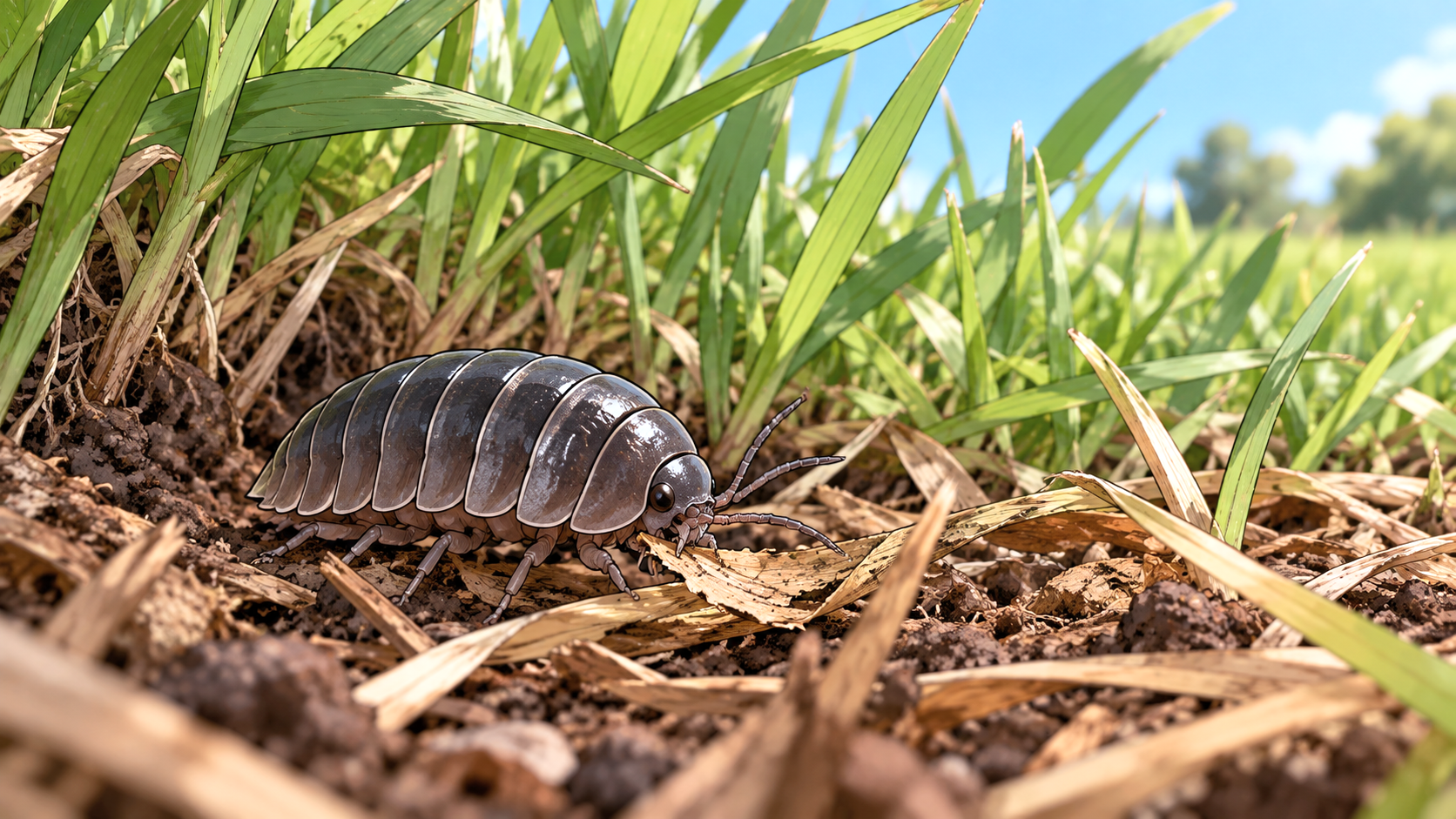
Roly-polies are generally not bad for your lawn. These small terrestrial crustaceans, also called pill bugs, feed mainly on decaying plant material rather than healthy turfgrass. They help break down dead vegetation and recycle organic matter in the soil. Although large populations can occasionally feed on tender roots and young plants, established grass is rarely damaged by their activity. Finding numerous roly-polies beneath lawn debris is usually evidence of a moist, sheltered environment rather than an infestation destroying the grass.
Their feeding habits explain why they are classified as harmless nuisance animals in turfgrass pest management guidance. A lawn containing hundreds of pill bugs can remain healthy, while an adjacent lawn with very few may be suffering from unrelated problems.
Can Roly-Polies Eat Grass or Damage Its Roots?
Roly-polies possess chewing mouthparts and can consume living plant tissue under certain conditions. Young roots, tender seedlings, and vegetation already weakened by damage are more vulnerable than mature grass. The feeding behavior of pill bugs and sowbugs includes occasional damage to new roots and low-growing plants, particularly where moisture and decaying organic material support large populations.
Newly seeded lawns deserve more attention than established turf. Grass seedlings have small, delicate root systems, and feeding on vulnerable tissue can interfere with establishment. However, pill bugs are not recognized as a major cause of widespread turfgrass loss. Their preference for decomposing vegetation makes significant damage to established grass uncommon.
A few roly-polies clinging to exposed grass roots do not prove that they caused the roots to deteriorate. They may be consuming dead organic matter surrounding the roots or occupying soil that offers favorable moisture conditions. Grass already weakened by poor drainage, disease, or another pest can attract decomposers after its tissues begin breaking down.
The useful test is whether healthy grass is being eaten. Finding roly-polies beside dead roots is insufficient evidence of destructive feeding.
Why Are There So Many Roly-Polies in Your Grass?
Heavy roly-poly activity is commonly associated with persistent moisture and accumulations of organic matter. Thick layers of dead leaves, decomposing grass clippings, and damp material beneath landscaping objects create protected spaces where pill bugs can remain active.
Their numbers may become particularly noticeable after rainfall or irrigation. Moving a piece of wood from a shaded lawn edge can expose dozens of individuals that were previously concealed. Similar conditions support springtails in outdoor environments, although these much smaller arthropods differ from roly-polies in their anatomy and feeding habits.
Pill bugs also gather around garden beds adjoining lawns. Decomposing mulch, fallen leaves, and sheltered soil can support populations that occasionally wander into the grass. Other moisture-associated arthropods, including earwigs attracted to garden conditions, may occupy nearby spaces without causing the same kind of damage.
A lawn that remains constantly wet deserves attention regardless of whether roly-polies are present. Poor drainage can interfere with healthy root development, while excessive surface moisture may favor certain turfgrass diseases. The Environmental Protection Agency’s lawn care recommendations identify proper watering and turf maintenance as important parts of preventing lawn deterioration.
How to Tell Whether Roly-Polies Are Responsible for Brown Patches
Brown or thinning grass should not automatically be blamed on whichever arthropod is easiest to find. Several established lawn pests directly damage roots, stems, or leaves, producing symptoms that require different management approaches.
White grubs, for example, feed on grass roots. Severe infestations can leave turf loose enough to peel away from the soil. The Cornell Integrated Pest Management identification guidance describes how examining the root zone can reveal the larvae responsible for this damage.
Billbug larvae attack grass stems, crowns, and roots. Their feeding can produce yellow or brown patches that resemble drought injury. Damaged stems may break easily when pulled, sometimes revealing hollowed tissue and sawdust-like waste. The diagnostic characteristics of billbug damage help distinguish this injury from ordinary water stress.
These signs provide a more reliable starting point than counting roly-polies. A homeowner examining a damaged patch can compare the condition of the grass with a nearby healthy section. Roots that have been chewed away, hollowed stems, or visible pest larvae point toward problems requiring further investigation. Roly-polies found among deteriorating vegetation do not provide an equivalent diagnosis.
Should You Get Rid of Roly-Polies in Your Lawn?
Routine roly-poly extermination is unnecessary for an otherwise healthy lawn. Their decomposition activity contributes to the breakdown of dead vegetation, and removing them provides no established benefit to mature turfgrass. The Environmental Protection Agency’s integrated pest management principles recommend identifying a pest and establishing that it is causing meaningful damage before choosing a control method.
If unusually large numbers are concentrated around newly planted grass or vulnerable seedlings, inspect the plants for actual feeding damage. Remove thick accumulations of decomposing debris directly covering the affected area and adjust irrigation where the soil remains excessively wet. Watering should still meet the needs of the grass, since deliberately drying out a lawn to discourage pill bugs can cause greater damage than the animals themselves.
There is also no reason to remove all organic material from the lawn. Properly managed grass clippings return nutrients to the soil, and healthy turfgrass maintenance depends on balancing irrigation, mowing, and pest prevention rather than eliminating soil organisms.
Broad-spectrum insecticide applications are particularly difficult to justify when the only evidence is a large pill bug population. They can expose beneficial organisms to unnecessary treatment without correcting excess moisture or any unrelated cause of thinning grass.
For an established lawn with roly-polies but no confirmed feeding injury, leave the animals alone and concentrate on the condition of the turf. Where grass is dying, investigate the roots, soil moisture, and possible turfgrass pests before attempting treatment. That approach protects the organisms contributing to decomposition while directing attention toward the actual cause of lawn damage.