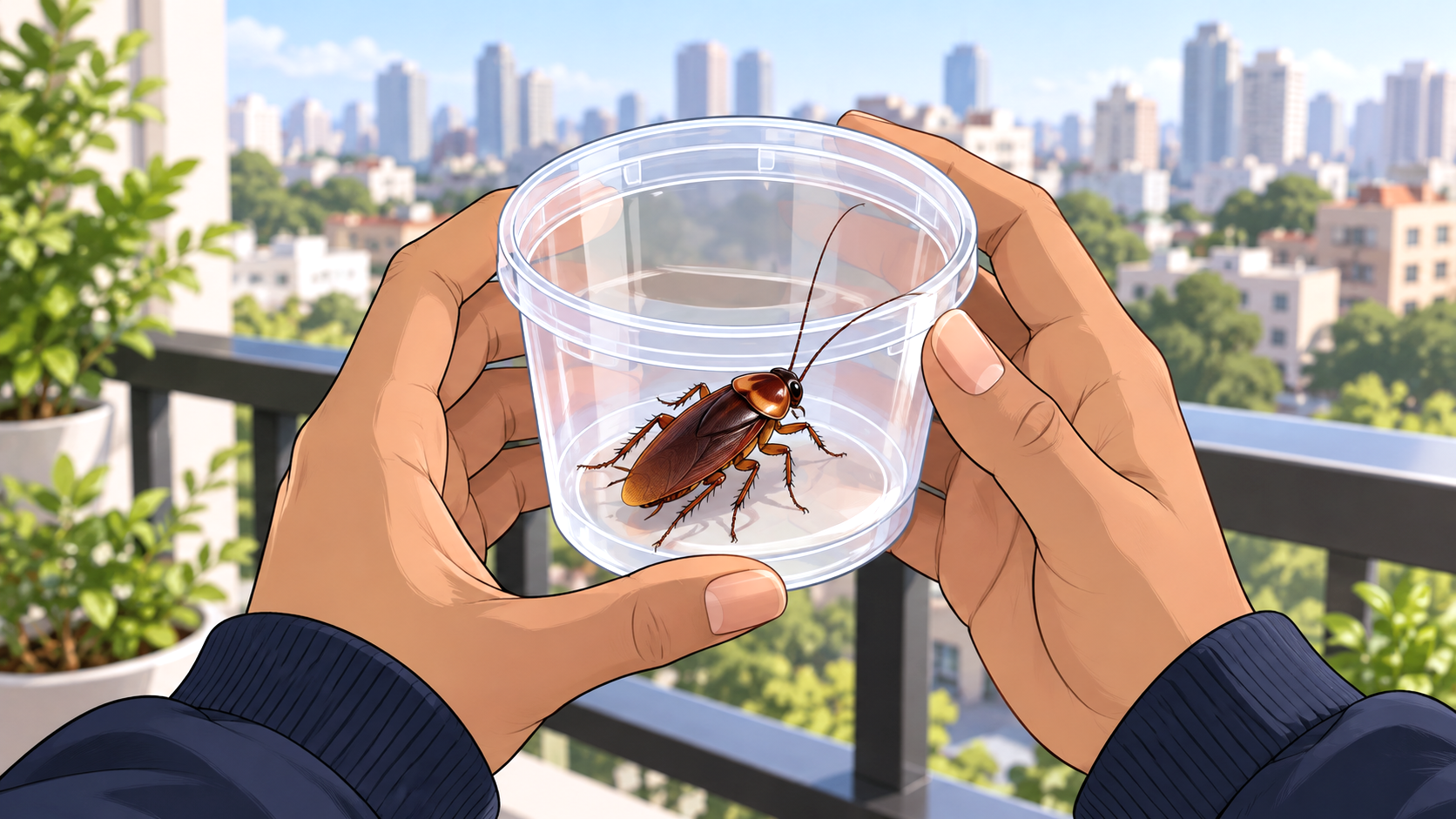
A roach and a cockroach are the same insect. Roach is simply a shortened, informal version of cockroach, particularly common in American English. The two words do not describe different species, sizes, sexes, or developmental stages.
Someone reporting roaches in an apartment is describing the same insects as someone reporting cockroaches. However, the word roach has several unrelated meanings outside pest control, and regional nicknames can sometimes make cockroach identification confusing.
Why Are Cockroaches Also Called Roaches?
The shortened word became established in American English during the nineteenth century. According to the Online Etymology Dictionary, roach was recorded as an abbreviation of cockroach by 1830.
The longer English word has an older history. It developed from the Spanish cucaracha, with its spelling gradually altered as English speakers associated its sounds with familiar English words. The Oxford Advanced Learner’s Dictionary traces cockroach to Spanish and records its appearance in English during the early seventeenth century.
The shortening did not create a new biological category. It merely provided an easier word for everyday conversation.
Modern dictionaries continue to recognize both forms. The Cambridge Dictionary defines roach as the informal American English term for a cockroach, while the Oxford dictionary entry recognizes the same usage.
The difference is therefore linguistic rather than biological.
Is Roach the Informal Word and Cockroach the Correct Word?
Both words are correct, but they suit different contexts.
Cockroach is generally preferable in scientific publications, educational materials, inspection reports, and formal pest-control documentation. Roach is common in conversation, advertising, product descriptions, and informal discussions about household pests.
The distinction is similar to choosing between a full name and its widely understood abbreviation. Neither version changes the insect being described.
| Context | Common wording |
|---|---|
| Scientific or educational writing | Cockroach |
| Everyday American conversation | Roach or cockroach |
| Pest-control advertising | Roach, cockroach, or both |
| Formal infestation report | Cockroach, preferably with the species identified |
| Product names | Often roach |
| British English | Cockroach is generally more usual |
The difference is visible even in regulatory language. The U.S. Environmental Protection Agency’s pesticide registration database includes products marketed as roach killers while identifying cockroaches among their target pests.
For formal communication, using cockroach initially and roach occasionally afterward is perfectly understandable. In casual American speech, using roach throughout is equally natural.
Does Roach Mean a Smaller Cockroach?
No. There is no size threshold that separates roaches from cockroaches.
A small German cockroach can be called a roach, and a much larger American cockroach can also be called a roach. The shortened name does not imply that the insect is young, undersized, or part of a particular species.
Nor does roach mean male while cockroach means female. The physical differences between male and female cockroaches exist independently of which English name someone uses.
Similarly, a newly emerged nymph and a mature adult may both be described as roaches. The size differences among cockroach species cannot be determined from the choice of word alone.
Statements such as “I found a little roach” and “I found a baby cockroach” may describe the same insect, but neither wording establishes its species or developmental stage without further information.
Why Do Some People Say Water Roach, Waterbug, or Palmetto Bug?
Regional nicknames can make the terminology less straightforward because they sometimes refer to particular cockroaches rather than the entire group.
In parts of the United States, large cockroaches are called waterbugs or palmetto bugs. These are informal names, not reliable species identifications.
For example, Penn State Extension identifies Oriental cockroaches as insects frequently called waterbugs because of their association with cool, damp environments. American cockroaches are also sometimes described by that name, particularly when encountered around drains, basements, or other moisture-prone areas.
Palmetto bug is commonly applied to large cockroaches in the southeastern United States, although the exact species intended can vary locally.
These terms differ from the simple shortening of cockroach to roach. The word roach itself does not narrow the identification, whereas a regional nickname may suggest a particular group of large cockroaches without reliably confirming one.
The University of California’s cockroach identification information identifies German, American, Oriental, brown-banded, and Turkestan cockroaches as distinct species encountered around buildings. All can reasonably be called roaches, regardless of whether they have additional local nicknames.
Can Roach Mean Something Other Than a Cockroach?
Yes. Outside discussions about household pests, roach has several meanings unrelated to cockroaches.
A freshwater fish
In European fishing terminology, a roach is a freshwater fish commonly identified as Rutilus rutilus. It belongs to an entirely different animal group from insects.
The fisheries database FishBase identifies Rutilus rutilus as the common roach, a fish distributed through parts of Europe and Asia.
The fish name has a different linguistic history from the shortened insect name. Someone discussing roach fishing in a European river is almost certainly referring to fish rather than cockroaches.
A cigarette-related slang term
Roach can also mean the small remaining end of a smoked cannabis cigarette or a rolled filter tip, depending on the usage.
Both the Cambridge Dictionary and Oxford recognize cigarette-related meanings alongside the insect and fish definitions. Expressions such as roach clip and roach holder typically refer to this slang usage rather than insects.
Roach as a surname or proper name
Roach is also an English-language surname and can appear in business names, fictional characters, and geographical names. Capitalization and context usually help distinguish these uses from the ordinary insect noun.
None of these other meanings affects the interpretation of roach in a pest-control conversation.
Does Saying Roach Help Identify the Cockroach Species?
The word provides no more identification detail than cockroach.
If someone reports “brown roaches in the kitchen,” the description leaves several possibilities open. Different cockroach species overlap in coloration, body size, and habitat, so a casual name cannot replace identification based on visible characteristics.
The different colors cockroaches can have make broad descriptions such as brown roach especially imprecise.
Even common phrases like German roach or American roach should be understood as shortened versions of the respective species’ common names, not as independent taxonomic categories.
Scientific identification requires the actual species name or sufficient characteristics to establish it. The scientific naming conventions for cockroaches distinguish recognized species from the informal collective terms used in everyday speech.
For pest-control purposes, identifying the species is considerably more useful than deciding whether to call the insect a roach or a cockroach.
Should You Search for Roaches or Cockroaches When Reporting an Infestation?
Either word communicates the presence of cockroaches. Pest-control professionals, landlords, and public-health workers generally understand both.
However, a report becomes more useful when it includes specific observations rather than relying on the insect’s common name. Its approximate size, visible markings, location, and whether more than one insect has appeared can provide information that the word roach cannot convey.
A statement such as “several small, tan cockroaches were found around the kitchen cabinets” is more informative than simply reporting roaches. If the species is already known, including its name adds precision.
Likewise, evidence of concentrated cockroach activity in a harborage helps establish whether insects are repeatedly occupying a particular location, regardless of which term appears in the report.
The terminology need not change during treatment discussions. Instructions referring to roaches and those referring to cockroaches generally concern the same pests unless another meaning is explicitly indicated.