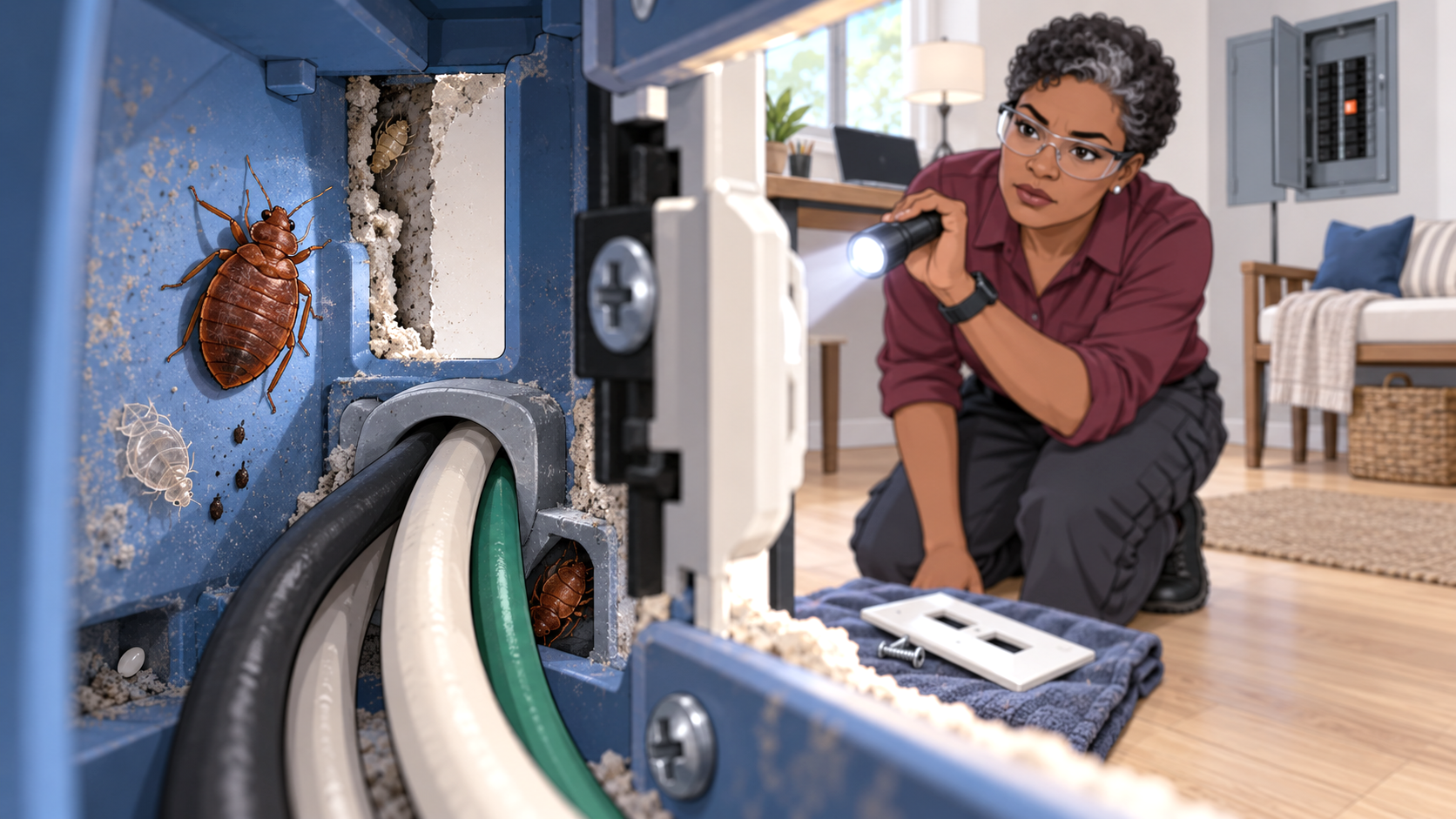
Finding a bed bug near an electrical outlet can make the situation look stranger than it really is. There is nothing about electricity that a bed bug needs to survive. What matters is the narrow protected space around the outlet and, potentially, the much larger wall cavity sitting behind it. Yes, bed bugs can hide in and behind electrical outlets. Their flattened bodies allow them to enter very small cracks, including gaps around outlet covers and electrical receptacles. An outlet can also provide access to a wall void. However, outlets are usually secondary hiding places rather than the first place bed bugs establish themselves.
Why Bed Bugs End Up in Electrical Outlets
Bed bugs spend much of their time concealed rather than moving around in the open. Their usual hiding places are close to where people sleep or rest, including mattress seams, box springs, bed frames, headboards, and nearby furniture. As an infestation expands, however, they can occupy a much wider range of cracks and protected spaces.
Their body shape makes that possible. Adult bed bugs are only about 5 millimeters long and have a flattened, oval body. They can fit into surprisingly narrow spaces, which is why a proper bed bug inspection extends well beyond the mattress.
Electrical fixtures fit that hiding strategy. Bed bugs can be found in electrical receptacles and appliances, as well as behind wall plates. The insects are using the protected crack or cavity, not feeding on wiring or drawing anything from the electrical system.
We would therefore treat an outlet sighting as a clue about where the bug can hide or travel, not as evidence that bed bugs somehow prefer electricity.
The Outlet Cover and the Wall Behind It Are Two Different Places
When someone says there are bed bugs “in the outlet,” the exact location matters. A bug can hide behind the plastic faceplate, around the edges of the electrical box, or farther inside a wall void connected to that opening.
Those are very different situations from a pest-control perspective.
A bed bug tucked behind a loose cover is still relatively close to the room surface. Once bed bugs have access to wall cavities, however, the hiding area becomes much harder to inspect visually. Guidance for multifamily housing specifically recommends sealing cracks around light sockets and similar openings to discourage movement through wall voids.
That does not mean every bed bug found beside an outlet has been traveling through the wall. You cannot determine its route from the sighting alone. Still, the possibility becomes more important in apartments, hotels, dormitories, and other buildings where neighboring rooms or units share walls.
An Outlet Sighting Can Tell You Something About Infestation Size
A single bed bug near a bed does not automatically tell you how large an infestation is. Location adds useful context, though.
Bed bugs generally concentrate near places where hosts spend long periods resting. As infestations become heavier, they can turn up farther from those primary harborages. Electrical receptacles are specifically included among the places where bed bugs may be found when a room is heavily infested.
For that reason, finding bugs behind several outlets, switches, wall hangings, or baseboards deserves more attention than discovering one isolated insect beside a receptacle. It suggests the inspection needs to extend beyond the bed itself.
This is where we would resist the temptation to make the outlet the entire problem. Inspect the mattress and box spring, bed frame, headboard, nearby furniture, baseboards, and other cracks around the sleeping area. Our guide to the early signs of bed bugs explains the physical evidence worth looking for, while bed bugs in baseboards covers another important perimeter hiding area.
Electrical Outlets Can Matter More in Apartments
Shared walls change the significance of an electrical opening.
Bed bugs do not have to remain inside the room where an infestation began. They can move from room to room, and cracks associated with utilities can connect spaces that look completely separate from the living side of the wall.
This is particularly relevant in multifamily buildings. Sealing cracks and crevices around baseboards and light sockets can help discourage movement through wall voids. Consequently, an apartment resident finding bed bugs around outlets should not assume that spraying or cleaning that one fixture resolves the source.
Nearby units may also need inspection when an infestation is confirmed. Bed bug control can become much more difficult when one apartment receives treatment while connected infestations remain elsewhere in the building. We cover that problem separately in our guide to how bed bugs spread between apartments.
The practical point is simple. In a detached house, an outlet may primarily represent another hiding crack. In a connected building, it can also be part of a route through shared structural spaces.
Do Not Pour or Spray Household Products Into an Outlet
Seeing an insect disappear behind an outlet cover creates an obvious urge to spray something into the opening. We would not treat an energized electrical receptacle as an ordinary crack in a baseboard.
Water-based liquids, rubbing alcohol, household cleaners, essential oils, and improvised pest mixtures do not belong inside electrical equipment. Apart from electrical and fire hazards, using an unverified substance in the outlet does not solve the wider bed bug infestation.
Pesticides require the same discipline. A pesticide can only be used in an electrical outlet or wall void when its current label specifically permits that application. Some pesticide formulations are labeled for cracks, voids, or electrical outlets, but that does not make every bed bug spray suitable for those spaces.
This is an important place where DIY enthusiasm can create a second problem without solving the first one. Our broader guide to whether bed bug sprays work explains why the product, formulation, placement, and label all matter.
What to Do If You Find Bed Bugs Around an Outlet
Start by treating the outlet as evidence rather than an isolated target. A careful inspection should work outward from the sleeping or resting area and establish how far the infestation extends. Bed bugs may also be hiding in furniture joints, carpet edges, behind pictures, under loose wallpaper, and in other narrow spaces around the room.
Outlet and switch covers can be part of a professional inspection. Preparation guidance also recommends checking electrical outlets and wall switches for bed bug evidence. However, electrical safety comes first. Do not dismantle energized electrical components to chase an insect into the wall.
Once accessible evidence has been addressed safely, gaps around wall plates can be sealed as part of exclusion. The useful distinction is that you are sealing the rim and surrounding crack, not filling the receptacle itself with caulk. Reducing those openings can remove hiding access and, particularly in multifamily housing, help limit movement through wall spaces.
Most importantly, continue treating the infestation as a whole. Bed bug management can involve inspection, laundering and drying suitable belongings, vacuuming, encasements, monitoring, targeted pesticide treatment, heat, and professional intervention depending on the situation. An outlet is one possible harborage inside that larger problem, not a separate species of infestation requiring its own household remedy.
If bugs are appearing in several outlets, wall voids appear involved, the infestation spans multiple rooms, or you live in a connected building, we would lean toward professional assessment rather than repeatedly treating individual sightings. Our guide to when to call an exterminator for bed bugs covers that decision in more detail.
Other Questions About Bed Bugs and Electrical Outlets
Can bed bugs damage electrical wiring?
Bed bugs use outlets and wall spaces as hiding places. They do not feed on electrical wiring, wood, or insulation because their food source is blood. An outlet infestation should therefore be treated as a bed bug harborage and movement issue rather than a wire-feeding problem.
Can bed bug eggs be behind an outlet cover?
Yes. Bed bugs deposit eggs in protected cracks and crevices, and outlet-cover areas can provide that kind of sheltered space. Preparation guidance specifically recommends inspecting behind outlet and switch covers for visible bed bugs or eggs.
Should I put outlet covers or plugs into unused outlets?
Closing accessible gaps can be one part of reducing bed bug movement and hiding opportunities, but an outlet plug by itself is not bed bug control. Other cracks around the electrical box, baseboards, wall penetrations, and nearby furniture can remain available, so exclusion works best as part of a broader treatment plan.
Can bed bugs hide in electronics as well as outlets?
Yes. Bed bugs have been documented in computers, phones, televisions, clocks, and smoke detectors. As with outlets, the attraction is the protected hiding space rather than the electricity itself. Electronics also require treatment methods that will not damage the device or create an electrical hazard.