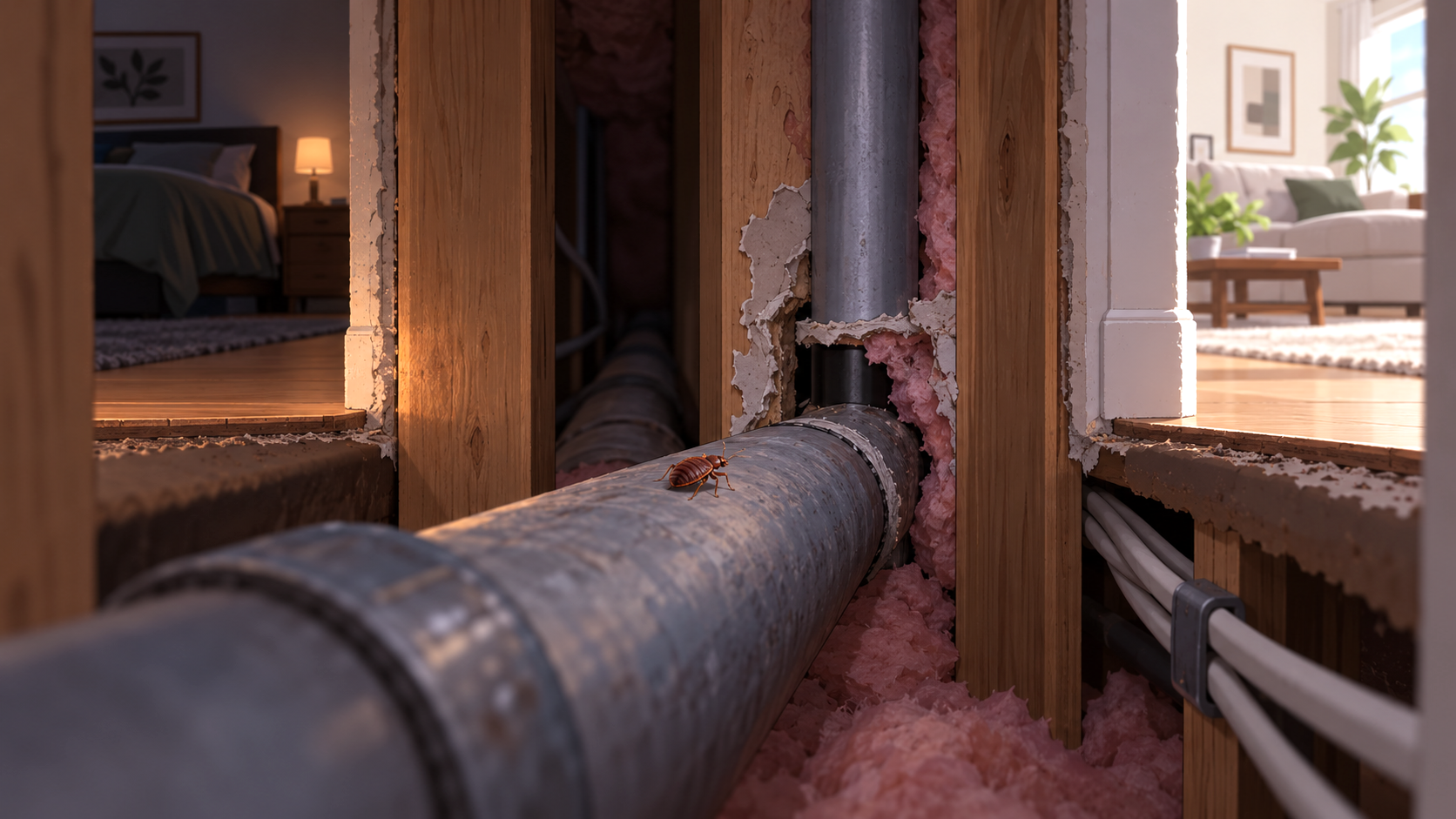
Bed bugs can spread between apartments in the same building. They may crawl through structural pathways such as wall voids, cracks, spaces around pipes, and hallways, while residents can also unintentionally carry them between units on clothing, furniture, bedding, bags, and other belongings. As such,they can move from one apartment to another, particularly when units share walls, ceilings, floors, hallways, or utility penetrations. This is why discovering bed bugs in one apartment can justify inspecting neighboring units rather than treating the affected apartment in isolation.
How Do Bed Bugs Get From One Apartment to Another?
Bed bugs do not need to remain permanently beside a bed. Although they normally concentrate near places where people sleep or rest, they can crawl considerable distances within a building when searching for hosts or new harborages. In multi-unit housing, they have been documented spreading through hallways, common walls, and ceilings.
Wall voids can provide concealed pathways between units. Openings around plumbing, electrical outlets, baseboards, heating systems, and other penetrations can connect spaces that appear completely separate from the occupants. Sealing cracks around baseboards and openings around electrical fixtures can discourage movement through wall voids, while door sweeps can reduce movement between an apartment and a shared hallway.
Bed bugs can also move between apartments with people and possessions. Carrying an infested couch down a hallway, moving untreated clothing to another unit, sharing furniture, or transporting infested belongings through common areas can relocate bugs without them having to crawl there themselves. That is why residents dealing with an infestation should avoid moving untreated belongings from room to room or apartment to apartment.
Which Apartments Are Most at Risk?
Units immediately surrounding an infested apartment deserve particular attention. When a resident reports bed bugs, professional guidance recommends inspecting not only that apartment but also neighboring apartments above, below, and across the hall.
That does not mean every neighbor automatically has bed bugs. It means proximity increases the importance of checking. Research in apartment buildings has documented bed bug dispersal from infested units and supports examining adjacent residences rather than waiting for every resident to independently report bites or sightings.
The risk becomes more concerning when an infestation is large. As bed bug populations increase, bugs can occupy locations farther from the original sleeping area and appear in neighboring rooms. If you are trying to understand how severe a bed bug infestation has become, finding activity away from beds and throughout multiple areas can be an important clue.
Can Bed Bugs Travel Through Apartment Walls?
Yes. Bed bugs can use gaps and openings associated with shared walls rather than literally tunneling through solid drywall. Research and pest-management guidance identify structural pathways such as cracks, wall voids, electrical openings, and plumbing penetrations as possible routes between units.
This also explains why treating only the visible bugs around one tenant’s mattress may not solve a building-level infestation. If nearby areas where bugs have migrated are left untreated, the treated apartment can continue experiencing activity even after many of its original bugs have been killed.
What Should Happen When One Apartment Has Bed Bugs?
The resident should report the infestation promptly so building management can arrange appropriate inspection and treatment. If you are the person who discovered them, the immediate steps in what to do after finding bed bugs in an apartment include documenting the evidence, notifying management, containing potentially infested belongings, and avoiding actions that spread bugs elsewhere.
Inspection should determine whether the infestation is limited to one unit or involves neighboring apartments. Treatment can then target the actual extent of the problem. In multi-family housing, successful integrated bed bug management requires cooperation from residents and building management, particularly when several units are involved.
Residents should not start moving furniture into hallways or sleeping in another apartment while waiting for treatment. Infested possessions should remain contained, and items that must be transported should be handled according to the treatment plan. Proper preparation for bed bug extermination helps technicians treat the infestation without creating additional routes for spread.
Can Bed Bugs Return From a Neighboring Apartment After Treatment?
They can. If your apartment is treated successfully but another connected unit remains infested, bed bugs may eventually enter again. An untreated neighboring infestation is one possible reason bed bugs can come back after treatment.
This is why recurring bed bugs in the same apartment should not automatically be blamed on poor housekeeping or assumed to be survivors from the previous treatment. The exterminator may need to determine whether activity persists inside the unit or is being introduced from elsewhere in the building.
Monitoring helps answer that question. Bed bug interceptor cups and other bed bug monitors can reveal continuing activity even when residents are not seeing bugs directly. Building management should also continue monitoring treated units to verify that control has been successful.
Can You Reduce the Chance of Bed Bugs Entering From Another Unit?
You cannot completely isolate an apartment from every possible introduction, but closing obvious structural routes can help. Seal appropriate cracks and crevices around baseboards and utility penetrations, repair damaged walls, and consider a door sweep where there is a gap beneath the entrance door. These measures are especially useful as part of a building-wide control program rather than as substitutes for treating an active infestation.
Avoid bringing abandoned furniture from hallways or dumpsters into your apartment, and do not accept potentially infested belongings from affected units. If bed bugs have already been found nearby, periodically check your apartment for bed bugs so a new infestation can be detected while activity is still limited.
Other Questions About Bed Bugs Spreading Between Apartments
Can bed bugs spread to the apartment upstairs?
Yes. Structural pathways can allow movement vertically as well as horizontally, which is why units above and below an infested apartment may need inspection.
Can bed bugs crawl under an apartment door?
They can move through sufficiently large gaps and hallways. Installing a suitable door sweep can help reduce this route of movement.
Does finding bed bugs mean my neighbor has them too?
No. A neighboring infestation is possible, but it cannot be assumed. Nearby units need inspection to determine whether bed bugs are present.
Can treating only one apartment solve the problem?
Yes, if the infestation is genuinely confined to that unit. If other apartments are also infested, however, treating only one can leave populations elsewhere in the building.
9 thoughts on “Can Bed Bugs Spread Between Apartments in the Same Building?”