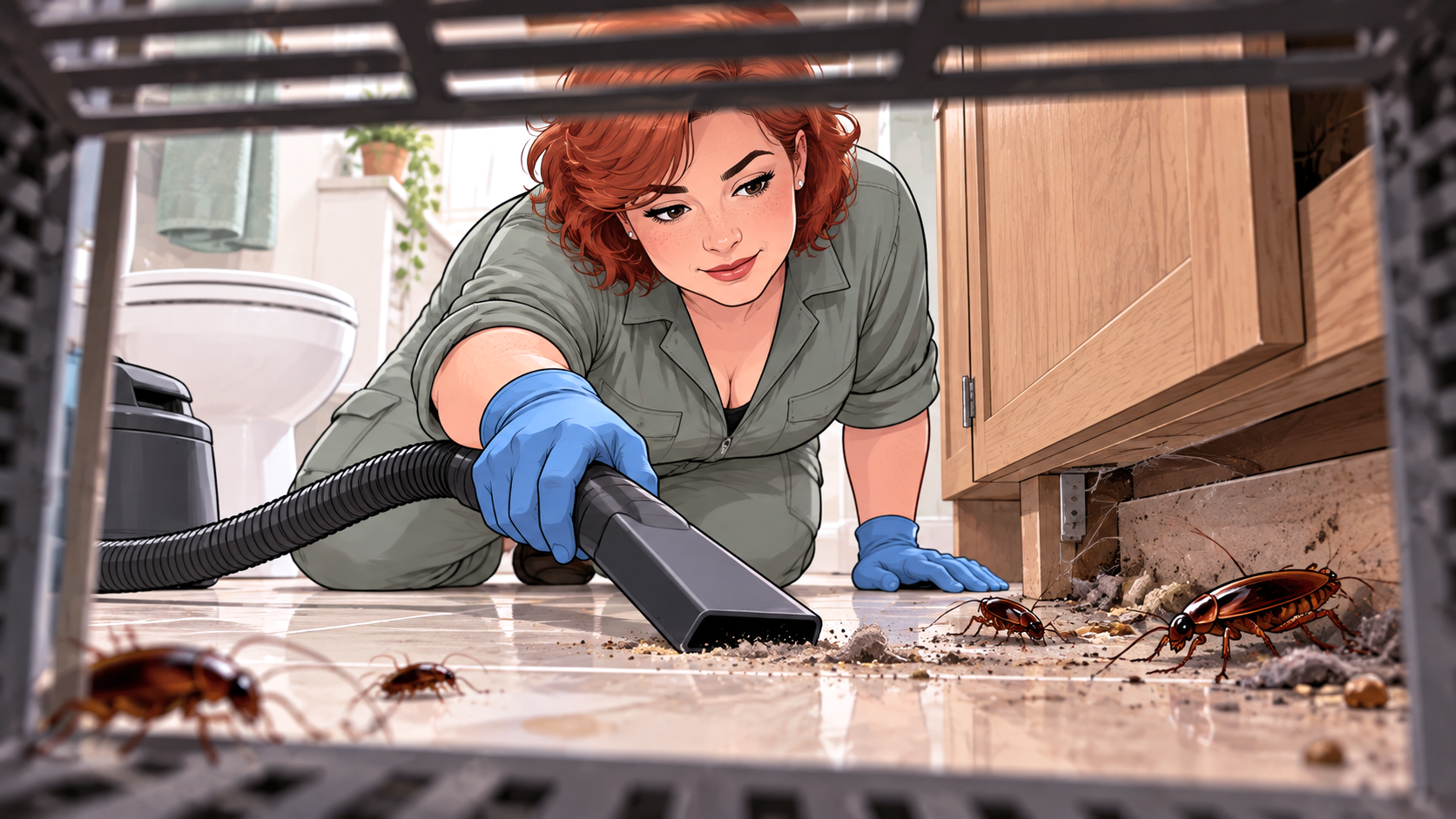
A cockroach infestation can produce a musty, oily, stale, or slightly sour odor that becomes more noticeable when large numbers of insects occupy an enclosed space. Some people describe it as damp cardboard, old grease, or an unpleasant mixture of stale food and musk. The smell comes partly from chemical compounds associated with cockroach droppings, body secretions, and accumulated insect remains.
Getting rid of the odor requires removing the contaminated material rather than simply covering it with fragrance. Even after the cockroaches have been eliminated, deposits trapped behind appliances, inside cabinet joints, or in porous materials can continue contributing to an unpleasant smell.
What Does a Cockroach Infestation Actually Smell Like?
There is no single odor that everyone recognizes as distinctly cockroach-related. Descriptions vary because infestations contain mixtures of insect-produced chemicals and surrounding household materials.
The most commonly reported descriptions include:
- Musty or stale: A persistent, enclosed smell resembling old cardboard or a poorly ventilated storage area.
- Oily or greasy: A heavy, unpleasant odor sometimes associated with contaminated kitchen surfaces.
- Sour or pungent: A sharper smell that may become noticeable when concentrated insect waste is disturbed.
- Musky: An animal-like odor that is difficult to associate with any familiar household product.
These descriptions are subjective rather than scientifically validated odor categories. They cannot reliably identify cockroaches without additional evidence.
Researchers studying German cockroach fecal extracts have nevertheless documented unpleasant odors. A study published in the Journal of Economic Entomology specifically described cockroach fecal extracts as having an undesirable smell, prompting researchers to develop a formulation with reduced odor.
The smell is often strongest close to accumulated contamination. A heavily occupied cabinet recess may have a distinctive odor even when the rest of the kitchen smells normal. In contrast, an occasional cockroach entering from outdoors may produce no detectable smell at all.
Why Cockroach Droppings Contribute to the Odor
Cockroach feces contain more than undigested food and waste products. They also carry chemical compounds involved in communication between insects.
Research published in the Proceedings of the National Academy of Sciences identified 40 volatile carboxylic acids in German cockroach fecal extracts. Many were associated with microorganisms living in the insects’ digestive systems.
The researchers demonstrated that gut bacteria contribute to the chemical signals released from German cockroach droppings. These compounds influence aggregation behavior, helping cockroaches recognize locations occupied by others.
An earlier chemical analysis of German cockroach fecal material identified more than 150 compounds, including numerous carboxylic acids.
These findings establish that cockroach feces contain complex mixtures of potentially odorous substances. However, they do not mean that every chemical identified contributes equally to the smell perceived by humans.
The appearance and concentration of cockroach droppings can help locate material responsible for an odor. Dark deposits clustered around cabinet seams are more useful evidence than an unpleasant smell coming from the general direction of a kitchen.
Dead Cockroaches and Old Harborages Can Smell Different
A location that has contained cockroaches for an extended period may accumulate shed skins, dead insects, fecal material, and household debris. As organic material deteriorates, microorganisms can generate additional odors unrelated to the chemical signals produced by living cockroaches.
The smell may consequently change after insect activity declines. A previously musky or stale odor can become more unpleasant if dead cockroaches remain trapped in inaccessible spaces, particularly where moisture is present.
The combined physical evidence found in cockroach harborages helps explain why cleaning an exposed countertop may have little effect on an odor originating behind fixed cabinetry.
Cockroach remains can also contribute to indoor allergen contamination. The U.S. Environmental Protection Agency identifies cockroach droppings among biological contaminants in household dust, making the removal of contaminated material more important than merely improving how the room smells.
A dead insect discovered beneath an appliance is not necessarily responsible for an entire room’s odor. If removing it produces no noticeable improvement, another source may be present.
How to Remove Cockroach Odor From Cabinets and Hard Surfaces
The most effective cleaning method depends on where the contamination is located and whether the affected material can tolerate moisture.
Start with accessible areas where droppings, shed skins, or insect remains have accumulated. Wear gloves, remove exposed food and utensils, and avoid dry brushing deposits into the air. A vacuum equipped with a HEPA filter is preferable for collecting loose cockroach material because it reduces the release of fine particles during cleanup.
The EPA’s guidance for housing managers recommends HEPA-filtered vacuuming for cockroaches, droppings, and egg cases. Collected material should be contained and discarded promptly.
After removing loose debris, wash compatible hard surfaces with warm water and a mild detergent. Work into accessible corners and seams where residue has accumulated, then wipe away remaining detergent and allow the surfaces to dry thoroughly.
Detergent cleaning is generally more useful than spraying fragrance over contaminated material because it physically removes deposits. Strongly scented cleaners may temporarily conceal the odor while leaving its source untouched.
Avoid soaking unfinished wood, particleboard, electrical components, or cabinet joints that can trap moisture. Where a contaminated area cannot be reached safely, aggressive cleaning may damage the structure without removing the underlying material.
Why the Smell Can Remain After the Cockroaches Are Gone
Eliminating the insects does not automatically remove the compounds already deposited throughout their occupied spaces.
Residues can remain on cabinet surfaces, behind fixtures, and within dust. Porous materials such as cardboard, unfinished wood, and some fabrics may absorb odor-producing compounds or retain contaminated particles.
The persistence of the smell depends on how much material accumulated, how thoroughly accessible surfaces were cleaned, and whether the source is still present. There is no reliable universal number of days after which cockroach odor disappears.
Ventilation can dilute airborne odors, but contaminated surfaces may continue releasing odorous compounds. The EPA identifies source removal and ventilation as primary methods of improving indoor air quality, with source removal generally providing the most effective long-term improvement.
If one cabinet continues to smell after surrounding surfaces have been cleaned, inspect its accessible joints and the adjacent area for retained contamination. Repeated odor in the same location may indicate an overlooked source rather than a room-wide air-quality problem.
The possible persistence of cockroach egg cases and other reproductive material is another reason that controlling visible adults does not necessarily mean all insect-related debris has disappeared.
Can Vinegar, Baking Soda, or Air Fresheners Remove the Smell?
These products are frequently suggested for household odors, but their usefulness depends on whether they can contact and remove the material producing the smell.
Vinegar may help clean certain washable surfaces, but it is not necessary for removing ordinary cockroach residue. Its own strong smell can also make it difficult to determine whether the original odor has diminished. Follow the surface manufacturer’s recommendations rather than assuming vinegar is suitable for stone, metal finishes, or every cabinet material.
Baking soda may absorb or neutralize some odors under suitable conditions, but leaving an open container in a room will not remove contaminated deposits behind an appliance or beneath cabinetry. It should not replace physical cleaning.
Air fresheners primarily change the perceived smell of a room. They do not remove cockroach droppings, dead insects, or contaminated dust. A fragrance that initially seems to solve the problem may fade while the original odor remains.
Ozone generators are also inappropriate as a routine solution. The EPA warns that ozone-generating air cleaners can damage respiratory health and are generally ineffective at safely removing many indoor odor compounds.
For stubborn odors, a properly selected activated-carbon air filter may help reduce certain airborne compounds, but its effectiveness depends on the chemicals involved and the amount of sorbent material. It cannot remove contaminated solids from inaccessible surfaces.
Could the Smell Be Mold, Sewage, or Rotting Food Instead?
A stale or musty smell is not specific to cockroaches. Several household problems can produce similar odors, sometimes in the same areas where cockroaches are encountered.
| Odor pattern | Other possible source | Useful observation |
|---|---|---|
| Persistent mustiness near a damp wall | Mold or moisture-damaged material | Water staining, visible growth, recurring dampness |
| Rotten or sewer-like smell near plumbing | Drain or sewer-gas problem | Strongest odor around plumbing connections or drains |
| Sour smell inside a cabinet | Spoiled food or contaminated packaging | Food residue, spills, damp cardboard |
| Decaying odor around appliances | Trapped organic material | Food debris or other remains beneath accessible equipment |
The Centers for Disease Control and Prevention notes that mold can produce a musty smell and recommends addressing the underlying moisture source. A damp cabinet can therefore contain both cockroach evidence and an unrelated source of odor.
An unmistakable sewer-gas or rotten-egg smell should not be attributed to cockroaches without investigating plumbing or other possible sources. A suspected natural-gas leak requires immediate attention according to local gas-utility emergency guidance.
Smell alone cannot establish the responsible cause. Visible contamination, moisture conditions, and the location of the strongest odor provide better evidence.
Does a Strong Cockroach Smell Mean a Severe Infestation?
A strong odor can accompany heavy cockroach activity, but odor intensity is not a dependable infestation-size measurement.
A relatively small concentration of insects occupying a poorly ventilated cabinet may produce a noticeable smell, while cockroaches distributed through larger structural spaces might generate little odor in occupied rooms.
Different people also have different sensitivities to particular compounds. Cleaning products, cooking odors, ventilation, humidity, and other environmental factors can mask or alter what someone perceives.
The number of cockroaches concealed within a harborage cannot be calculated from odor strength. Even a distinctive smell should be interpreted alongside physical evidence and monitoring results.
The absence of an odor is equally inconclusive. German cockroaches can occupy small gaps without creating a smell strong enough for a person to notice.
What if the Cockroach Odor Keeps Coming Back?
An odor returning after cleaning suggests that the source was not fully removed, that new contamination is accumulating, or that another household problem is producing a similar smell.
Recheck the location where the smell is strongest. If fresh droppings or live insects appear after the surfaces have been cleaned, continuing cockroach activity may be contributing new material.
The movement of cockroaches between connected rooms and structures can complicate the situation because odor-producing deposits may be concentrated somewhere other than the room where insects were first noticed.
Sticky monitoring traps can help determine whether activity continues near the affected area. The University of California’s cockroach monitoring guidance recommends traps for locating activity and assessing changes over time.
If monitoring shows little or no ongoing cockroach activity, investigate retained contamination, damp materials, drain problems, and other odor sources rather than assuming insects remain.
Persistent odor inside porous cabinetry may require further cleaning or replacement of material that cannot be adequately restored. The decision should depend on the extent of contamination and the condition of the material, not merely on whether an unpleasant smell is detectable.