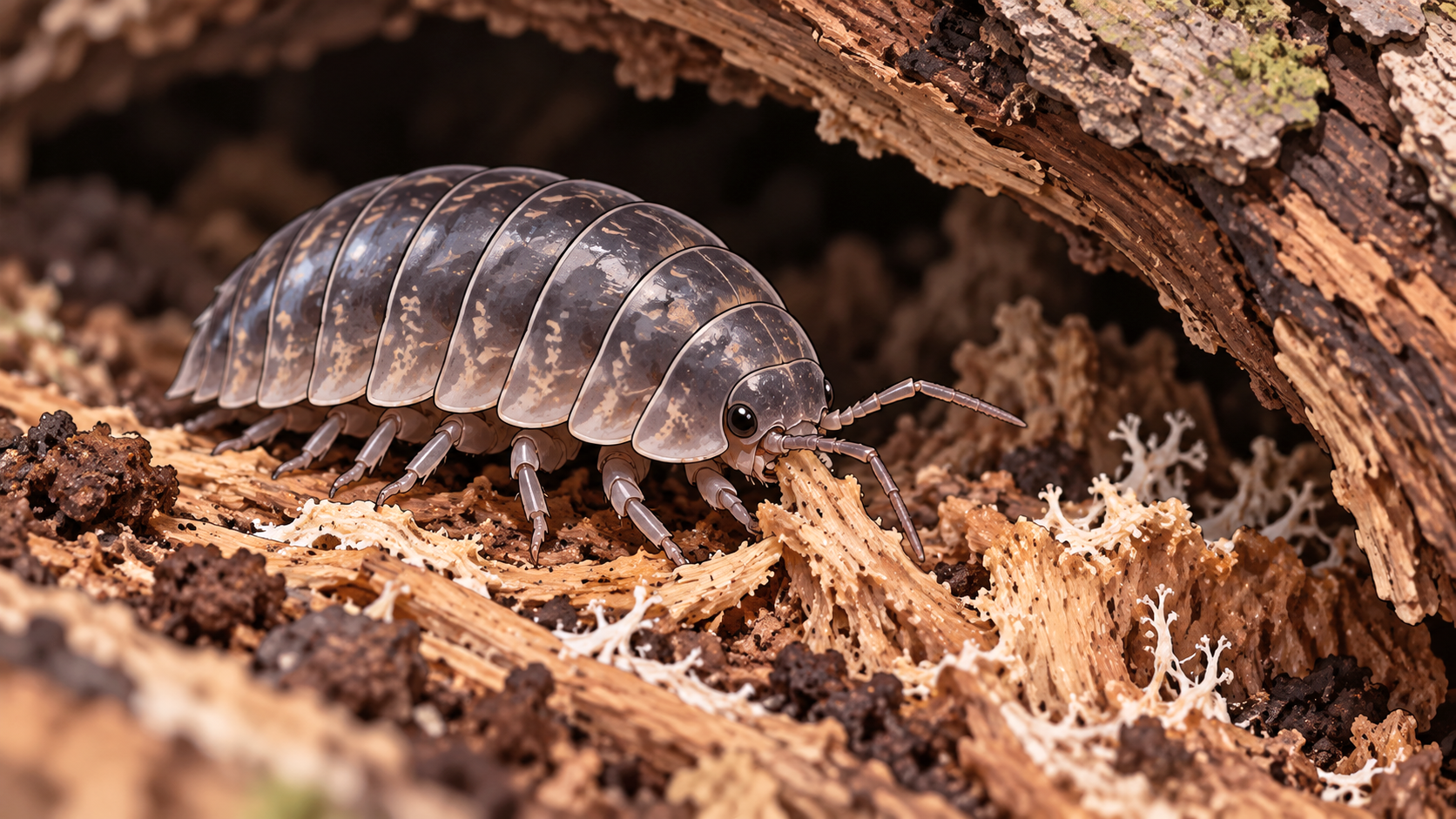
Roly-polies can feed on softened, decaying wood, particularly when fungi and other microorganisms have begun breaking it down. They are primarily decomposers, feeding on dead leaves and deteriorating plant material rather than boring into healthy timber. The common roly-poly (Armadillidium vulgare) does not consume sound structural wood like a termite, and finding one beneath a wooden deck or beside a damp doorframe is not evidence that it caused the damage.
Wood also provides shelter. A fallen branch, rotting stump, or damp board creates a protected space where pill bugs can avoid drying out while feeding on nearby organic debris. Their presence may therefore be associated with deteriorating wood without establishing that they are responsible for its condition.
What Kind of Wood Do Roly-Polies Eat?
Soft, decomposing wood is more suitable for roly-polies than freshly cut lumber. As wood deteriorates, fungi and other microorganisms colonize its surface and alter its composition. This microbial activity makes the surrounding organic material more accessible to organisms that feed on decaying matter.
Roly-polies possess chewing mouthparts capable of breaking apart softened material. Their digestive systems process plant debris alongside the microorganisms associated with it. The nutritional biology of terrestrial isopods explains how microbial colonization contributes to food quality and nutrient availability.
A damp, crumbling log may consequently support numerous pill bugs, while a dry piece of intact lumber offers little suitable food or shelter. Even when roly-polies are seen on rotten wood, some may be feeding on decomposed leaves, fungal growth, or organic material collected in the surrounding crevices.
Their feeding contributes to decomposition rather than initiating the decay of healthy wood. Research into isopod activity in woodland litter demonstrates how these animals fragment dead plant material and influence the microorganisms involved in breaking it down.
Can Roly-Polies Damage Wooden Furniture, Decks, or House Framing?
Roly-polies do not cause the type of structural wood damage associated with termites. They do not construct feeding tunnels through sound boards, excavate wooden beams, or establish colonies inside dry furniture. A pill bug found beneath a deck is usually taking advantage of the moisture and shelter available there.
The Illinois Department of Public Health’s guidance on occasional household invaders identifies pill bugs and sowbugs as moisture-dependent animals that do not damage buildings. Their presence is more useful as an indication that damp conditions exist nearby.
Consider a wooden porch post resting against persistently wet soil. If the base develops rot, roly-polies may gather in the softened material. Removing the animals will not restore the timber because the deterioration is associated with moisture and wood-decaying organisms. A post that has become soft enough to crumble requires assessment for wood decay and possible structural repair.
The identification of moisture-associated household pests separates harmless nuisance organisms such as pill bugs from wood-damaging insects. Where actual wood destruction is present, the cause must be identified independently of any roly-polies occupying the damaged area.
How to Tell Roly-Poly Activity From Termite Damage
Termites can consume cellulose within wood, while roly-polies primarily use material that is already decomposing. The physical evidence left behind is consequently different.
Subterranean termites may construct mud tubes between soil and wood, and feeding can create concealed galleries inside structural timber. Roly-polies leave neither characteristic termite mud tubes nor networks of galleries excavated through intact boards. Their rounded, segmented bodies also differ from the soft-bodied appearance of termite workers.
A pile of deteriorating wood containing several pill bugs cannot establish the cause of the damage. The structural behavior of wood-destroying insects provides a basis for distinguishing insect damage from ordinary deterioration.
Other small arthropods can create identification confusion around damp timber. For example, booklice mistaken for termites differ substantially in their feeding behavior and structural significance. Similarly, springtails confused with termites may be present in damp environments without damaging the wood itself.
Visible galleries, mud tubes, unexplained structural weakness, or suspected termite activity warrant an inspection by a qualified professional. Identifying a roly-poly nearby does not eliminate the possibility of a separate wood-damaging problem.
Why Roly-Polies Gather Around Rotting Wood
A decaying log offers several conditions that pill bugs need at once. Its underside retains moisture, its cracks provide shelter, and the surrounding organic debris supports feeding. The animals often concentrate where the wood touches the ground because that contact creates a humid space protected from direct sunlight and moving air.
The relationship between shelter and feeding helps explain why large numbers may occupy the same piece of wood. Their presence does not necessarily mean they are consuming the log continuously. Some individuals are resting or avoiding dehydration, while others are feeding on decomposing material.
The University of California’s pill bug management guidance identifies decaying plant material, surface moisture, and ground-level debris as conditions favoring their activity. The University of Maryland’s identification and management information likewise recognizes damp wood and outdoor debris as common sheltering environments.
Removing every rotting log from a garden is unnecessary. Away from buildings, dead wood provides habitat for decomposers and other wildlife. Wood that traps moisture against siding, foundations, or wooden structural members presents a different concern because it can contribute to persistent dampness around the building.
Should You Remove Roly-Polies From Rotten Wood?
Removing roly-polies is unnecessary when they are living in a decaying log or stump that poses no problem. Their feeding contributes to the breakdown of dead organic matter, and the animals themselves are not a reason to apply pesticides.
Wood touching a house deserves more attention. Move loose decaying boards, accumulated leaves, and unnecessary wooden debris away from the foundation. Correct drainage problems and investigate leaks that keep structural timber damp. The University of Kentucky’s recommendations for pill bugs and sowbugs emphasize moisture reduction, removal of nearby shelter, and sealing entry points rather than routine indoor pesticide applications.
If the wood is already rotten, assess its condition instead of concentrating on the animals found beneath it. Removing a few pill bugs from a deteriorated deck board will leave the moisture problem untouched, while repairing the decay and preventing continued wetting addresses the actual threat to the structure.
This post reflects our own research and isn’t a substitute for advice from a licensed pest control professional. Always follow the product label. See our full disclaimer for more.