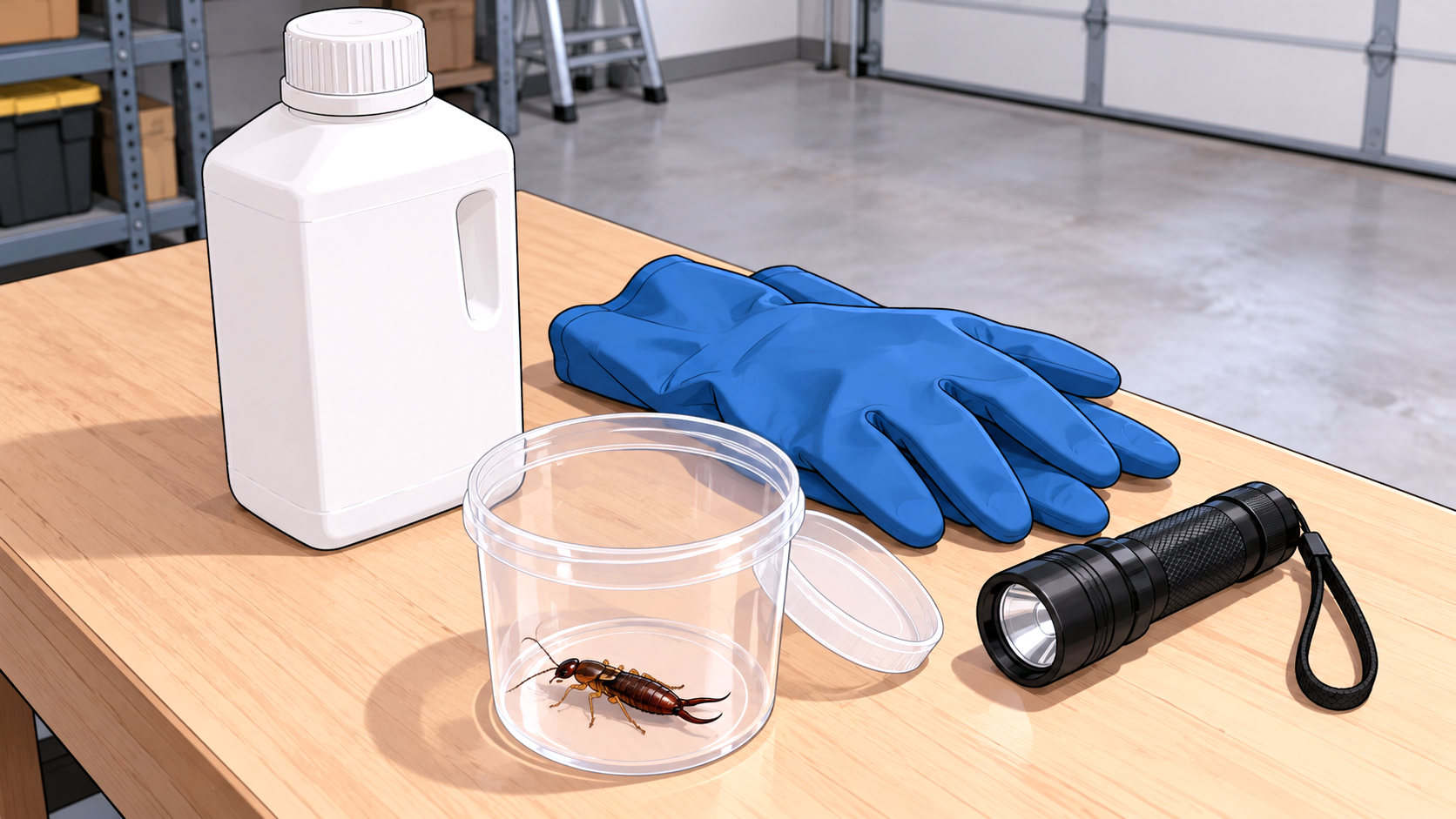
Permethrin kills earwigs. This synthetic pyrethroid insecticide affects their nervous systems, causing loss of coordination, paralysis, and death after sufficient exposure. Permethrin is an established option for earwig control, and certain registered products specifically list earwigs on their labels. It can work through direct contact or residues left on treated surfaces.
The main limitation is exposure. An earwig that crosses an effective treated deposit may be affected, while another concealed in an untreated crevice may escape. Permethrin is most useful where recurring earwig activity has been identified and a product is approved for that specific location.
Which Permethrin Products Are Approved for Earwigs?
Permethrin appears in numerous insecticide products, but their concentrations, intended uses, and registration conditions differ considerably. Its presence on an ingredient list does not automatically authorize every application.
Three examples illustrate the differences:
| Product | Permethrin concentration | Earwig-related labeled use |
|---|---|---|
| Permethrin 10 EWC | 10% | Localized outdoor earwig infestations in specified noncrop areas |
| Permethrin 2.5 EWC | 2.5% | Earwigs among listed garden and landscape pests |
| Permethrin CS controlled-release insecticide | Formulation-specific | Selected indoor crack-and-crevice and spot treatments for earwigs |
The EPA registration records for Permethrin 10 EWC include a label accepted in April 2025. The product has directions for specified outdoor insect-control situations, although its exact permitted uses must be checked against the current label accompanying the container.
Permethrin CS is a different type of product. Its controlled-release formulation is designed to deposit the insecticide in a form that can provide continuing contact exposure. Its registered instructions include selected indoor treatments for earwigs, but that does not make every permethrin concentrate suitable for indoor use.
A product marketed primarily for mosquitoes, ticks, or agricultural insects may contain permethrin without permitting the intended earwig treatment. Even products with similar names can differ by registration, jurisdiction, and formulation.
Permethrin-treated clothing sprays are another separate category. They are intended for approved fabric treatments against specified biting arthropods and should not be substituted for a household or garden earwig insecticide.
Does Permethrin Kill Earwigs on Contact?
Permethrin can kill earwigs through direct contact. It acts on voltage-gated sodium channels in insect nerve cells, disrupting normal electrical signals. A sufficiently exposed insect may develop muscle spasms, abnormal movement, paralysis, and ultimately die.
The documented nervous-system effects of permethrin explain why direct spray contact can produce visible symptoms. However, these effects should not be confused with a guaranteed instantaneous kill.
The result depends on the amount of insecticide reaching the earwig. A direct spray may provide substantial exposure, while an insect receiving only a small amount from an aging deposit may respond differently. Formulation and environmental conditions also influence the outcome.
Permethrin is not limited to killing insects that are visibly sprayed. Some products are registered for residual surface treatment, allowing susceptible insects to encounter insecticide after the original application.
Earwigs are primarily active after dark, so their movement can bring them into contact with treated surfaces. Yet nighttime activity alone does not guarantee exposure, particularly when insects travel through protected openings rather than across the deposited insecticide.
How Long Does Permethrin Keep Killing Earwigs?
Permethrin can leave insecticidal residues, but there is no universal duration of earwig control across all products.
A residual deposit must remain sufficiently available and potent to affect insects that encounter it. Rain, sunlight, surface material, cleaning, and formulation can alter its performance. An outdoor application on exposed siding may behave differently from a deposit protected inside a permitted structural crevice.
Permethrin also binds strongly to soil and organic matter. Its environmental persistence and behavior help explain why residues can remain after application, but the continued presence of the chemical does not establish that it remains effective against earwigs.
Manufacturers sometimes advertise residual protection measured in weeks. Those claims apply only under the conditions and for the pests specified on the particular label.
A homeowner should therefore avoid interpreting a product’s general residual claim as a guarantee that earwigs will remain controlled for the same period.
The time required for earwig activity to decline also depends on whether fresh insects continue entering from untreated surroundings. New sightings are not necessarily evidence that an existing deposit has stopped working.
Where Can Permethrin Be Applied Against Earwigs?
Permitted locations vary substantially among formulations.
For example, certain permethrin products allow outdoor treatment around building foundations and localized infestations in noncrop areas. Others permit applications to particular ornamental plants or specified edible crops. Some professional formulations include narrowly defined indoor uses.
The earwig control guidance from the University of Minnesota identifies permethrin as an option for exterior foundation treatments and certain garden applications. These recommendations do not replace the registration requirements for the selected product.
Indoor use requires additional care. An outdoor garden insecticide cannot be applied to interior baseboards, carpets, cabinets, or furniture simply because the same active ingredient appears in another indoor product.
When a label permits crack-and-crevice treatment, that authorization does not necessarily extend to broadcasting the insecticide across an entire floor. Similarly, a product allowing exterior foundation applications may restrict treatments on paved surfaces or near drainage features.
The management of earwigs around yards and lawns involves identifying areas of concentrated activity. A label-permitted pesticide treatment should be directed at a justified location rather than applied indiscriminately throughout the landscape.
For edible plants, check that the product explicitly permits the particular crop and pest. Any required preharvest interval, application limit, and protective equipment must be followed.
Why Permethrin Sometimes Appears Ineffective
One explanation is that earwigs never encounter the treatment. They often occupy sheltered spaces, including gaps beneath outdoor objects and areas protected from direct spray. A properly applied insecticide can kill exposed insects while leaving those in separate refuges unaffected.
A second possibility is continued entry. Earwigs can arrive from nearby outdoor populations after the original insects have died. The difficulty of eliminating recurring earwigs can therefore reflect repeated introductions rather than reduced chemical susceptibility.
The treatment surface may also be unsuitable. A formulation intended for contact or residual control must be deposited according to its label, including any limitations concerning porous materials, weather, or application equipment.
These circumstances should be investigated before assuming pesticide resistance. Resistance is a biological change in susceptibility within a population and cannot be established merely because insects remain visible following treatment.
Where earwigs have been observed damaging plants, the identification of earwig feeding injury is also important. Treating a suspected earwig problem will not resolve damage caused by slugs, caterpillars, or another pest.
Permethrin Precautions Around Cats, Fish, and Pollinators
Permethrin presents significant hazards to certain non-target animals. It is highly toxic to fish, aquatic invertebrates, and bees. Its use around water features, drainage systems, flowering plants, and other environmentally sensitive locations requires particular caution.
Cats are especially important to consider. They can be highly sensitive to concentrated permethrin exposure, particularly from products intended for use on dogs. The National Pesticide Information Center’s permethrin guidance describes neurological effects associated with poisoning, including tremors, poor coordination, and seizures.
Never apply a household or garden permethrin insecticide directly to a cat. Products labeled for dogs are not automatically safe for cats, and cats must be protected from accidental contact with concentrated formulations or treated materials. Suspected poisoning requires prompt veterinary attention.
Aquatic exposure is another serious concern. Permethrin can harm aquatic organisms at low concentrations, making runoff and spray drift especially undesirable. The EPA’s pyrethroid labeling and environmental-protection measures address restrictions intended to reduce contamination of waterways.
Bee exposure should also be minimized. Avoid treating flowering plants visited by pollinators unless the exact product label permits the application under the relevant conditions. Evening treatment is not automatically safe, since residues can remain available after application.
These precautions are particularly relevant around milkweed. Although earwigs can consume monarch eggs and newly hatched caterpillars, applying permethrin around monarch habitat may expose the butterflies, caterpillars, and other insects that depend on those plants.
Human exposure also requires attention. Permethrin can cause skin tingling or irritation, and inhaled spray droplets may irritate the respiratory system. Follow the product’s personal protective equipment, ventilation, and reentry instructions, and prevent children and pets from accessing treated areas as required.
Is Permethrin a Good Choice for Earwig Control?
Permethrin is an effective earwig-control ingredient when used in an appropriately registered product at a suitable location. It offers both direct-contact and potential residual activity, making it relevant when insects repeatedly encounter a particular outdoor or structural area.
Its broad-spectrum toxicity makes it less attractive for isolated earwigs that can be removed without chemicals. Earwigs also consume other garden insects, so eliminating harmless populations may unnecessarily reduce beneficial predatory activity.
A pest-management approach based on monitoring and actual need helps avoid applying insecticides where the insects are not causing meaningful problems.
When a permethrin application is justified, evaluate its effect by observing fresh activity in the original problem area. If earwigs remain numerous, determine whether they are encountering the treated surface or arriving from another location before considering retreatment. Any additional application must comply with the label’s frequency restrictions.
For someone selecting an insecticide specifically against earwigs, the strongest reason to choose permethrin is an exact product label that lists the pest and permits the intended use. Without both, the ingredient’s demonstrated insecticidal activity is not enough to justify application.