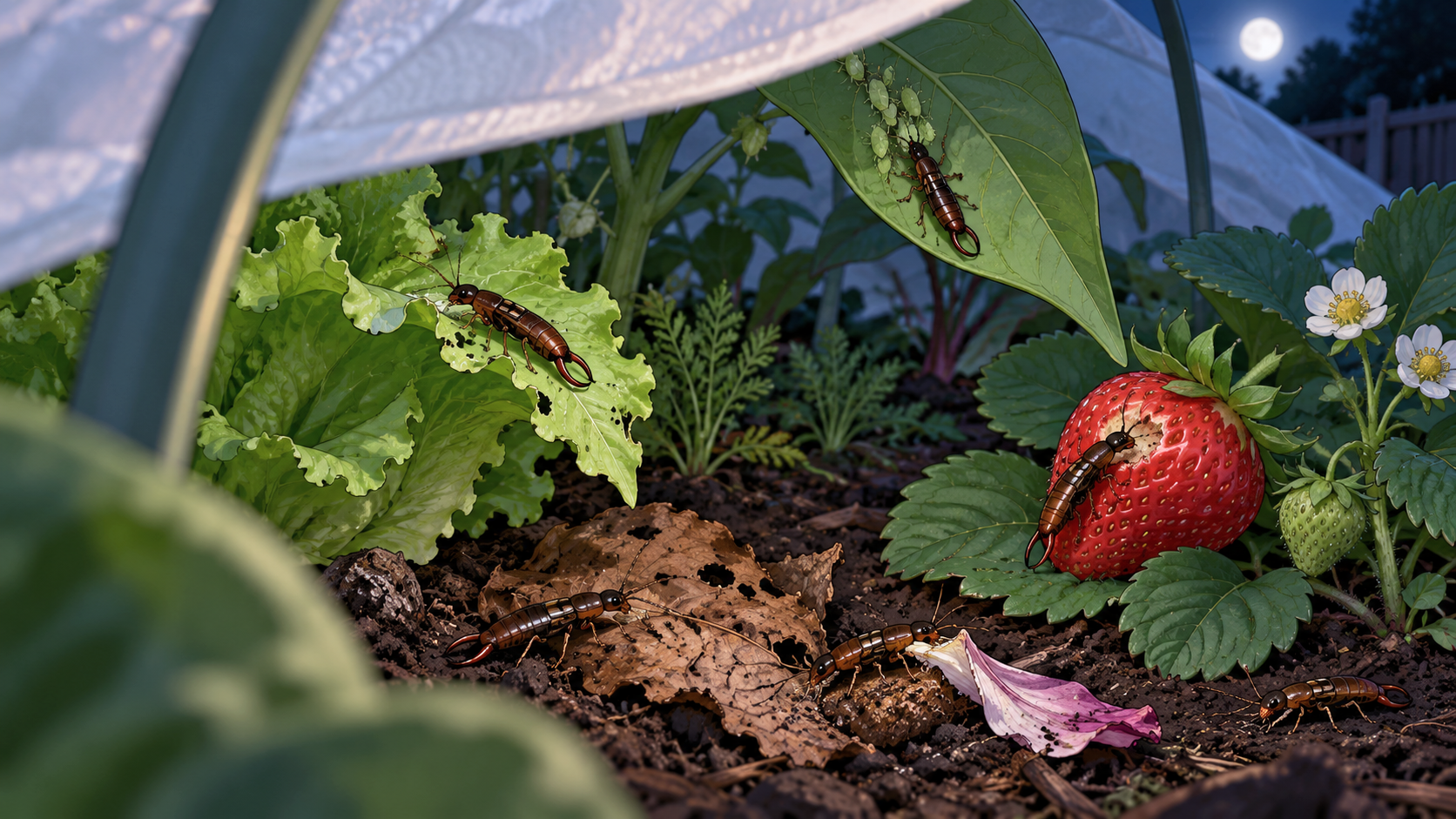
An earwig does not enter the garden looking for one particular meal. It may chew a flower petal, scavenge decaying vegetation and prey on a small insect during the same night. That unusually flexible diet explains why gardeners can find earwigs almost anywhere food and suitable shelter overlap.
Earwigs eat both plant and animal material in the garden. Their diet includes leaves, flowers, buds, seedlings, soft and ripe fruits, fungi, decaying organic matter, aphids, mites, caterpillars, maggots and other small invertebrates. They are opportunistic omnivores, so what they eat changes with the food available around them.
Earwigs Eat Far More Than Living Plants
The European earwig, Forficula auricularia, is an omnivore rather than a strict plant-eater. Its documented diet includes plants, fungal spores, small invertebrates and decaying organic matter. This broad menu is the key to understanding almost everything about earwig feeding in a garden.
A damaged leaf beside an earwig hiding place can therefore be misleading. The insect may have eaten the plant, but it could also have been scavenging dead material or hunting another small animal nearby. Earwigs are especially active after dark, while daylight hours are usually spent inside protected places such as mulch, cracks, plant debris and tightly folded vegetation.
Their diet also changes the way we think about whether earwigs are good or bad for a garden. They can damage plants, but plant tissue is only one part of what they eat.
Which Garden Plants Do Earwigs Eat?
Earwigs can feed on leaves, shoots, buds, flowers and fruit. The softer or more vulnerable parts of a plant often suffer the most consequential damage.
Flowers are common feeding sites. Earwigs can chew marigolds, dahlias, zinnias, butterfly bush and hostas, leaving irregular holes in leaves and blossoms. Other documented food plants include roses, hollyhocks and clover. The resulting damage can make ornamental plants look ragged even when the feeding does not threaten the entire plant.
Vegetables are also on the menu. Earwigs feed on leafy vegetables and can attack young beans, beets, lettuce, celery and other garden crops. Seedlings deserve particular attention because losing part of a stem or several young leaves matters far more to a tiny plant than comparable feeding does to an established one. We cover that vulnerable stage separately in our guide to earwigs eating seedlings.
Sweet corn presents a different feeding opportunity. Earwigs can eat corn silks, and heavy feeding can interfere with kernel development. If that is where you are finding them, the more specific earwig and sweet corn guide is the better place to diagnose the problem.
Earwigs Eat Soft and Ripe Fruit Too
Fruit becomes another food source when it is accessible. European earwigs can feed on strawberries, raspberries, blackberries and apricots. Their feeding can leave irregular depressions or holes and make damaged fruit unsuitable for harvest.
Ripeness matters. European earwigs prefer ripe fruit over firm, immature fruit, which helps explain why earwigs can suddenly become much more noticeable around fruit close to harvest. They may also shelter within damaged fruit or other protected plant structures during daylight.
Not every fruit is equally vulnerable. Hard fruit such as apples generally escapes the type of feeding damage seen on softer fruit, while apricots can be attacked. In mature apricot trees, foliage feeding itself is usually of little concern, but feeding on the fruit can cause shallow, irregular damage.
That difference is useful because “earwigs eat fruit” is too broad to guide a gardener. The type and condition of the fruit matter.
Some of an Earwig’s Meals Are Other Garden Pests
Plant damage gets most of the attention, but earwigs are also predators.
European earwigs eat small invertebrates and can prey on aphids, mites, caterpillars, maggots and scale insects. They also consume insect eggs. Under some circumstances, their appetite for soft-bodied insects can provide useful biological control. Aphids in particular are a documented part of their predatory diet, and earwigs are among the many garden animals that feed on aphids.
This creates an odd situation on a single plant. An earwig climbing through the foliage may be there to eat the plant itself, but it may instead be hunting something that is already feeding on that plant.
We would not try to infer the meal simply from where the earwig is sitting. If the plant has aphids and an earwig is nearby, its presence alone does not prove what it has been eating. Likewise, finding one inside a flower does not prove it created every hole in the petals.
That is one reason earwig diet is more interesting than a simple list of plants. The same mouthparts are used for both predation and plant feeding, and the available food helps determine which role the earwig takes.
Dead Plants, Fungi and Other Decaying Material Are Food
A garden produces food for earwigs even when nothing is growing.
European earwigs consume detritus and decaying organic matter. They also feed on fungi and fungal spores. This scavenging behavior gives them a role in the breakdown of organic material rather than limiting their diet to fresh plants and live prey.
Dead leaves, deteriorating vegetation and other organic debris can therefore serve two purposes around earwigs. Some of that material provides food, while piles of debris can also create dark, protected daytime shelter. Those are separate benefits to the insect, even though they often occur in the same place.
This distinction also helps explain why earwigs are commonly associated with rich garden environments. They are not living on moisture or mulch itself. Moisture creates favorable conditions, and mulch can provide shelter, while the surrounding garden supplies a mixture of living plants, decomposing material, fungi and prey.
Our guide to what attracts earwigs deals with those habitat conditions in more detail. Diet is only one part of why they choose a particular area.
What Earwigs Eat Can Change as They Develop
Young and adult earwigs do not necessarily divide their meals in exactly the same way.
In citrus, both nymphs and adults feed on insects, insect eggs and succulent plant material. However, nymphs tend to feed on plant material more than adults. That is a useful reminder that an earwig population is not one uniform feeding unit.
Young earwigs eventually leave the maternal nest and begin searching for food. They look broadly like smaller versions of the adults, although their appearance changes through several molts. Our guide to what baby earwigs look like covers those developmental differences without turning this diet article into a life-cycle guide.
For a gardener, the practical point is simpler. Plant damage can involve more than adult earwigs, so seeing only small nymphs around affected vegetation does not clear them as possible feeders.
How to Find Out What Earwigs Are Eating in Your Garden
The most useful evidence comes after sunset.
Earwigs feed primarily at night. During daylight they usually retreat into dark, moist and protected spaces. Checking a damaged plant at noon may therefore reveal the injury without revealing the animal responsible for it. Inspecting the same plant after dark with a flashlight gives you a better chance of catching the feeder in place.
Look at the damaged area itself rather than simply searching the surrounding soil for earwigs. Their plant feeding can produce small irregular holes, ragged edges and damaged flowers or fruit. However, earwig damage can resemble slug or caterpillar feeding. Slugs leave slime, while caterpillars may leave frass, webbing or pupae that point toward a different culprit.
This is where we think observation beats an automatic treatment response. An earwig under a board several feet away tells you that earwigs live in the garden. An earwig actively chewing the plant you are trying to protect tells you something much more useful.
Once feeding is confirmed and the damage is significant, the response can focus on the affected area rather than every earwig outdoors. The dedicated guide to getting rid of earwigs in the garden covers that next step.
Other Questions About What Earwigs Eat
Do earwigs eat slugs?
Slugs are not a food item we would use to characterize the normal garden diet of earwigs. Their well-documented animal foods include small invertebrates such as aphids, mites, caterpillars and maggots, along with insect eggs.
Do earwigs eat grass?
Earwigs can feed on grasses and tender grass tissue as part of their broad plant diet. However, a lawn is generally much less vulnerable to consequential earwig feeding than seedlings, flowers, soft fruit and other tender garden plants.
Do earwigs eat wood?
Earwigs are not wood-destroying insects. Finding them beneath logs, boards or bark usually reflects their preference for protected hiding places rather than a diet based on structural wood.
Do earwigs eat each other?
Earwigs are opportunistic omnivores that consume animal material, but cannibalism is not necessary to explain ordinary earwig activity in a garden. Their normal documented food range already includes plants, fungi, decaying matter and numerous small invertebrates.
Do earwigs eat at night?
Yes. Earwigs are predominantly nocturnal feeders and normally shelter during daylight. Their nighttime schedule is covered more fully in our guide to when earwigs are active.
7 thoughts on “What Do Earwigs Eat in the Garden?”