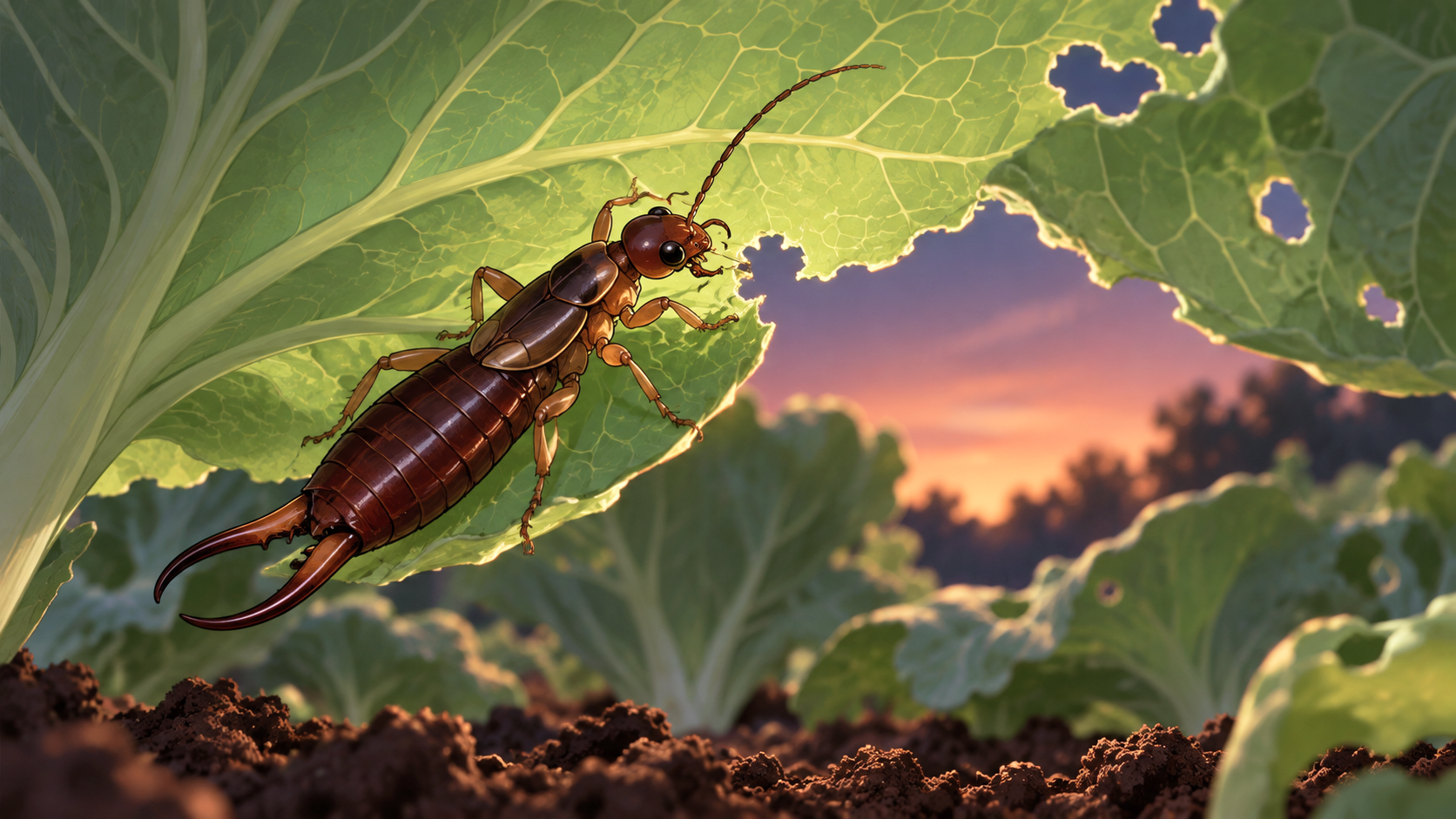
You can tell if earwigs are eating your plants by looking for irregular holes, ragged leaf edges, damaged flower petals, or small feeding cavities in soft fruit, then checking the plants after dark for actively feeding earwigs. The damage alone is not enough to confirm the cause because caterpillars, slugs, beetles, and other garden pests can leave similar marks.
Earwigs are both plant feeders and predators of other insects. Finding one among damaged leaves does not necessarily mean it caused the injury. A reliable diagnosis combines the appearance of the damage, the affected plant parts, and direct observation of feeding.
What Earwig Damage Looks Like on Leaves and Flowers
Earwig feeding commonly produces irregular holes through leaves or notches along their edges. The openings may be scattered across tender foliage, while heavily affected leaves can develop a ragged, tattered appearance. Unlike insects that extract plant juices and leave discolored spots, earwigs have chewing mouthparts that physically remove plant tissue.
The damage is often most noticeable on young, tender growth. Earwigs can injure seedlings, vegetable leaves, and ornamental plants, especially when substantial numbers are present. Earwig feeding symptoms include chewed leaf margins, irregular openings, and injury to buds and flowers.
Flower petals can develop small holes, torn-looking edges, or missing sections. Dahlias, marigolds, and zinnias are particularly susceptible, although other ornamentals can also be affected. The feeding patterns observed on flowering plants may resemble damage from other chewing insects, so inspect newly injured flowers rather than relying on older marks.
The location of the damage can offer additional clues. Earwigs may shelter deep within dense flowers and feed where petals overlap. A blossom that looks reasonably healthy from the outside may contain damaged inner petals. Gently separating the flower parts can reveal concealed insects, although simply finding an earwig inside a bloom does not establish that it was feeding.
Existing holes will not disappear after the responsible insect is removed. To assess ongoing damage, inspect new growth and newly opened flowers instead of repeatedly examining the same injured leaves.
Which Plants Are Most Likely to Show Earwig Feeding?
Earwigs can feed on various vegetables, flowers, and fruits, but the amount of damage differs considerably among plant species and growth stages. Young plants are generally more vulnerable to tissue loss than established plants with extensive foliage.
| Plant or plant part | Possible earwig feeding signs |
|---|---|
| Marigolds, dahlias, and zinnias | Irregular holes and damaged petals |
| Leafy vegetables and herbs | Ragged margins or holes through tender leaves |
| Young seedlings | Missing leaf tissue and injury to developing growth |
| Strawberries and raspberries | Small cavities or deeper feeding holes in soft fruit |
| Apricots and other susceptible stone fruit | Shallow gouges or irregular openings |
| Sweet corn | Feeding on silks, potentially affecting pollination |
The damage associated with European earwigs includes ornamental flowers, seedlings, soft fruit, and corn silks. However, the presence of a susceptible plant does not establish that an earwig is responsible for every damaged leaf.
The consequences also depend on plant maturity. A mature ornamental may tolerate several damaged leaves without meaningful loss of vigor, while a seedling with only two developing leaves can lose a substantial proportion of its foliage. Corn silk feeding presents a different concern because damage during pollination can contribute to incomplete kernel development.
When fruit is affected, look closely at the damaged area. Earwigs can chew into soft fruit and sometimes occupy existing splits or wounds. On strawberries, earwig feeding cavities can resemble slug damage, making other evidence necessary before identifying the cause.
Inspect Your Plants After Dark to Confirm Feeding
A nighttime inspection is one of the most useful ways to determine whether earwigs are causing fresh damage. They generally remain concealed during daylight and emerge after dark, when they may feed on leaves, flowers, and fruit.
Choose a plant showing recent injury, preferably one where new holes or damaged petals have appeared since the previous inspection. Return after darkness with a flashlight and examine the damaged foliage without immediately shaking the plant. Check both sides of the leaves, flower centers, developing fruit, and the places where stems meet dense foliage.
The recommended method for confirming earwig feeding is to observe the insects at night rather than assuming that daytime sightings identify the culprit. Directly seeing an earwig chewing a leaf or flower provides substantially stronger evidence than finding one on the soil beneath it.
Inspect more than once if necessary. Feeding activity varies with weather, temperature, and insect movement, so a single evening without visible earwigs does not eliminate them as a possibility. Earwig nighttime scouting is particularly useful where damage is recent but the insect cannot be located during daylight.
Use the flashlight carefully around delicate flowers and seedlings. Excessive handling can dislodge insects or damage petals, making the inspection less informative. Photograph any insect actually feeding, including the surrounding plant tissue, to preserve the evidence.
If several species are present, observe which one is consuming the plant. An earwig may be hunting aphids on a leaf while a caterpillar elsewhere is responsible for the holes.
Earwig Damage vs. Slugs, Caterpillars, and Beetles
The appearance of chewed leaves is rarely specific to one insect. Several common garden pests remove plant tissue, and their damage can overlap considerably. Secondary clues and direct observation are more dependable than hole shape alone.
Earwigs vs. slugs and snails
Slugs and snails frequently leave irregular holes resembling earwig feeding. They also tend to become active in moist conditions and may feed at night, creating considerable overlap in where and when the damage occurs.
Slime trails provide an important clue. A shiny residue on leaves, pots, or nearby surfaces supports slug or snail activity because these mollusks produce mucus as they move. Earwigs do not leave comparable slime trails. The absence or presence of slime around damaged fruit can help distinguish possible feeding sources.
However, an absent trail does not prove that earwigs caused the injury. Slime can be difficult to see, and both types of animal may visit the same plant. Search for the actual feeder when the distinction matters.
Earwigs vs. caterpillars
Caterpillars can create irregular leaf holes, notched edges, and extensive missing sections. Some feed openly, while others remain concealed or emerge mainly at night.
Look for caterpillar droppings, often called frass, on leaves or directly beneath damaged foliage. Some species also produce silk or webbing, while cutworms may sever young stems near ground level. Earwigs can leave droppings, too, so frass alone is not definitive; its appearance and association with a feeding caterpillar provide stronger evidence.
A seedling cut through near the soil surface suggests a different investigation from one with small holes chewed through its leaves. Examining the stem and the surrounding soil can help locate cutworms or other insects responsible for that type of damage.
Earwigs vs. leaf-feeding beetles
Leaf beetles and flea beetles can also produce holes in foliage. Flea beetles often create numerous small, rounded openings that give leaves a shot-hole appearance, although damage varies among species.
Many leaf-feeding beetles are active during daylight, making them easier to observe than earwigs. Examine the leaf surfaces for beetles, larvae, or eggs rather than attributing every hole to an insect that happens to be hiding beneath the plant.
The patterns of damage caused by chewing garden pests can help narrow the possibilities, but direct identification remains preferable when deciding whether intervention is warranted.
How to Use Traps to Find Earwigs Near Damaged Plants
Traps can show whether earwigs are active near an affected plant even when they are difficult to observe feeding. Corrugated cardboard rolled into a tube, folded newspaper, or short sections of suitable tubing provide sheltered spaces that earwigs may enter during daylight.
Place a small shelter trap close to the damaged plant during the evening and inspect it the following morning. Look inside carefully and record the number of earwigs collected. Corrugated cardboard traps have been studied for monitoring European earwigs, although catches depend on trap construction and placement.
Traps are especially useful when comparing neighboring plants. Suppose one damaged dahlia has numerous earwigs in a nearby trap while an undamaged dahlia has very few. The difference supports further investigation of earwig activity near the injured plant, but it does not independently establish that the insects caused the damage.
The strongest evidence comes from combining trap catches with observed feeding and the appearance of fresh injury. A trap filled with earwigs beside a plant that has no new damage may indicate sheltering activity rather than a problem requiring control.
For consistency, use similar traps and inspect them at comparable times. A trap left in place for three nights cannot be directly compared with one checked after a single morning without accounting for the different collection periods.
The use of shelter traps around susceptible plants can also collect insects for removal when actual damage has been confirmed. Keep traps accessible and prevent them from becoming undisturbed shelters after monitoring has ended.
How to Tell Whether Earwigs Are Helping Rather Than Hurting
Earwigs consume aphids, mites, insect eggs, and other small invertebrates. Their presence can therefore be beneficial, particularly when they are feeding on pests rather than plant tissue.
An earwig discovered among aphids on a rosebud may be hunting insects. Removing it immediately could eliminate a predator without addressing the organism responsible for the plant’s condition. The beneficial predatory activity of European earwigs is one reason low populations are often tolerated in gardens.
Plant condition provides useful context. If new leaves are developing normally, flowers remain intact, and no fresh feeding injury appears, occasional earwig sightings generally do not justify treatment. When vulnerable seedlings lose substantial tissue or flower damage continues, identifying the responsible feeder becomes more important.
Some earwigs may feed on insects and plant material within the same garden. Their beneficial role does not guarantee that they will never damage plants, just as finding them near injured foliage does not establish guilt. Decisions should depend on observed feeding and the severity of the injury.
When Is There Enough Evidence to Intervene?
Intervention becomes reasonable when fresh feeding damage continues, earwigs have been observed causing it, and the affected plants cannot tolerate the loss. Several minor holes on an established plant may not justify treatment, while repeated injury to developing seedlings or valuable flowers can warrant targeted action.
A brief monitoring record can make the decision more objective. Photograph an affected leaf or bloom, inspect it again after a comparable interval, and note whether new tissue has been damaged. Record any earwigs actually observed feeding and compare those observations with nearby unaffected plants.
Where earwigs are confirmed as the cause, collecting insects from affected plants or using nearby shelter traps can reduce feeding pressure without immediately resorting to pesticides. The broader management of earwigs in yards and lawns should remain separate from diagnosing a particular damaged plant.
Pesticide treatment is not justified simply because earwigs were captured. Integrated pest management principles emphasize identifying the pest, assessing the level of damage, and choosing interventions proportionate to the problem. If treatment becomes necessary, only products labeled for the pest, plant, and intended application site should be considered.
After collecting the suspected feeders, watch the plant’s newest growth. Fresh leaves and flowers developing without further injury provide better evidence that the cause has been addressed than waiting for previously damaged tissue to recover. If new holes continue appearing without any earwigs observed feeding, reassess the diagnosis before taking additional action.