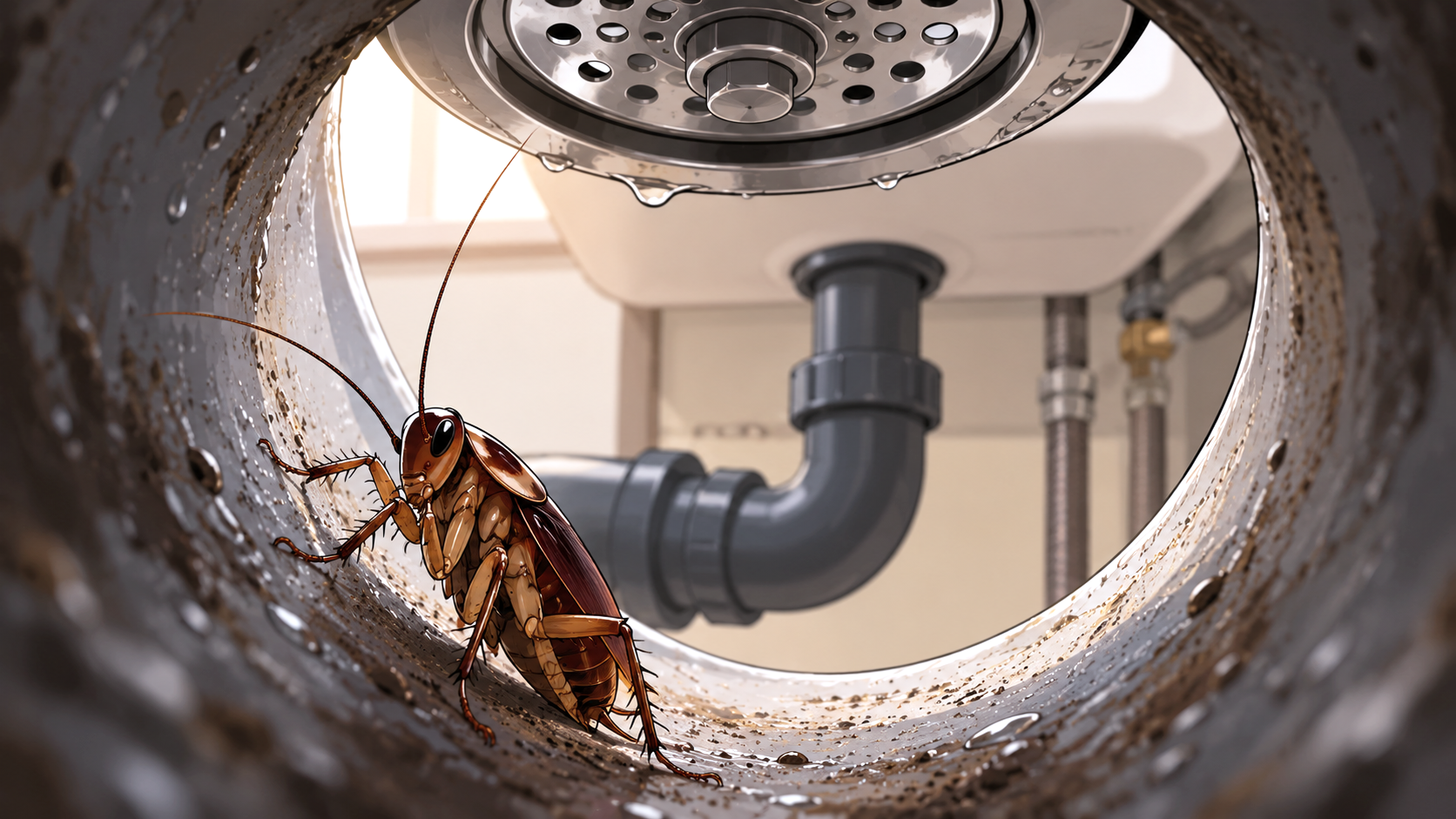
A cockroach sitting inside a bathtub or beside a floor drain creates an obvious suspect. Sometimes the plumbing really is involved. In other cases, the insect reached the fixture from the room and became trapped on its smooth surface. Before treating a drain, it helps to establish whether the opening is functioning as an entry route at all.
Cockroaches can travel through some sewer and plumbing systems, particularly American and Oriental cockroaches, but a cockroach found near a drain did not necessarily come through it. Dry drain traps, damaged plumbing, unscreened floor drains, sewer-associated populations, and gaps around pipes can create routes that need different fixes.
First Check Whether the Drain Has a Working Water Trap
Most frequently used sinks, tubs, and showers have a curved section of pipe called a trap. Water remains in the trap after the fixture drains, forming a barrier between the room and the drainage system. A drain that has not been used for a long period can lose this water through evaporation. EPA building guidance specifically identifies dry drain traps as openings between occupied buildings and sewer systems.
Floor drains deserve particular attention because some receive water infrequently. If a little-used drain has a functioning trap but has simply dried out, restoring the trap’s water seal may close the route. A trap that repeatedly loses water despite regular use may indicate a plumbing problem that needs diagnosis rather than repeated refilling. Pouring insecticide, bleach, or improvised chemical mixtures into the drain does not repair a missing or defective water barrier.
Some Cockroach Species Really Do Occupy Sewers and Drains
American and Oriental cockroaches are much more relevant to sewer-related sightings than every cockroach species. California public-health guidance describes both species as peridomestic cockroaches that can live in sewer systems and other protected environments around buildings. American cockroaches also occur around floor drains, pipe chases, basements, and other warm, moist sites, while Oriental cockroaches commonly occupy damp areas at or below ground level.
Identification can therefore change the investigation. A large reddish-brown American cockroach or dark Oriental cockroach appearing around a basement floor drain fits a sewer-related explanation better than a German cockroach automatically being blamed on the same route. The considerable differences among common cockroach species make “cockroaches come through drains” too broad to apply equally to every sighting.
The Gap Beside the Pipe May Be the Actual Opening
Plumbing creates two potential routes that are easy to confuse. One is through the drainage system itself. The other is through the structural opening surrounding the pipe.
A sink cabinet may contain gaps where water lines and drainpipes pass through its back or floor. Those openings can connect with wall voids, neighboring rooms, basements, crawl spaces, or other apartments. EPA housing guidance recommends sealing openings around sewer lines and plumbing penetrations specifically to prevent pests from using them as travel routes. A cockroach emerging beneath a sink can consequently appear to have come from the drain even when it never entered the drainpipe.
This possibility becomes particularly relevant in multifamily buildings. German cockroaches have been documented moving between connected apartments, so tracing cockroaches between your unit and the wider building may require inspecting pipe penetrations rather than treating the drain opening.
Floor Drains Need a Different Inspection From Sinks
A floor drain in a basement, utility room, commercial kitchen, laundry area, or seldom-used bathroom can remain undisturbed for long periods. The combination of an evaporated trap, accessible drainage system, moisture, and nearby structural gaps makes these drains worth checking carefully. Pest-management guidance recommends screening suitable floor drains and routinely cleaning drain grates and strainers, while older EPA urban IPM guidance specifically advises keeping drain traps full or capped.
Repeated appearances from one floor drain provide stronger evidence than finding a cockroach once in a bathtub. A sticky monitor positioned beside the suspected drain can help establish whether activity continues there. Other monitors placed near plumbing penetrations and room edges can show whether the drain is actually the center of movement or merely one feature in a larger infestation.
What to Do Depends on the Route You Find
Start with the physical plumbing. Restore water to a dry but otherwise functional trap, repair leaking or defective plumbing, replace damaged drain components, and seal openings around pipes where appropriate. Suitable drain covers or screens can limit pest movement in locations where they do not interfere with drainage or violate plumbing requirements. Moisture around the area should also be corrected because cockroaches depend on accessible water even when the drain itself is not their entrance.
Do not respond by indiscriminately pouring pesticides down household drains. Pesticide products have specific approved sites and directions, and EPA guidance requires users to follow the pesticide label and apply products only where permitted. Products registered for professional sewer treatment are not automatically appropriate for a household sink or shower. If cockroaches appear to be emerging from a functioning plumbing system despite intact traps, a plumber or qualified pest professional may need to investigate the route.
Safety note: Never pour a pesticide into a drain unless its label specifically permits that use. Do not mix bleach, drain cleaners, pesticides, ammonia, or other household chemicals in an attempt to treat cockroaches. Plumbing defects, persistent sewer access, or unexplained drain activity may require professional inspection.
A Drain Fix Will Not Remove a Population Living Elsewhere
Closing a genuine plumbing route can stop further entry without eliminating cockroaches already established inside the building. Likewise, treating an indoor population will not prevent repeated introductions if an open sewer or plumbing route remains.
Use the surrounding evidence to determine which situation you have. Multiple life stages, cockroach egg cases, repeated trap catches, or other signs of an established cockroach infestation suggest that the investigation should extend beyond the drain. One isolated insect requires less inference because a single cockroach sighting cannot establish population size or source.
Drain Questions That Are Easy to Misread
Can a cockroach survive in the water inside a drain trap?
Cockroaches can tolerate temporary contact with water, but an intact water-filled trap is intended to maintain a physical separation between the fixture and the drainage system. Seeing an insect in a sink does not demonstrate that it swam through the trap.
Why is a cockroach sitting in my bathtub in the morning?
The insect may have entered the tub from the room and then struggled to climb the smooth sides. Check the drain, overflow opening, nearby pipe penetrations, and surrounding room before assigning a route.
Could a drain cover help?
A properly fitted cover or suitable screen can reduce access through some drain openings, particularly floor drains. It should not obstruct required drainage, ventilation, or normal plumbing operation.
What if cockroaches keep appearing after I refill a dry trap?
Persistent activity suggests another route, a defective plumbing component, or an established population nearby. The broader conditions that can place cockroaches in a bathroom include moisture and structural openings that remain relevant even after the drain is secured.