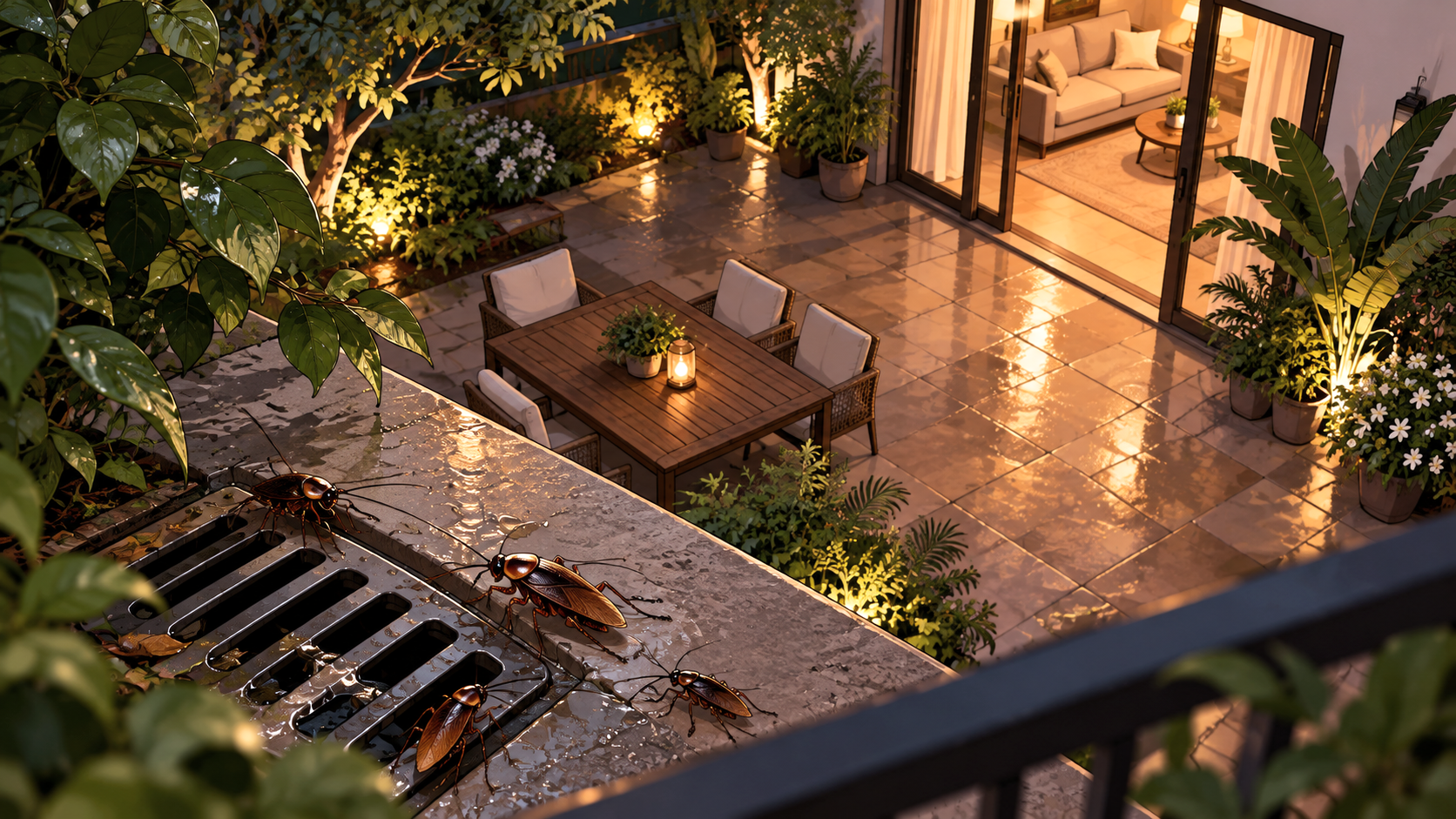
Cockroach season generally runs from spring through fall in temperate regions, with many outdoor species becoming most noticeable during the warmer months. However, there is no universal cockroach season. German cockroaches can remain active indoors throughout the year, Oriental cockroach adults are often most abundant in late spring and early summer, and some wood cockroaches become particularly noticeable during their spring mating period.
In tropical and subtropical climates, where temperatures remain suitable for much of the year, cockroach activity may continue across all twelve months. Local humidity, rainfall patterns, species composition, and building conditions can influence when sightings increase.
Cockroach Season Changes Depending on Where You Live
A summer cockroach peak in Pennsylvania does not necessarily correspond to the most active period in Florida, Nigeria, or another warm region.
In temperate climates, rising temperatures generally provide more favorable conditions for outdoor movement, feeding, and development. Autumn cooling subsequently reduces visible activity among many outdoor species, although the timing differs according to local weather and habitat.
Warm regions have less pronounced temperature-driven seasonal boundaries. Cockroaches may remain active outdoors year-round, while changes in moisture availability and other environmental conditions influence their numbers.
| Climate or setting | Typical seasonal pattern |
|---|---|
| Northern United States and similar temperate regions | Outdoor sightings generally increase during spring and summer |
| Southern United States | Many outdoor species remain active over an extended warm season |
| Tropical and equatorial climates | Activity can continue year-round, with local seasonal fluctuations |
| Heated homes and commercial buildings | Indoor populations can remain active throughout the year |
| Unheated garages and outdoor shelters | Activity depends more directly on local temperatures |
A field investigation in Florida recorded substantial seasonal variation in outdoor cockroach populations. The study of peridomestic cockroach seasonality found that population levels were approximately 73% lower after winter. It also linked autumn household infestations more strongly to population size and proximity to outdoor habitats than to an assumed seasonal increase in insect mobility.
Such results cannot establish the same seasonal pattern everywhere. They demonstrate how local populations can change considerably across the year even in relatively warm environments.
German Cockroaches Have No Fixed Indoor Season
German cockroaches (Blattella germanica) are closely associated with human buildings, especially spaces that provide consistent warmth and resources.
Their populations can reproduce throughout the year when indoor conditions remain favorable. A heated apartment, restaurant kitchen, or commercial facility may therefore experience cockroach activity in January as readily as in July.
That does not mean indoor populations are completely unaffected by the seasons.
A two-year investigation of German cockroaches in homes and restaurants in Busan, South Korea, found that trap catches were generally highest in summer, followed by autumn. Nevertheless, some locations experienced population peaks during winter.
These differences reflect the importance of indoor conditions. Population density can change with temperature, shelter availability, sanitation, and other factors even when the insects are protected from outdoor weather.
The University of Florida’s cockroach management guidance notes that indoor domestic cockroach species may produce multiple generations annually. The number of eggs a female cockroach can produce influences how quickly populations can increase when conditions remain favorable.
A household infestation should consequently be assessed according to current activity rather than postponed until a presumed summer cockroach season.
Oriental Cockroach Season Often Peaks Earlier Than Expected
Oriental cockroaches (Blatta orientalis) follow a more distinctly seasonal developmental pattern than German cockroaches, particularly in temperate regions.
Their adult populations commonly peak during late spring and early summer, often around May and June in parts of the United States. Adult numbers then decline as the season progresses, while immature stages become more prominent.
Penn State Extension’s Oriental cockroach account describes this late-spring and early-summer peak, followed by relatively low adult numbers by late summer and early autumn.
A separate Rutgers University assessment of cockroaches in New Jersey identifies the same general seasonal pattern.
This means that fewer adult Oriental cockroaches in late summer do not necessarily indicate that the population has disappeared. The composition of the population changes as individuals develop and adults die.
The time needed for cockroach eggs to hatch and the subsequent development of nymphs affect when different life stages become noticeable.
Oriental cockroaches are therefore a good example of why the warmest month does not always coincide with the highest number of adults.
Wood Cockroaches Are Especially Noticeable in Spring and Early Summer
For people living near forests, a sudden increase in cockroaches around windows or porches during May or June may involve wood cockroaches rather than an established indoor pest population.
Male Pennsylvania wood cockroaches (Parcoblatta pensylvanica) become conspicuous during their reproductive period. Their movements can bring them close to houses, particularly in wooded surroundings.
The University of Arkansas Arthropod Museum identifies May and June as the mating season when males are especially likely to appear around homes in the Ozark region.
Penn State Extension reports that wood cockroach adults can occur throughout the warmer months, although their seasonal appearance depends on the species and locality.
These insects normally live outdoors and generally do not establish reproducing populations inside homes. As a result, a short-lived increase in wood cockroach sightings can represent a seasonal outdoor event rather than growing indoor infestation activity.
The flight capabilities of different cockroach species also affect which insects are likely to be noticed around windows and exterior lighting during their active season.
American and Smokybrown Cockroach Activity Can Peak Later
Large outdoor-associated cockroaches often show a longer period of activity in warm environments.
American cockroaches (Periplaneta americana) occupy outdoor refuges as well as protected urban infrastructure. Their visible numbers can fluctuate seasonally, but the timing is influenced by regional temperature patterns and habitat conditions.
Smokybrown cockroaches (Periplaneta fuliginosa) offer an especially useful example of why species matter.
A three-year investigation of outdoor cockroaches in Tokyo documented frequent smokybrown cockroach observations from July through October. Japanese cockroaches (Periplaneta japonica) in the same investigation showed peaks during April, May, October, and November.
Two species living within the same city therefore displayed markedly different periods of greatest observed activity.
The University of Florida’s American cockroach profile also describes outdoor and infrastructure-associated populations in warm environments. The conditions around a particular building can influence whether these insects are encountered indoors.
Their seasonal presence should not be reduced to one nationwide calendar, particularly when populations occupy different climates and protected urban habitats.
Do Cockroaches Have a Wet Season or a Dry Season?
In tropical climates, the familiar spring-to-autumn model becomes less useful. Many locations experience wet and dry seasons rather than prolonged cold winters.
Moisture can affect habitat suitability, but the wet season is not automatically cockroach season.
A study conducted in Abraka, Delta State, Nigeria, investigated cockroach populations during wet and dry periods. Researchers collected 7,835 cockroaches representing six identified species. Although differences occurred in some observations, the overall seasonal comparison did not establish a statistically significant difference.
Another investigation in Bali, Taraba State, Nigeria, recorded 5,146 American cockroaches across household sampling locations. The study found 58% during the dry season and 42% during the wet season, but the difference was not statistically significant.
These investigations do not establish a single pattern for Nigeria or other tropical countries. Sampling methods, household conditions, local habitats, and species composition can produce different results.
Rainfall may also temporarily change where cockroaches are seen without demonstrating a corresponding increase in their total population. Seasonal abundance and short-term weather-related movement are different phenomena.
What Months Should You Watch for Cockroaches?
For a homeowner in a temperate region, the most useful seasonal expectations depend on the species.
- April to June: Wood cockroach males may become conspicuous near wooded properties, while adult Oriental cockroaches approach their seasonal peak.
- July to September: Many outdoor-associated species remain active, and warm conditions can support substantial populations.
- October to November: Some outdoor species remain noticeable where autumn conditions are favorable, while activity declines in colder regions.
- December to March: Outdoor encounters may decrease considerably in cold climates, but established indoor German cockroach populations can remain active.
These are approximate Northern Hemisphere patterns, not fixed dates. Seasonal timing shifts with latitude, altitude, local climate, and the year-to-year weather.
In the Southern Hemisphere, the corresponding warm-season months occur at different times. Tropical regions may not fit this calendar at all.
A household’s seasonal pattern also depends on whether the cockroaches originate outdoors or occupy established indoor shelter. The differences among common cockroach species are more useful for interpreting sightings than assuming every cockroach shares one annual cycle.
When Should You Start Monitoring for Cockroaches?
In temperate regions, checking exterior conditions before the usual spring increase can help identify potential outdoor activity. However, monitoring an established indoor population should not be restricted to particular months.
The University of California’s cockroach management guidance recommends sticky monitoring traps for identifying active locations and evaluating population changes.
A simple record of catches can reveal whether activity is increasing, decreasing, or remaining consistent. Comparing similar trap locations over successive weeks is more informative than comparing isolated sightings across different rooms.
The distance cockroaches travel between sheltered areas may also influence where they are observed as activity changes. An increase in sightings near doors or windows may reflect a different pattern from repeated captures within a heated kitchen.
For properties with previous infestations, monitoring through the less active months can establish a useful baseline before numbers rise. Where German cockroaches are already present indoors, waiting for summer provides no biological advantage.
The relevant season is ultimately determined by the species and its environment, not simply by the month printed on the calendar.
One thought on “When Is Cockroach Season?”