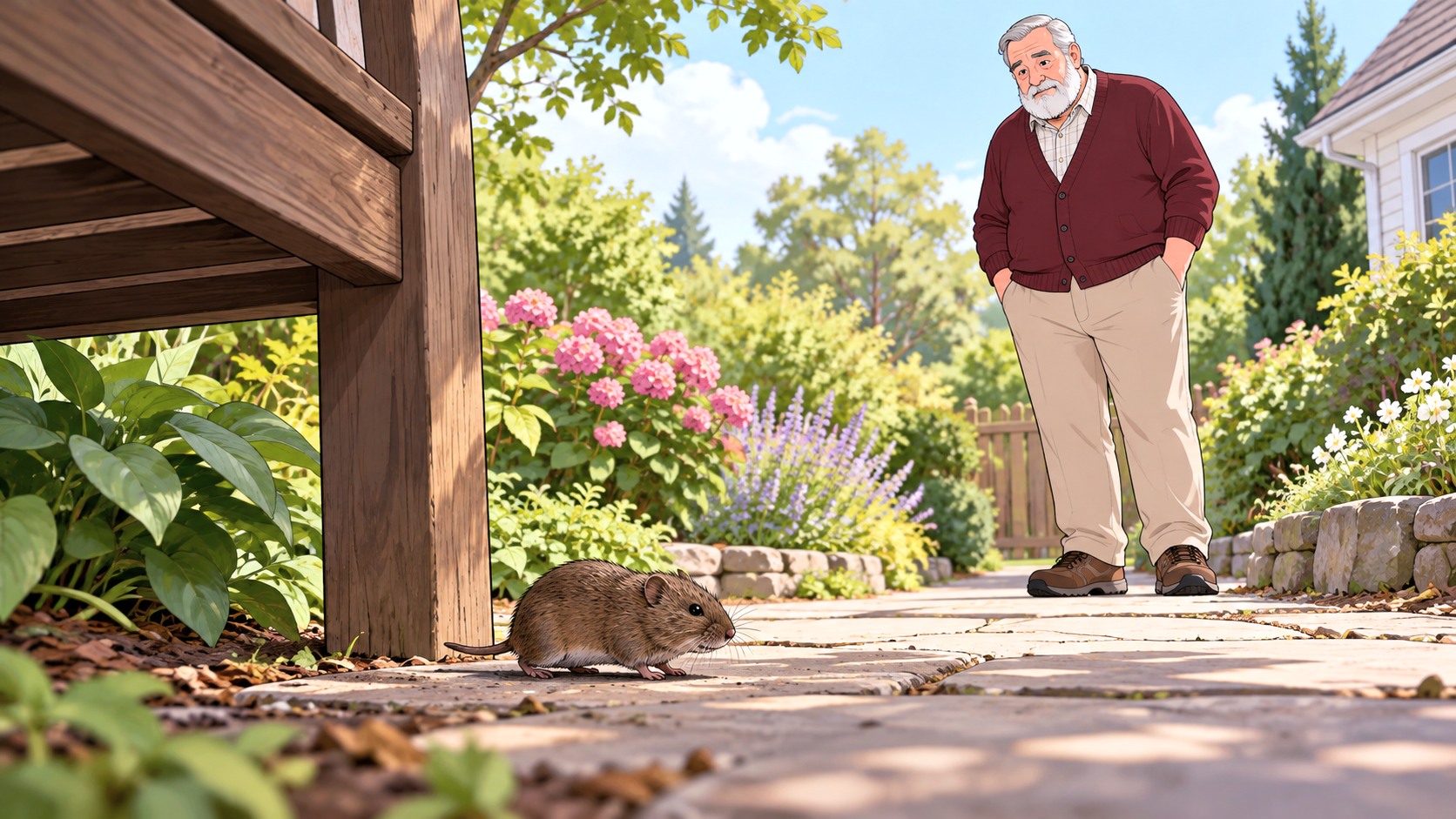
Voles are not generally dangerous to humans during ordinary outdoor encounters. They do not hunt, pursue, or deliberately attack people, and their usual response to disturbance is to retreat into vegetation or a burrow. However, voles are wild rodents capable of biting when handled, and contact with infected animals or their waste can create health risks. Watching a vole move through your lawn is very different from catching one with your bare hands. The main concern is unnecessary contact. A vole feeding near a garden bed does not require the same precautions as a sick animal, an animal trapped indoors, or rodent waste discovered where people prepare food. The circumstances of the encounter determine whether any action is needed.
What Happens When You Encounter a Vole?
Most encounters are brief. A vole may emerge from grass, cross an exposed patch of soil, or remain motionless before retreating into nearby cover. These animals spend much of their time in protected outdoor habitats and have no reason to approach humans for food or companionship. The University of California’s vole information describes their preference for vegetation, burrows, and concealed surface pathways.
A vole appearing close to your shoes is not necessarily approaching you. It may be following an established route through the grass or moving toward shelter. Similarly, a vole that remains still while someone approaches is not demonstrating that it is tame or safe to pick up. A wild animal’s behavior during a brief encounter cannot establish its health or temperament.
Leave the animal room to escape. Children should be discouraged from catching voles, even when they appear small or unusually calm. The CDC’s guidance on encounters with wildlife recommends maintaining distance rather than touching unfamiliar wild animals. Attempting to corner or restrain one creates an avoidable opportunity for injury.
Can Voles Bite or Injure People?
A vole has sharp incisors capable of breaking human skin. Biting is primarily a defensive concern when an animal is captured, restrained, or otherwise prevented from escaping. A vole moving freely through a yard is not seeking opportunities to bite people.
Even a small puncture wound deserves attention because bacteria can enter damaged skin. If a vole bites you, immediately wash the wound thoroughly with soap and running water. Seek medical advice, particularly if the wound is deep, the animal appeared ill, your tetanus vaccination is not current, or redness, swelling, warmth, or increasing pain develops. The CDC’s recommendations for animal bites and scratches identify these circumstances as reasons for medical assessment.
The risk associated with vole bites is therefore related to direct contact rather than ordinary proximity. There is no benefit to testing whether a vole will bite by approaching it with a hand or attempting to lift it.
Can Being Near Voles Make You Sick?
Seeing a vole outdoors does not constitute a disease exposure. The concern arises when a person comes into contact with an infected animal, contaminated material, or an organism capable of transmitting a pathogen. Rodents can carry infectious agents without displaying obvious signs of illness, making appearance an unreliable indicator of infection.
Tularemia is one documented concern involving wild rodents, including voles in affected regions. Infection can occur through contact with infected animals, bites from certain arthropods, or other environmental exposure routes. The CDC’s tularemia information identifies rodents among the susceptible animals and explains why direct handling deserves caution. The actual risk depends on the pathogen, animal species, geographic area, and exposure circumstances.
Rodent-associated illnesses should not automatically be attributed to every vole. For example, the CDC’s hantavirus information identifies deer mice as the principal source of Sin Nombre virus infections in the United States. The fact that voles and deer mice are both rodents does not establish identical disease risks. Claims about diseases associated with voles must account for the particular pathogen and the evidence connecting it to the animal.
The practical precaution is to avoid handling wild voles or touching their waste without protection. The CDC’s wild rodent guidance identifies direct handling, contaminated materials, and exposure to infected ectoparasites among the possible routes by which rodent-associated infections reach humans. Finding one healthy-looking vole in the garden does not mean those exposure routes have occurred.
Are Voles Dangerous Around Children and Outdoor Play Areas?
A vole living beneath grass beside a playground or garden does not ordinarily threaten children using the area. The greater concern is curiosity. Children may attempt to catch a small animal, touch a dead one, or pick up material found near its burrow.
Young children are particularly likely to put contaminated fingers or objects into their mouths. The CDC’s small-mammal safety recommendations emphasize handwashing and caution with animal contact, particularly for children younger than five and people with weakened immune systems. Although those recommendations address small mammals broadly, avoiding direct contact with wild rodents is also appropriate.
If children discover a vole, have them observe it from a distance and continue playing elsewhere while it retreats. An injured or unusually inactive animal should be left alone rather than carried indoors or offered food. Contacting a wildlife rehabilitator or local animal-control service is preferable when professional intervention is necessary.
Ordinary gardening also does not become unsafe merely because voles inhabit nearby vegetation. Gloves provide a sensible barrier when working around areas containing animal waste, and hands should be washed before eating or handling food.
Are Voles Dangerous If They Enter Your House?
Voles are primarily outdoor mammals and are not typical household pests. Their presence near a foundation, patio, or basement window does not establish an indoor infestation. The University of California’s description of vole habitat identifies outdoor vegetation and burrow systems as their normal environment rather than occupied buildings.
An animal discovered indoors presents a different concern because someone may accidentally touch it, corner it, or encounter contaminated material in a confined space. Keep children and pets away, avoid handling the animal directly, and arrange appropriate assistance if it cannot leave without being captured.
Identification is particularly important indoors. A small rodent found in a kitchen or storage room may be a house mouse rather than a vole. The differences between voles and mice influence how an indoor sighting should be interpreted, especially when no clear photograph of the animal is available.
An actual case of a vole entering a house should be assessed according to the animal’s location and any evidence of continuing activity. There is no reason to assume that voles occupy wall cavities or establish indoor breeding populations simply because one was seen near a building.
What If You Find a Dead Vole?
Do not pick up a dead vole with bare hands, even when there are no visible wounds or signs of illness. The cause of death may be unknown, and direct contact can expose skin to biological material. Keep children and pets away until the animal can be handled appropriately.
The Public Health Agency of Canada’s animal-handling precautions recommend rubber gloves when handling dead animals and washing hands afterward. Avoid disturbing surrounding waste or contaminated debris, particularly in enclosed areas where dust can accumulate.
A dead vole discovered outdoors is not proof that the surrounding property contains an infectious outbreak. Several noninfectious causes of death are possible, including predation and injury. Multiple unexplained deaths, however, deserve greater caution than an isolated carcass. Local animal-health or wildlife authorities can advise whether reporting or professional collection is appropriate.
When Does Vole Activity Require a Safety Response?
For most homeowners, a vole moving through an outdoor planting bed requires no immediate safety intervention. A bite, direct contact with a sick animal, or rodent contamination of an occupied space creates a different situation and should be addressed according to the actual exposure.
The response should also be proportional to the problem. Applying rodenticides throughout a yard because someone saw a vole introduces additional hazards to pets, children, and non-target wildlife. Poisoned bait is not a substitute for identifying the animal or establishing a need for control. The EPA’s rodent-control safety guidance emphasizes keeping rodenticides away from children and pets and following the pesticide label.
Where the actual concern is damaged landscaping rather than human exposure, the consequences of voles in a garden provide a more appropriate basis for deciding whether action is justified. Health precautions and plant protection are different decisions, and neither requires treating every vole sighting as an emergency.
For an ordinary encounter, allow the animal to retreat and avoid physical contact. If an actual bite, suspected contamination, or illness following wildlife exposure occurs, address that specific risk promptly rather than relying on the animal’s harmless appearance.
One thought on “Are Voles Dangerous to Humans?”