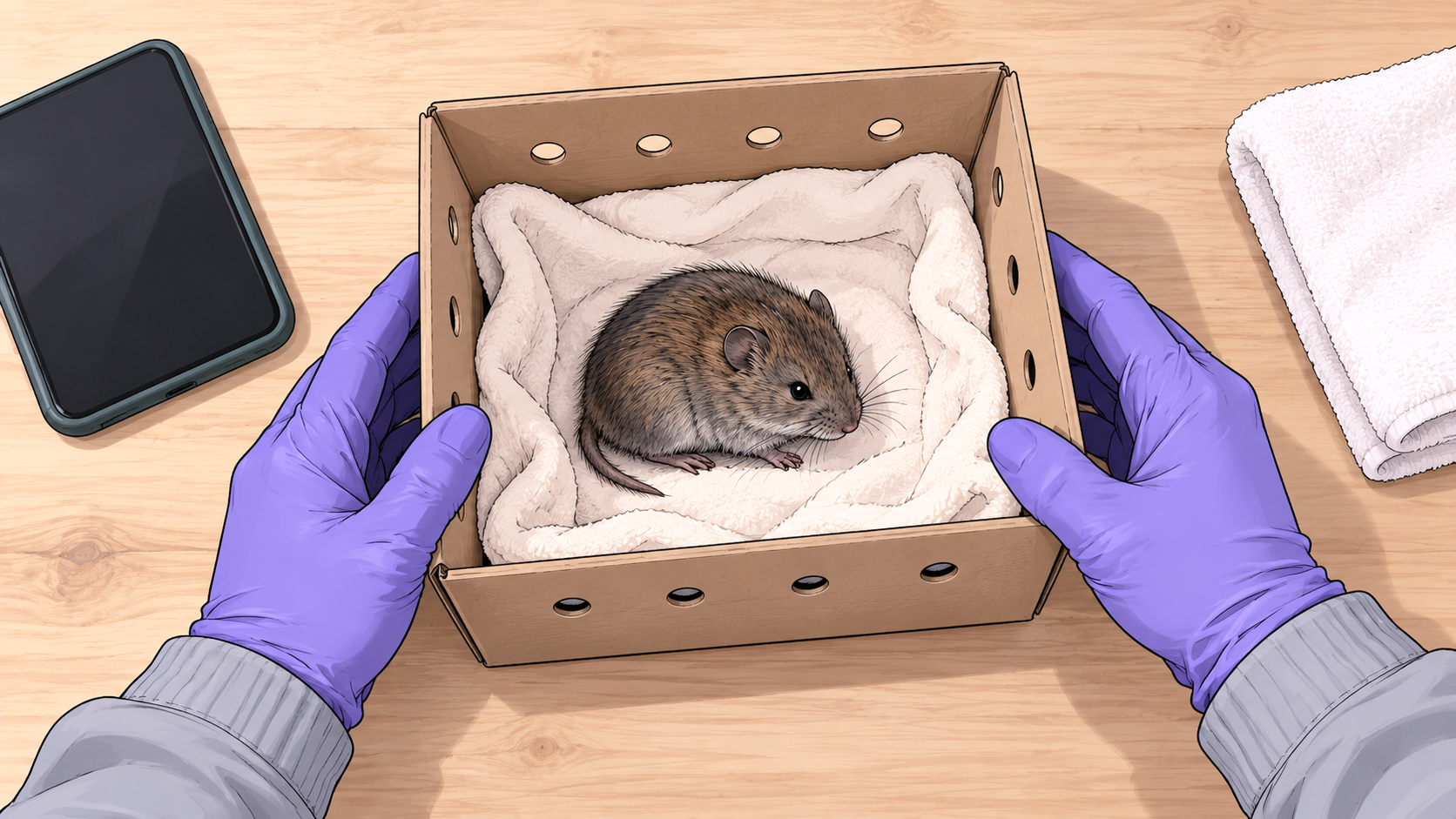
If you find a baby or injured vole, first determine whether it genuinely needs help, keep pets and people away, and contact a licensed wildlife rehabilitator if it is injured, cold, weak, or apparently orphaned. A healthy young vole found outside its nest may already be independent, while an uninjured baby whose nest was disturbed may still be reunited with its mother. Avoid unnecessary handling, and never attempt to feed or treat the animal yourself.
The circumstances of discovery are often more important than the vole’s size. An alert juvenile running through the grass needs a different response from a hairless newborn exposed during gardening or an adult lying motionless after an encounter with a cat.
Decide Whether the Vole Actually Needs Rescue
A small vole is not necessarily an orphan. Young voles develop rapidly, and fully furred juveniles that are alert and actively avoiding people may already be independent. Their small size alone does not justify removing them from their habitat.
An animal that runs away normally, remains coordinated, and has no visible injury is generally best left undisturbed. Keep dogs and cats away and allow it to reach nearby cover. The appearance of baby voles at different developmental stages can help distinguish an immature nest-dependent pup from a more developed juvenile, although appearance cannot establish the animal’s health.
Certain findings warrant immediate professional advice:
- Visible bleeding, an open wound, or an apparently broken limb.
- Contact with a cat or dog, even without an obvious injury.
- Unusual weakness, collapse, or inability to move normally.
- A hairless or closed-eyed baby found exposed outside its nest.
- An animal that is cold, soaked, or unresponsive.
- Fly eggs or maggots on the body.
These are reasons for assessment by a wildlife rehabilitator, not conditions a homeowner should attempt to diagnose or treat. Small puncture wounds and internal injuries may be difficult to recognize from the animal’s appearance.
If You Accidentally Disturbed a Vole Nest
Gardening, mowing, moving stored materials, and clearing vegetation can expose a nest containing young voles. Discovering several babies without an adult nearby does not establish that the mother has abandoned them.
If the nest is intact and the babies appear unharmed, stop the work and leave the surrounding area undisturbed. Where nesting material has been displaced, returning the babies and their original nesting material as close as possible to the nest location can allow the mother to recover them. Handle them only if necessary to protect them from immediate danger, using gloves and gentle movements.
The mother may avoid returning while people, pets, or machinery remain nearby. Move away and keep the area quiet. If the nest was destroyed, contact a wildlife rehabilitator for instructions on a temporary reunion arrangement rather than improvising one.
For healthy babies whose nest was disturbed, a rehabilitator may advise allowing an overnight opportunity for maternal retrieval. Cold weather, heavy rain, injury, or other immediate dangers can change that recommendation. Do not leave vulnerable newborns exposed while waiting for an arbitrary period to pass.
If the mother does not return within the period recommended by the rehabilitator, further assistance is necessary. Repeatedly opening the nest to check the babies can create additional disturbance without helping determine whether the mother is attending them.
What to Do With an Injured Vole
An injured vole should be handled as little as possible. Contact a wildlife rehabilitator before attempting capture when feasible, particularly if the animal is mobile, behaving abnormally, or difficult to approach safely.
For an animal that clearly requires containment, use a small, sturdy, ventilated box lined with a soft cloth or paper towel. Wearing protective gloves, gently guide or scoop the vole into the container without squeezing its body, pulling its tail, or attempting to straighten an injured limb. Secure the lid and keep the box away from children and pets.
A contained animal should remain in a warm, dark, quiet environment while professional assistance is arranged. If additional warmth is needed, a heating pad on a low setting can be placed beneath only half the box, allowing the animal to move away from the heat. Avoid direct contact with hot surfaces or placing the container where it can overheat.
Do not repeatedly open the box to check whether the vole is moving. Handling, noise, and visual disturbance can increase stress in an already compromised animal. The container is a temporary transport arrangement, not an enclosure for keeping wildlife.
Never Give a Baby or Injured Vole Milk, Food, or Water Without Professional Advice
A common mistake is attempting to feed a weak baby vole immediately after finding it. Young rodents have specific nutritional and developmental needs, and inappropriate feeding can cause serious complications.
Milk, infant formula, bread, seeds, and water delivered by syringe are not suitable emergency treatments unless a qualified wildlife professional specifically instructs their use. Improper feeding can cause aspiration and digestive injury, particularly when an animal is cold, weak, or unable to swallow normally.
Placing an open water dish inside a small rescue box can also create problems. An injured animal may spill the water, become wet, or be unable to use the container safely. Temporary wildlife care should exclude food and water unless a rehabilitator directs otherwise.
An animal that has already received homemade formula or other food should be assessed by a rehabilitator. Report what was given and approximately when, rather than attempting additional feeding to correct the situation.
A Vole Caught by a Cat or Dog Needs Special Attention
An animal that has been inside a cat’s mouth requires prompt professional assessment even if it escapes without obvious bleeding. Cat teeth can cause small punctures that are difficult to see beneath fur, and those wounds may become infected.
Dogs can cause crushing injuries that are not immediately visible. A vole that appears alert after being dropped or released may still have sustained significant trauma. Predator contact is a reason for wildlife rehabilitation assessment, regardless of whether a puncture wound is obvious.
Separate the pet from the animal without reaching into the pet’s mouth or exposing yourself to a bite. If the vole can be safely contained, keep it quiet until a rehabilitator provides further instructions.
The risks associated with dogs and cats encountering voles also deserve attention when the pet has sustained an injury or may have swallowed the animal. Veterinary concerns involving the pet should be handled separately from the vole’s rehabilitation.
Protect Yourself While Helping
Wild voles can bite when frightened or restrained, including individuals that initially appear weak. Their small size does not eliminate the risk of injury during handling.
Wear suitable gloves, avoid direct contact with saliva or other bodily fluids, and wash your hands after handling the container or contaminated materials. If the vole’s identity is uncertain, do not assume it is harmless based solely on its appearance.
The possibility of vole bites makes handling by inexperienced people an avoidable risk. Likewise, disease exposure associated with wild rodents is a reason to minimize contact and avoid disturbing accumulated droppings or nesting debris.
If bitten or scratched, wash the wound thoroughly with soap and running water and seek medical advice when appropriate, particularly for a puncture wound, signs of infection, or uncertain tetanus protection.
How to Find Qualified Wildlife Help
Contact a licensed wildlife rehabilitator, wildlife hospital, or the relevant state or provincial wildlife authority. Describe the animal’s approximate size, visible injuries, behavior, location, and the circumstances in which it was found. A photograph taken without additional handling can help the professional decide what assistance is appropriate.
Wildlife rehabilitation is regulated differently across jurisdictions. For example, Ontario requires authorization to temporarily care for injured or orphaned wildlife. Requirements elsewhere may differ, and not every rehabilitation facility accepts small rodents.
For a baby vole, the rehabilitator may recommend reuniting it with its mother rather than immediately transporting it. For an injured animal, professional treatment or an assessment of its condition may be necessary. The legal protections applying to particular vole species can also affect handling, possession, and relocation.
If a rehabilitation center cannot accept the animal, ask for an appropriate referral rather than releasing an injured vole in an unfamiliar location. Moving wildlife elsewhere can expose it to new hazards and may violate local regulations.
A healthy, independent vole should generally remain in its natural habitat. An injured animal or a genuinely dependent orphan needs timely professional assistance, with temporary containment limited to keeping it secure, quiet, and protected until suitable help is available.
2 thoughts on “What to Do If You Find a Baby or Injured Vole”