At normal room temperatures, newly hatched bed bug nymphs survive without a blood meal for much less time than older nymphs and adults. In one laboratory study, first instar nymphs survived an average of about 14 to 36 days depending on the strain, while fifth instars and adults lasted considerably longer. Cooler temperatures can extend starvation survival even further.
That difference is why there isn’t one useful answer to how long bed bugs can live without feeding. Life stage, temperature, and even the particular bed bug population being studied can change the number substantially. Eggs are a separate issue because they don’t need a blood meal before hatching.
Life Stage Changes How Long Bed Bugs Survive Without Feeding
A laboratory study that measured starvation across every bed bug life stage found a striking difference between young nymphs and older bugs. First instar nymphs had mean survival times ranging from 13.8 to 36.3 days among the four strains tested.
Fifth instar nymphs and adults lasted much longer. Depending on life stage, sex, and strain, mean survival stretched from about 41 days to more than 140 days in parts of the study. That difference matters if you’re wondering whether simply leaving a room empty will make an infestation disappear. A population containing older nymphs and adults can outlast the youngest bugs by a wide margin.
The reason life stage matters also connects directly to the bed bug life cycle. Nymphs need blood meals as they develop through successive stages, while adults continue feeding throughout their lives. Starvation therefore doesn’t affect every member of a mixed population on the same timetable.
Cold Can Extend Bed Bug Starvation Survival
Temperature can push those survival times much further. A mark-release-recapture study that discusses earlier starvation research cites a historical record in which a starved adult female survived 562 to 572 days at 13°C, or about 55°F. That’s an extreme laboratory observation rather than a normal room-temperature expectation, but it shows how dramatically cooler conditions can extend survival.
Under laboratory temperatures around 26°C, or about 79°F, the figures were far shorter. The same paper cites maximum starvation periods of 38 days for first instar nymphs and 99 to 106 days for adult males and females under those warmer conditions.
Cold doesn’t make bed bugs indestructible, either. Separate experiments on bed bug survival under sustained cold exposure found that mortality depended on both temperature and exposure time. That distinction matters because leaving an infested room chilly isn’t the same thing as applying a controlled lethal cold treatment. We’ve covered that temperature question separately in whether bed bugs go dormant in cold conditions.
Resistant Bed Bugs Add an Unexpected Twist
Insecticide resistance doesn’t automatically mean a bed bug survives every kind of stress better. The starvation study comparing four different strains found that the pyrethroid-resistant strains generally survived starvation for less time than the susceptible strain.
The difference was substantial. Depending on the life stage, the resistant strains survived about one-half to one-third as long without food as the susceptible strain. The authors linked that difference to possible fitness costs associated with resistance.
That doesn’t contradict evidence discussed in how long bed bugs live overall showing advantages for resistant populations under other conditions. “Hardier” isn’t one fixed characteristic. A population can perform well under one set of conditions while being less tolerant of a different stress, and starvation is a good example of why that distinction matters.
Why Empty Apartments Don’t Match Laboratory Numbers Exactly
Laboratory survival records tell us what individual bed bugs can do under controlled conditions. Vacant apartments tell us something different.
In a field study that tracked bed bugs in apartments after residents moved out, marked adult females were detected for up to 113 days after the apartments became vacant, while males were detected for up to 134 days. We’ve discussed the movement side of that experiment separately in how fast bed bugs actually move.
Those field observations shouldn’t be treated as either minimum or maximum starvation limits. The experiment measured what researchers could detect in real apartments, while laboratory starvation studies measured survival under controlled conditions. They’re answering related but different questions.
That distinction is important because the largest laboratory number shouldn’t automatically become the expected survival time in your home. At the same time, the shorter field observations don’t prove every bed bug would be dead after that many days.
Why a Short Vacancy Won’t Reliably Starve Bed Bugs
Leaving for two weeks or even a month isn’t a dependable way to starve an established infestation. Some first instar nymphs may die during a prolonged period without feeding, but older nymphs and adults can survive considerably longer under suitable conditions.
Eggs create another complication. Bed bug eggs hatch without taking a blood meal, so removing the host doesn’t stop an already-laid egg from continuing toward hatching. Once the nymph emerges, however, it needs blood to continue developing through the life cycle.
This is why we’d treat vacancy as absence of a host, not as a bed bug treatment. The survival data varies too much with temperature, life stage, and strain to turn a certain number of empty days into a reliable elimination method.
What to Do With an Infested Room or Item Instead
Don’t use a countdown as proof that bed bugs are gone. If a room has been vacant, inspect and monitor it rather than assuming enough time has passed. Our guide to how to check for bed bugs covers where to look for live bugs and other physical evidence.
The same caution applies to infested belongings. Sealing an item can contain bed bugs and prevent them from spreading, but sealing alone doesn’t give you a short, predictable starvation deadline. Survival still depends heavily on the conditions and life stages involved.
Mattress encasements have a specific role because they trap bugs already inside and prevent bugs outside from entering the enclosed mattress or box spring. If that’s the approach you’re considering, what happens to bed bugs sealed inside a mattress cover explains why containment and starvation have to be thought about over a much longer period than a short vacancy.
Other Questions About Bed Bugs Surviving Without Food
Can bed bugs survive longer without food than fleas?
The two pests have very different life cycles and shouldn’t be judged by the same starvation timeline. Bed bugs are unusually capable of surviving extended periods between blood meals, particularly once they reach later nymphal stages or adulthood. If the insect itself is uncertain, start by comparing bed bugs and fleas before using either pest’s survival timeline.
Will turning off the heat make bed bugs starve faster?
No. Cooler temperatures can prolong bed bug survival without feeding because their metabolism slows. Simply allowing a room to become cold is therefore not a reliable way to speed up starvation. Controlled lethal cold exposure is a different process from leaving an infested room unheated.
Can a bed bug survive in an empty storage unit?
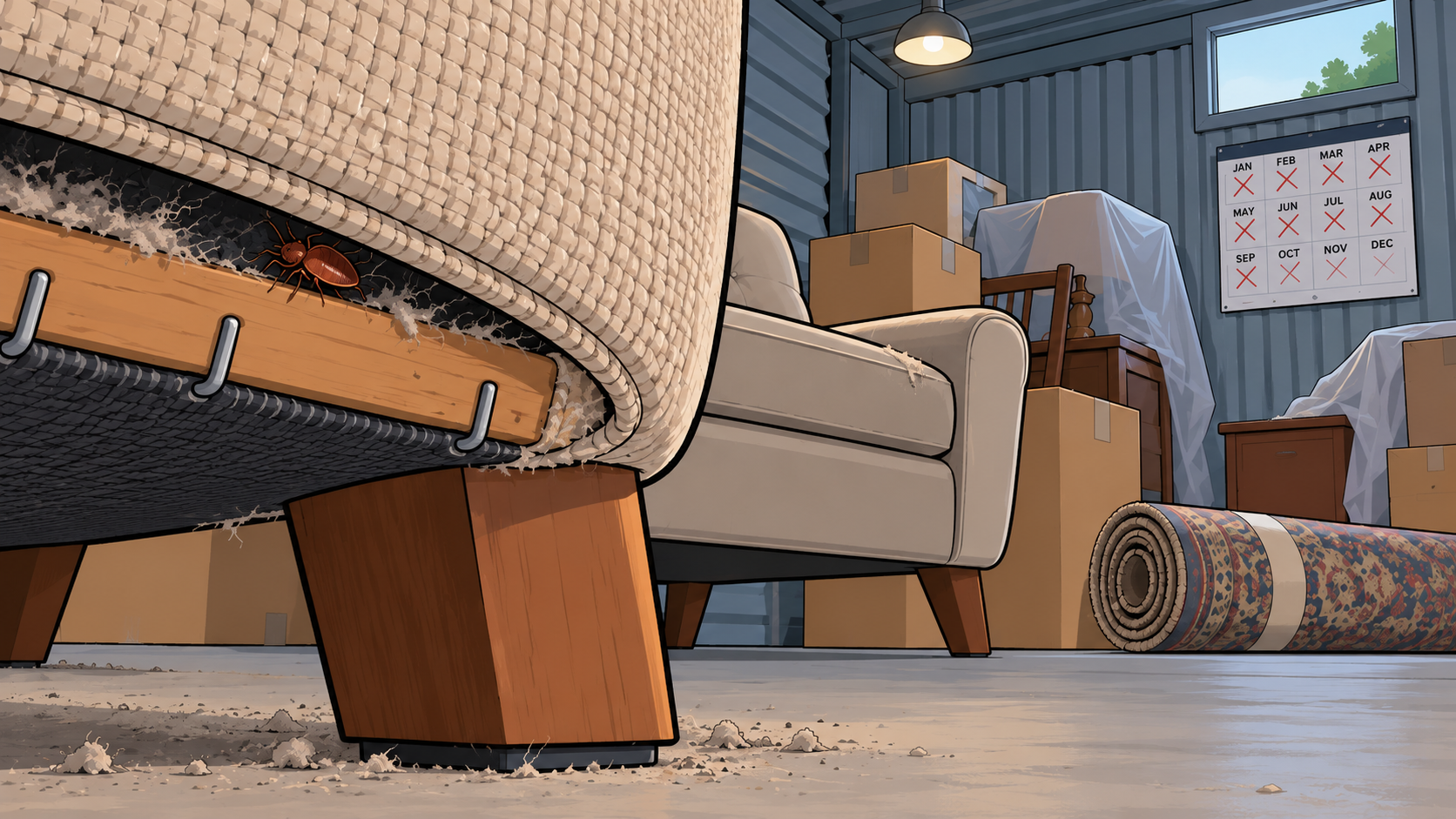
Potentially, depending on its life stage and the temperatures inside the unit. Without access to a host, it can’t feed, but older nymphs and adults can survive extended periods of starvation. A cool storage environment may prolong that survival rather than shorten it.
Does a bed bug die immediately after using up its last blood meal?
No. Bed bugs naturally spend time between blood meals, and starvation survival extends well beyond the digestion of a single meal. How long an individual survives afterward depends strongly on its life stage, temperature, and population.
7 thoughts on “How Long Can Bed Bugs Live Without Feeding?”