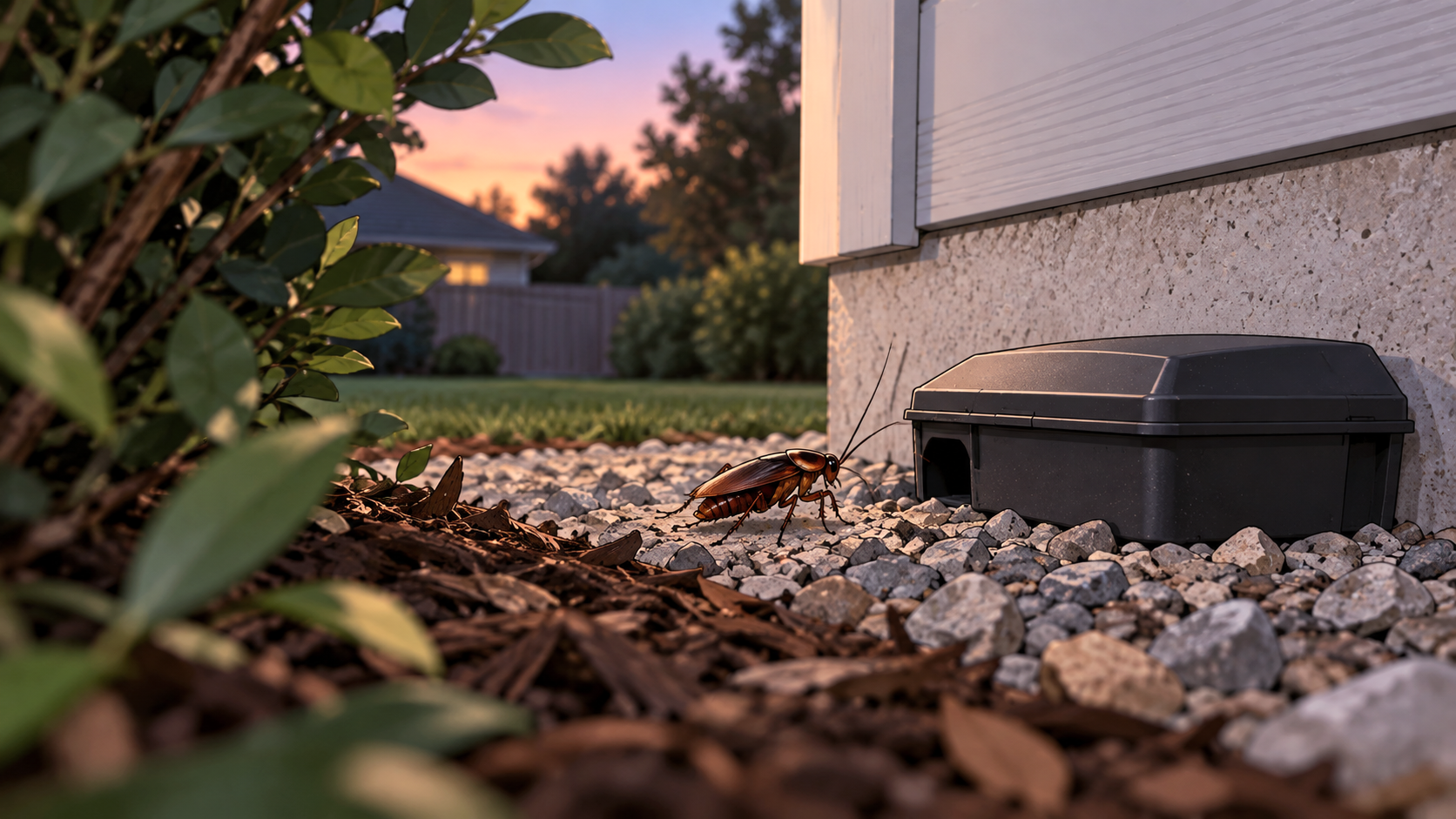
The best cockroach repellents are physical exclusion products such as door sweeps, silicone caulk, weatherstripping, and insect screens. They prevent cockroaches from entering through specific openings, while scented sprays, essential oils, and electronic repellers have weaker evidence for lasting household protection. A repellent that causes a cockroach to avoid one treated spot also does not establish that the insect has left the building.
For homeowners, the choice depends on where the cockroaches originate. A large outdoor cockroach entering beneath a door presents a different problem from German cockroaches breeding behind kitchen cabinets. The first situation is well suited to exclusion. The second requires population control because blocking exterior entrances cannot remove insects already established indoors.
The Best Cockroach Repellent Options Compared
Products sold as cockroach repellents work through different mechanisms. Some close an entry route, others discourage insects from approaching an area, and certain insecticides can cause avoidance through irritating residues. These differences affect where each product belongs in a household pest-control plan.
| Repellent option | Best application | Evidence-based assessment | Main limitation |
|---|---|---|---|
| Door sweeps | Gaps beneath exterior doors | Strong preventive choice | Cannot block other openings |
| Silicone caulk | Cracks around pipes, cabinets, and trim | Strong exclusion method | Requires identifying and sealing actual gaps |
| Weatherstripping | Door and window edges | Effective physical barrier | Worn or poorly fitted seals leave openings |
| Fine-mesh screens | Windows, doors, and vents | Reliable barrier when properly installed | Does not protect unscreened entry routes |
| Essential-oil sprays | Limited, localized deterrence | Some laboratory evidence | Household protection is not well established |
| Commercial botanical sprays | Surfaces specified on the product label | Formulation-dependent | Repellency claims do not establish infestation control |
| Ultrasonic plug-in devices | Advertised for entire rooms | Insufficient reliable evidence | Cannot substitute for exclusion or control |
The first four choices are supported by established cockroach exclusion and management guidance. Their advantage is straightforward: once an opening is properly closed, a cockroach cannot cross it through that route. Chemical and scent-based deterrents require evidence that insects actually avoid the treated material under household conditions.
Door Sweeps and Weatherstripping for Outdoor Cockroaches
A door sweep is particularly useful where American, Oriental, or other outdoor-associated cockroaches enter through a gap beneath an exterior door. A sweep with a continuous rubber or brush seal closes the space between the door and threshold. Weatherstripping addresses openings along the sides and top. Together, they provide a barrier without depositing insecticide where people or pets walk.
The installation matters more than the brand. A sweep mounted too high leaves an accessible route, while a damaged threshold can create openings even when the sweep contacts part of the floor. The EPA’s building pest-prevention guidance recommends fitted door sweeps, repaired closures, and protected ventilation openings as measures against pest entry.
For a door that opens directly onto a patio, garage, or outdoor refuse area, we would purchase a correctly sized sweep before spending money on a scented cockroach repellent. The physical barrier addresses the route rather than relying on the insect to react to an odor. It also remains useful when the door is closed, regardless of whether the nearby cockroaches are attracted to food, water, or shelter.
Garage doors require closer inspection because gaps can occur along the bottom seal and at the corners where the seal meets the frame. Replacing a damaged garage-door seal can reduce entry through these openings, although cockroaches may still enter while the door is raised.
Silicone Caulk for Cockroach Entry Points and Hiding Gaps
Caulk works best on stationary joints around plumbing penetrations, baseboards, cabinet backs, and wall openings. A narrow gap beside a kitchen sink may connect the cabinet interior to a wall cavity, allowing cockroaches to travel between sheltered spaces. Closing it interrupts that route without requiring continued application of a repellent.
Silicone caulk is our preferred option for moisture-prone, nonmoving joints, provided the product is suitable for the surface. Paintable sealants may be more appropriate for some dry interior trim. Larger holes can require backing material or a proper building repair rather than a thick application of caulk.
The EPA’s school pest-management manual identifies sealing cracks around sinks, toilets, shelves, and pipes as part of cockroach prevention. The practical priority is to close observed routes and sheltered gaps, not to coat every cabinet joint indiscriminately. Do not obstruct plumbing access, required ventilation, or electrical equipment openings. Sealing should also be coordinated with treatment when an active infestation occupies the cavity.
Caulk is especially useful after visible activity has been reduced. Otherwise, the household may end up with cockroaches still occupying accessible spaces inside the home, even though some routes between those spaces have been blocked.
Window Screens and Vent Covers
A screened window can remain open for ventilation while preventing larger cockroaches from entering through the opening. Screens also protect frequently opened areas where a permanent seal would be impractical. Their effectiveness depends on an intact mesh, secure frame, and close fit around the edges.
Ventilation openings require greater care. A suitable insect screen can block an exposed entry route, but installing fine mesh over an appliance exhaust, combustion-air opening, or mechanical ventilation system without checking its requirements can restrict airflow. Use only screening approved for the particular opening.
The EPA’s indoor pest-prevention recommendations include installing screens and closing building openings that admit pests. Screens are useful for outdoor invaders, but they have little immediate effect on German cockroaches already reproducing inside appliances or furniture.
Are Essential-Oil Cockroach Repellents Worth Buying?
Essential oils are more credible as localized deterrents than as whole-house cockroach protection. Laboratory research has demonstrated avoidance responses to particular plant oils, including oregano, mint, eucalyptus, and kaffir lime. However, the response varies across cockroach species, oil concentrations, and exposure conditions.
A study involving brown-banded cockroaches (Supella longipalpa) found that oregano oil produced strong repellency under controlled conditions. Separate experiments involving American, German, and harlequin cockroaches found substantial repellent activity from kaffir lime essential oil. These results establish biological activity, but neither experiment demonstrates that an ordinary essential-oil diffuser or homemade spray prevents a household infestation.
The broader evidence concerning cockroach-repellent odors includes several promising plant compounds alongside popular household remedies with little practical support. Peppermint oil’s effectiveness against cockroaches is particularly sensitive to how the oil is formulated and delivered. A few drops on cotton balls are not equivalent to a controlled experimental treatment.
We would not purchase loose essential oils specifically for cockroach prevention. Their volatile compounds disperse, maintaining an effective concentration is difficult, and household exposures introduce avoidable risks. Concentrated oils can irritate skin and eyes, and some create toxicity concerns for pets. These limitations make physical barriers more useful for routine prevention.
Commercial Botanical Sprays
A commercial botanical repellent is preferable to an improvised essential-oil mixture when a suitable product has clear, cockroach-specific directions. Its label identifies the ingredients, intended application surfaces, and precautions, allowing the buyer to assess what the product actually promises.
Some botanical pest-control products qualify for exemptions under the EPA’s minimum-risk pesticide provisions. Qualifying for an exemption does not establish that a product effectively repels cockroaches. Registration and marketing requirements also vary by jurisdiction, so an exemption from federal registration does not mean unrestricted sale or use everywhere.
The shopping test is therefore product-specific. Look for a cockroach-repellency claim, defined application instructions, and supporting efficacy data for the formulation being sold. Products marketed primarily as contact killers belong in a different category from true repellents, even when both contain plant-derived ingredients.
Why Ultrasonic Cockroach Repellers Rank Last
Plug-in ultrasonic devices promise protection without sprays, odors, or physical installation. Some advertise coverage across several rooms, creating the impression that one small electrical device can drive cockroaches out of an entire home.
Reliable evidence does not support purchasing these devices as household cockroach repellents. The Federal Trade Commission has challenged ultrasonic and electromagnetic pest-control claims, including representations that such devices repel cockroaches or replace conventional pest management. The agency’s enforcement history highlights the need for scientific substantiation rather than advertised coverage figures.
An ultrasonic device also leaves the home’s entry points unchanged. Cockroaches can continue accessing food, water, and sheltered spaces regardless of whether a device is operating. For a homeowner deciding between an ultrasonic plug-in unit and repairs to a visibly damaged door seal, the door repair has a much stronger practical justification.
When Repellents Can Make an Infestation Harder to Control
A repellent can discourage cockroaches from crossing a particular surface without reducing the population. In a kitchen, insects avoiding a treated cabinet edge may continue using another route behind appliances or inside wall cavities. Strongly repellent aerosol treatments can also disperse cockroaches into previously unaffected areas.
This becomes especially relevant when using insecticide bait. Cockroach bait and gel treatments depend on insects approaching and consuming the bait. Applying a repellent near those placements can interfere with feeding, undermining the reason for using bait in the first place.
Aerosol insecticides and cockroach foggers present additional limitations when treatments fail to reach insects concealed in narrow spaces. Exclusion materials do not create the same chemical interference, although sealing occupied hiding places should be coordinated with treatment.
For established indoor infestations, targeted cockroach-killing products and monitoring serve a different purpose from repellents. A repellent protects a defined location or discourages entry; treatment must reduce the insects already present. Homes with children or animals also need to consider the exposure risks associated with cockroach-control products before introducing chemicals or concentrated oils.
What We Would Buy for Each Cockroach Problem
Our preference is to spend money on materials that correct an identifiable vulnerability rather than purchasing an all-purpose repellent with no clear application point.
For occasional large cockroaches entering through an exterior doorway, buy a correctly fitted door sweep and replace damaged weatherstripping. Where sightings occur near plumbing penetrations or open cabinet joints, use an appropriate sealant after inspecting the route. Broken window screens call for mesh replacement or repair. These purchases provide a defined physical barrier and can be evaluated by checking whether the openings remain closed.
Repeated sightings of small cockroaches inside kitchens require a different decision. German cockroaches can reproduce entirely indoors, so even a well-sealed exterior will not resolve an established population. Sticky monitoring traps can reveal activity, while appropriate bait treatment addresses the insects themselves. Persistent infestations, particularly in connected apartments, may require coordinated professional management.
We would reserve commercial botanical repellents for limited applications where the product has suitable evidence and label directions. Ultrasonic devices would not make our shopping list. The money is better directed toward closing real entry points and addressing the conditions supporting cockroach activity.