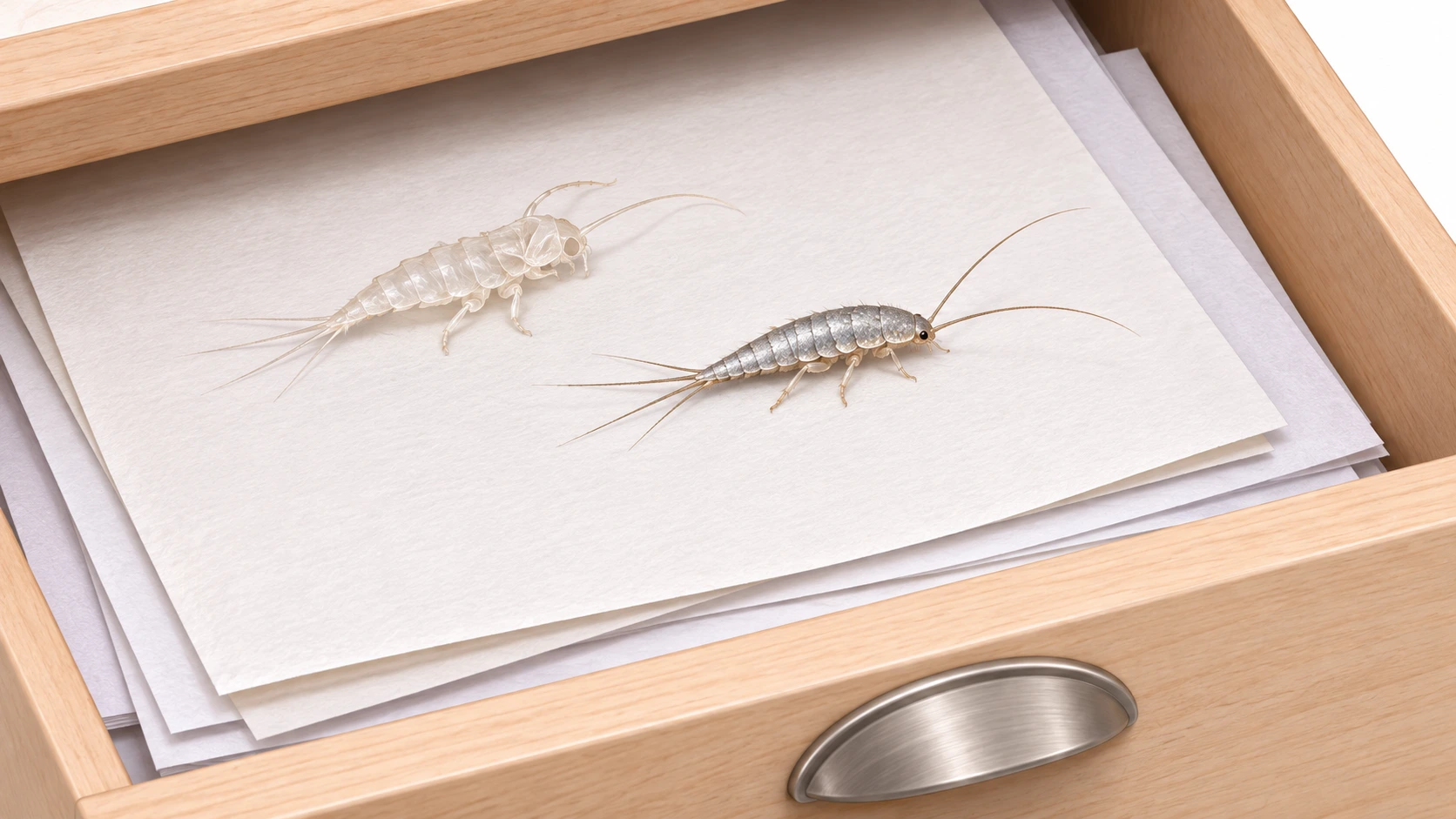
Silverfish are generally silent household insects and do not produce recognizable chirping, buzzing, or clicking calls. They also do not build protective cocoons because they develop directly from eggs into miniature versions of adults without a pupal stage. However, there is an interesting exception to the assumption that silverfish cannot produce silk: males of certain species spin extremely fine silk threads during courtship.
That silk has nothing to do with constructing a cocoon. It is associated with reproduction and helps females locate the male’s sperm package. Understanding the difference also helps homeowners avoid mistaking shed skins, loose scales, spider webs, or other insect remains for something made by silverfish.
Do Silverfish Make Noise That People Can Hear?
Silverfish are not known for producing characteristic audible sounds. Unlike crickets, cicadas, and certain other insects, they do not have a recognizable chirping or buzzing call associated with their normal behavior.
Their movements are generally quiet. Silverfish use their six legs to run across surfaces, while their flexible bodies and rear appendages help them navigate narrow spaces.
A silverfish moving across dry paper or another lightweight material could produce incidental contact sounds. Those faint noises would come from physical contact rather than a specialized sound-producing behavior.
This matters when someone hears scratching, clicking, or rustling inside a wall and suspects silverfish. Those sounds cannot establish that silverfish are present. Building materials, plumbing, rodents, and other insects can produce noises that require separate investigation.
Scientific research on insect sound production describes several mechanisms, including stridulation (rubbing body structures together), percussion, and vibrations transmitted through surfaces. The review of sound production in insects explains how different insect groups produce such signals.
Silverfish are more readily identified through their physical appearance and evidence of their presence than through sound.
Can Silverfish Produce Silk?
Silverfish can produce silk, although its documented function is very different from the protective silk structures made by some other insects.
Research has identified silk production in the gray or long-tailed silverfish (Ctenolepisma longicaudatum). Males produce extremely fine protein-based threads that serve as tactile cues during courtship.
The common silverfish (Lepisma saccharina) also uses silk during its mating behavior. The male produces a Y-shaped silk structure and deposits a spermatophore nearby. The female detects the silk and follows the reproductive sequence that allows her to collect the sperm package.
The threads are remarkably fine. Research published in Insect Biochemistry and Molecular Biology examined the silk produced by male gray silverfish and found fibers measuring approximately 0.3 to 1 micrometer in diameter.
The published research on silverfish silk structure examined its protein composition and unusual function as a tactile signal.
The University of Florida’s silverfish biology reference also describes the male’s Y-shaped silk structure and its connection to courtship.
This is a specialized reproductive behavior. It does not mean silverfish spin webs around furniture, construct silk shelters, or wrap themselves in protective coverings.
Do Silverfish Build Cocoons?
Silverfish do not construct pupal cocoons.
The reason comes from their developmental biology. They have an ametabolous life cycle, meaning their young resemble smaller versions of the adults rather than passing through a caterpillar-like larval stage and a pupal stage.
A moth, for example, develops from an egg into a larva and eventually a pupa before emerging as an adult. Some moth larvae construct silk coverings around themselves during development.
Silverfish follow a different pattern. Their young grow through successive molts, gradually developing the appearance and reproductive maturity of adults.
There is no pupal stage that requires a protective cocoon.
The University of Florida’s explanation of silverfish development describes their ametabolous development and continued molting, including after reaching adulthood.
A small amount of silk left by a courting male should therefore never be interpreted as a silverfish cocoon. The silk serves a reproductive function rather than protecting a developing insect.
What Might Look Like a Silverfish Cocoon?
A homeowner discovering unfamiliar material near a bookcase, closet, or storage box may mistake it for an insect-created cocoon.
Several different materials can cause this confusion.
| What you find | What it actually is | Possible source |
|---|---|---|
| Thin, translucent insect-shaped shells | Cast skins | Silverfish or another molting insect |
| Fine silvery dust | Detached body scales | Silverfish |
| Fine silk threads on a surface | Silk deposits | A spider or, in a different context, courting silverfish |
| Dense webbing around stored materials | Feeding or shelter structure | Spiders or other silk-producing insects |
| Small hairy brown shells | Retained larval skins | Carpet beetles |
| Small quantities of dark particles | Debris or droppings | Several possible household insects |
The shape and arrangement of the material matter more than its color.
Silverfish cast skins generally retain the outline of the insect, including its elongated body and rear appendages. They can resemble delicate empty insect shells.
Loose silverfish scales look more like fine dust. They may accumulate around damaged paper, books, and other materials where the insects have been active.
The silverfish molting and shed-skin guide explains how these cast skins differ from living insects and ordinary household debris.
Why Shed Silverfish Skins Are Sometimes Mistaken for Cocoons
Silverfish continue molting throughout their lives. Each molt involves shedding the old outer covering as the insect grows.
The resulting cast skins can accumulate in sheltered locations. Several discarded skins collected together may look like remnants of a protective insect structure.
However, a shed skin is the empty external covering left after an insect molts. It is not a cocoon enclosing an insect.
The distinction becomes clearer when the material is examined closely. A cast silverfish skin has recognizable insect anatomy, while a cocoon or pupal covering belongs to a different developmental process.
Silverfish also shed body scales, which can remain on nearby surfaces as fine, dustlike particles.
The University of California’s silverfish and firebrat reference describes their repeated molting and explains how their detached scales can provide evidence of activity around stored belongings.
Could Silverfish Silk Be Confused With Spider Webs?
Fine silverfish silk and spider silk are both threadlike materials, but their purposes and arrangements differ.
A spider produces silk for web construction, prey capture, shelter, and other species-dependent functions. Its web may form a recognizable network of strands attached to surrounding surfaces.
Silverfish silk associated with courtship occurs in a different context. The documented reproductive structures are associated with male activity and sperm transfer rather than insect capture.
A few extremely fine threads therefore cannot establish which animal produced them. Location and surrounding evidence matter.
For example, a web containing captured insects is consistent with spider activity. Small translucent insect remains beside fine dust and damaged paper provide a different set of clues.
Do not identify an unseen insect from a loose strand of silk alone.
What to Look for When You Suspect Silverfish Are Making Something
Silverfish activity is better established through physical evidence than through unexplained sounds or material that resembles silk.
Look for the insects themselves, particularly their elongated, tapered bodies, long antennae, and three rear filaments.
Other supporting signs include:
- Pale or translucent cast skins.
- Fine, silvery body scales.
- Small dark fecal particles.
- Surface feeding marks on paper or susceptible materials.
- Repeated sightings in sheltered locations.
These signs become more convincing when several occur together.
The signs of a silverfish infestation explain how sightings, cast skins, scales, and feeding evidence can be interpreted without relying on one ambiguous piece of debris.
A suspected cocoon should also be photographed before it is discarded. A clear image of the material beside a ruler can help distinguish an insect casing, discarded skin, webbing, or ordinary household debris.
What About Noises Coming From Inside Walls?
Silverfish can occupy concealed spaces around wall openings, baseboards, and utility penetrations. Their presence inside a wall cavity does not mean they are responsible for every sound coming from that area.
Scratching, tapping, gnawing, or repeated clicking should not be attributed to silverfish without physical evidence.
Rodents can produce scraping and gnawing sounds. Building materials may also creak or click as temperatures change, while plumbing and ventilation equipment can generate intermittent noises.
Termites and other insects may produce sounds under particular circumstances, but sound alone rarely identifies the responsible species.
When noises persist, investigate the location rather than assuming that a silverfish population is responsible. Look for actual insects, material damage, droppings, and other evidence that can support an identification.
The common places where silverfish hide inside homes help identify the areas where direct inspection is more useful than interpreting unexplained sounds.
The Difference Between Silverfish Silk and a Cocoon
Silverfish can produce genuine silk, but documented household species use it in reproductive behavior rather than constructing protective cocoons.
Males of the common silverfish and gray silverfish produce fine silk structures associated with courtship and the transfer of sperm. The insects themselves develop through repeated molts without a pupal stage.
Consequently, fine reproductive silk, discarded scales, and shed skins should not be grouped together as evidence of a silverfish cocoon.
Silverfish are generally identified through the insects and the physical traces they leave behind. A mysterious noise, loose thread, or small collection of debris is not enough to establish their presence.