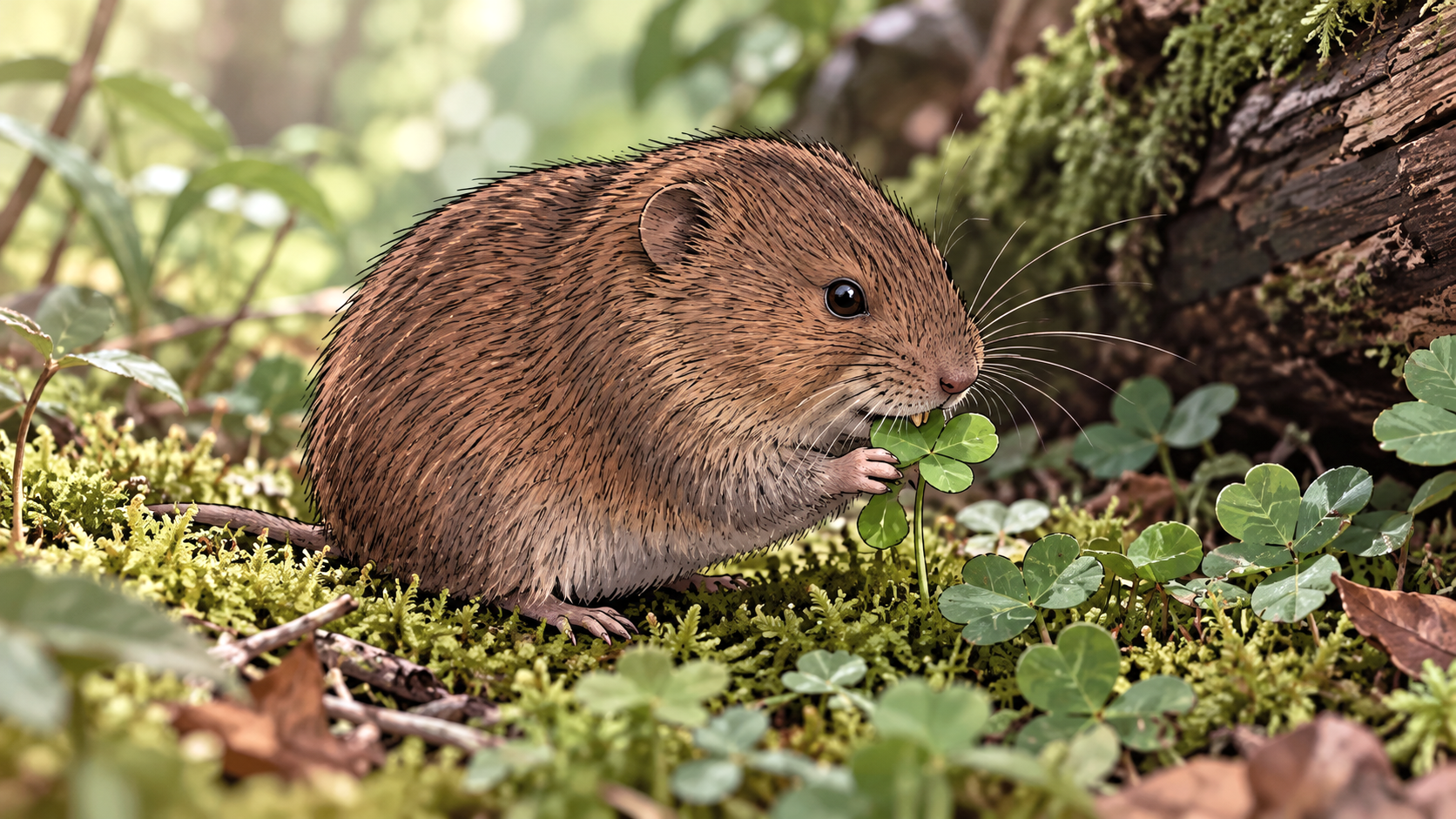
Voles are neither poisonous nor venomous. They do not naturally produce toxins that make their bodies poisonous to touch or eat, and they have no known venom-producing system that delivers toxins through a bite. A vole can still carry infectious organisms, and one that has consumed rodenticide may contain harmful chemical residues. Neither situation makes voles a naturally poisonous or venomous animal.
Confusion often comes from treating poison, venom, infection, and chemical contamination as interchangeable hazards. They are different biological processes, and a vole’s sharp teeth or ability to carry disease does not establish that it possesses toxic defenses.
Why Voles Are Neither Poisonous Nor Venomous
Poisonous animals contain or produce toxic substances that can harm another organism through exposure such as ingestion or contact. Venomous animals actively deliver toxins through specialized structures or mechanisms, commonly during biting or stinging. The difference between poison and venom therefore depends largely on how the toxic substance reaches another organism.
Voles have no recognized natural poison defense. Their skin and fur are not known to contain protective toxins comparable to those found in poisonous amphibians, and their tissues are not inherently toxic simply because they belong to the vole group.
They also lack an established venom-delivery mechanism. Their front teeth are adapted for gnawing, while their back teeth grind food. The incisors and molars characteristic of voles serve ordinary feeding functions rather than delivering venom.
The distinction is important because an animal does not need to be poisonous or venomous to present other hazards. Bacteria, viruses, parasites, and environmental chemicals can create exposure risks without being part of the animal’s natural defensive biology.
Can a Vole Inject Venom When It Bites?
A vole bite cannot inject venom because voles have no established venom-producing apparatus. The animal may puncture skin with its incisors, but the resulting wound is a mechanical injury rather than an envenomation.
Venomous mammals do exist. Some shrews produce biologically active toxins in their saliva, and the venom of the northern short-tailed shrew has been isolated and studied. These toxins help certain shrews subdue prey, including small rodents.
Voles are different animals. They belong to the rodent family Cricetidae, whereas shrews belong to the order Eulipotyphla. Although both are small mammals, their evolutionary relationships and feeding adaptations differ.
A vole’s defensive biting behavior should not be confused with the specialized venomous bites of certain shrews. A frightened vole may bite when restrained, but it has no demonstrated ability to inject a naturally produced toxin.
Nor does pain following a bite prove venom exposure. A puncture wound can hurt because teeth damage skin and underlying tissue. Later swelling or inflammation may reflect ordinary wound healing or infection rather than an injected toxin.
Can Vole Saliva Be Toxic?
Vole saliva is not known to contain a specialized venom, but saliva from a wild rodent should not be treated as sterile.
Like other mammals, voles have microorganisms associated with their mouths and surrounding environment. Some wild rodents can carry pathogens that spread through contact with saliva, urine, droppings, or contaminated materials. Infectious organisms transmitted through rodent contact are a separate concern from naturally produced toxins.
The difference is biological. Venom contains substances that directly produce toxic effects through a specialized delivery mechanism. An infectious microorganism causes disease by entering a susceptible host and establishing an infection.
Consequently, an infected wound does not demonstrate that the animal was venomous. The same principle applies to ordinary scratches, contaminated punctures, and other animal bites.
The diseases associated with voles depend on the pathogen, host species, geographic location, and exposure route. Their presence cannot be inferred merely from the appearance of the animal or its saliva.
Why a Poisoned Vole Is Different From a Poisonous Vole
A vole that has consumed rodenticide may contain chemical residues, but those residues originate from an external pesticide rather than a natural substance produced by the animal.
This difference affects how the word poisonous should be understood. A naturally poisonous animal possesses a biological source of toxicity. A rodent contaminated with poison has been exposed to an external chemical.
Rodenticides may affect mammals through several mechanisms, and their toxic effects depend on the active ingredient. Some chemicals can remain in an exposed rodent’s tissues long enough to create risks for predators or scavengers.
The possibility of secondary poisoning after consuming contaminated prey is therefore real, but it does not mean ordinary voles naturally contain poison.
The risks of rodenticides around dogs and cats concern pesticide exposure, not the animal’s inherent toxicity. A dog or cat that eats a vole may encounter different risks depending on whether the prey was exposed to a toxic substance.
An apparently healthy vole cannot be assumed free of chemical residues. Similarly, an animal found dead outdoors cannot be identified as poisoned merely because its death is unexplained.
Where pesticide exposure is suspected, possible rodenticide poisoning requires prompt veterinary advice for an affected pet. The response when a dog or cat eats a vole should take the circumstances of ingestion into account rather than assuming every swallowed vole presents the same danger.
Does Carrying Hantavirus Make a Vole Poisonous?
No. Hantaviruses are infectious viruses, not poisons produced by their rodent hosts.
Certain vole species naturally carry particular hantaviruses, while others are associated with different viruses or have no established role in transmitting human disease. The risk of hantavirus infection following rodent exposure depends on the virus, its reservoir species, and how exposure occurs.
The hantaviruses associated with voles also differ in their recognized effects on human health. The presence of a virus in one vole species does not establish that every vole is infected or that every vole-associated virus causes the same illness.
A vole carrying an infectious agent remains neither poisonous nor venomous in the biological sense. The health concern comes from possible transmission of the infectious organism, not from touching a naturally toxic coat or receiving an injection of venom.
Are Voles Poisonous to Dogs, Cats, or Wildlife That Eat Them?
Voles are natural prey for numerous predators, including owls, hawks, foxes, snakes, and small carnivorous mammals. Their role as prey is incompatible with the idea that they possess a universal toxic defense comparable to that of genuinely poisonous animals.
However, being natural prey does not establish that every vole is safe for every predator to consume. Infectious organisms, parasites, and externally acquired toxicants can create hazards unrelated to natural poison production.
The health implications of contact between voles and household pets differ from the risks involved when a pet consumes contaminated prey. An ordinary encounter, a bite, and ingestion should not automatically be treated as equivalent exposures.
Rodenticide contamination is especially important because poisoned rodents may expose predators and scavengers to pesticide residues. The likelihood and severity of poisoning vary by substance and exposure circumstances.
For wild predators, consuming voles is part of normal food-web activity. It does not require the prey to be toxic, and the ecological relationship should not be confused with the unintended effects of pesticides introduced into the environment.
Can You Tell Whether a Vole Is Dangerous by Looking at It?
Appearance cannot establish whether a vole carries a pathogen or has encountered a toxic chemical. Its coat, teeth, body condition, and behavior do not provide a dependable test for either possibility.
A healthy-looking animal may carry an infectious organism without obvious symptoms. Likewise, a sick or unusually sluggish vole may be injured, stressed, or affected by circumstances unrelated to poisoning.
The health risks associated with wild rodent exposure are best assessed through the type of contact and the surrounding circumstances, not through assumptions about an animal’s visible condition.
Avoid handling wild voles unnecessarily, and keep pets away from injured or dead individuals. These precautions are reasonable without labeling voles poisonous or venomous.