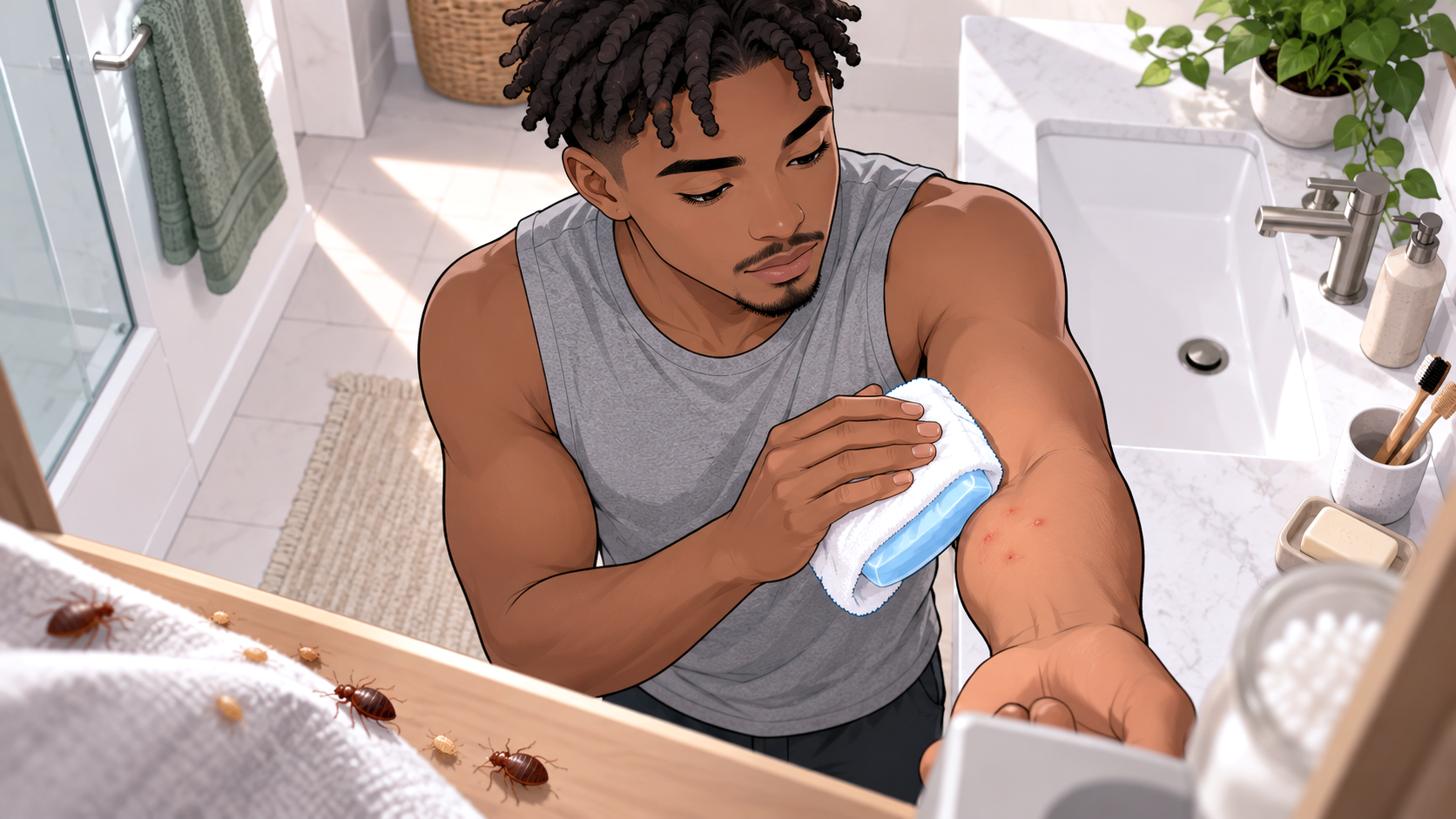
Scratching a bed bug bite can break the skin, increase inflammation, cause bleeding or scabbing, delay healing and create an opening for bacterial infection. Light scratching may cause nothing beyond temporary irritation, but repeated or forceful scratching can turn a small bite reaction into a larger skin injury. The bed bug itself does not make the wound deeper after feeding. The additional damage comes from fingernails repeatedly disrupting skin that is already inflamed and itchy.
Scratching Can Feel Good Briefly While Making the Skin More Irritated
The urge to scratch is a normal response to itch. Scratching stimulates sensory pathways associated with pain, which can temporarily suppress the sensation of itching. That short-lived relief helps explain why an itchy bite can be difficult to leave alone, particularly during sleep when scratching may happen without much awareness.
Repeated scratching has the opposite effect on irritated skin over time. Mechanical damage to epidermal cells can promote additional inflammatory signaling and contribute to an itch-scratch cycle in which scratching helps sustain irritation. The area may then itch again, prompting another round of scratching.
Bed bug reactions vary enough that this cycle affects some people much more than others. Someone whose bed bug bites barely itch may leave the skin largely undisturbed, while intense itching can result in repeated trauma to the same lesion.
Fingernails Can Break the Skin Barrier
The outer skin provides a physical barrier between underlying tissue and the external environment. Repeatedly dragging a fingernail across a bite can remove superficial skin cells and eventually create an excoriation, essentially a scratch wound layered over the original bite.
Once the surface breaks, a bite may bleed slightly and later develop a scab. The surrounding area can also become more swollen or tender from mechanical irritation. Scratching is known to disrupt the epidermal barrier and facilitate infection, so the condition of a heavily scratched lesion no longer reflects only the body’s initial response to bed bug saliva.
A scab therefore does not mean the bed bug caused a deep puncture. Bed bugs pierce the skin with specialized mouthparts to obtain blood and then leave. They do not burrow beneath the skin, and the more obvious wound that appears afterward may have been created largely by scratching.
Broken Skin Makes Secondary Infection Possible
Human skin naturally encounters microorganisms, and fingernails can introduce additional contamination into damaged tissue. When scratching opens a bite, bacteria gain easier access past the protective outer barrier. Documented secondary infections associated with scratched bed bug lesions include cellulitis, impetigo, ecthyma, folliculitis and lymphangitis, although the frequency of these complications has not been well quantified.
Most scratched bites do not automatically become infected. Infection becomes more concerning when pain is increasing rather than improving, redness is spreading, the area feels unusually warm, pus or drainage appears, or other signs of illness develop. Those changes warrant medical assessment instead of further scratching or experimentation with household remedies.
Good hygiene and avoiding additional scratching reduce opportunities for infection. If a secondary bacterial infection does develop, antibiotics may sometimes be required. Antibiotics are not routinely needed for an uncomplicated bed bug bite.
Scratching Can Extend the Time a Mark Remains Visible
An ordinary bite reaction and a scratch wound heal through different processes. If the original inflammation is beginning to settle just as repeated scratching removes the surface of the skin, the body now has physical tissue damage to repair as well. Continued scratching can reopen the same spot before that repair is complete.
This can make an individual lesion persist beyond the usual bed bug bite healing period. A repeatedly disturbed scab can also restart minor bleeding and prolong visible crusting. What looks like an unusually persistent bite may consequently be a combination of the original inflammatory response and later self-inflicted skin damage.
A lesion that keeps worsening deserves more attention than one that is simply fading slowly. Bed bug bites can produce stronger inflammatory reactions on their own, including blisters and unusually slow-healing lesions, so scratching is not the only explanation for prolonged symptoms.
Dark or Purple Marks Can Remain After Repeated Scratching
Inflammation and skin injury can alter pigment after the active lesion has settled. Post-inflammatory hyperpigmentation may leave a darker area that persists after itching, swelling and surface damage have resolved. Scratching can increase inflammation and therefore contribute to a more noticeable residual mark.
Color changes can be especially important when assessing bed bug bites on dark or Black skin, where redness may be less conspicuous and later hyperpigmentation may stand out more clearly. A flat dark mark left after healing is not evidence that a bed bug remains inside the skin.
Repeated trauma can occasionally produce more lasting changes. Deep excoriation, substantial inflammation or infection increases the possibility of scarring, whereas an uncomplicated superficial bite generally heals without a permanent scar. Purple or bruise-like changes around bed bug bites also need to be distinguished from the simple redness caused by fresh scratching.
Scratching a Blister Creates an Additional Risk
A fluid-filled blister provides a natural covering over the injured tissue beneath it. Scratching hard enough to tear the blister removes some of that protection and leaves a larger raw surface than scratching a small intact papule. Picking away the loose skin afterward can enlarge the wound further.
A blistering reaction can already represent a more substantial inflammatory response before any scratching occurs. Deliberately popping or peeling it is therefore unnecessary. Keeping the area clean and protecting it from further friction is preferable, while large, painful, worsening or unusual blisters merit medical evaluation.
The severity of a blister also cannot be used to estimate how many bed bugs are present. Individual immune responses vary widely, just as some people develop allergic reactions to bed bug bites while others show little visible response after exposure.
Reducing the Itch Can Help Protect the Skin
Preventing repeated scratching is easier when the itch itself is controlled. Keeping fingernails short reduces the amount of damage an unconscious scratch can cause. A cool compress can also provide temporary relief without mechanically tearing the skin.
Most bed bug bites require only minimal symptomatic care and good hygiene. For more extensive or severe itchy reactions, topical corticosteroids, sometimes combined with an oral antihistamine, may be useful under appropriate medical guidance. Available treatments for bed bug bite reactions have not been compared extensively in clinical trials, so care is generally directed at controlling symptoms and preventing secondary infection.
Managing the bite does not prevent another bed bug from feeding. If new lesions continue appearing, the source of exposure also needs attention. Measures that reduce bed bug access to a sleeping person at night can limit exposure while the infestation itself is being addressed.
Questions About Scratching Bed Bug Bites
What if you scratch a bed bug bite until it bleeds?
Wash the area gently and avoid reopening it. Bleeding indicates that scratching has broken the skin rather than simply irritated its surface. Persistent bleeding, a deep wound or subsequent signs of infection warrant medical attention.
Why does a bed bug bite itch more after scratching it?
Scratching can damage epidermal cells and intensify local inflammatory signaling. Although the immediate sensation may briefly overpower the itch, repeated scratching can contribute to renewed irritation afterward.
Can scratching spread bed bug bites to another part of your body?
No. Bed bug bite reactions do not spread across the skin because they are scratched. New marks elsewhere can reflect separate bites, delayed reactions or another skin condition rather than transfer of the original bite.
Can scratching make bed bug bites swell more?
Yes. Mechanical irritation can temporarily increase redness and swelling around an already inflamed lesion. Pronounced or expanding swelling can also reflect a stronger reaction to bed bug bites and should not automatically be attributed to scratching.