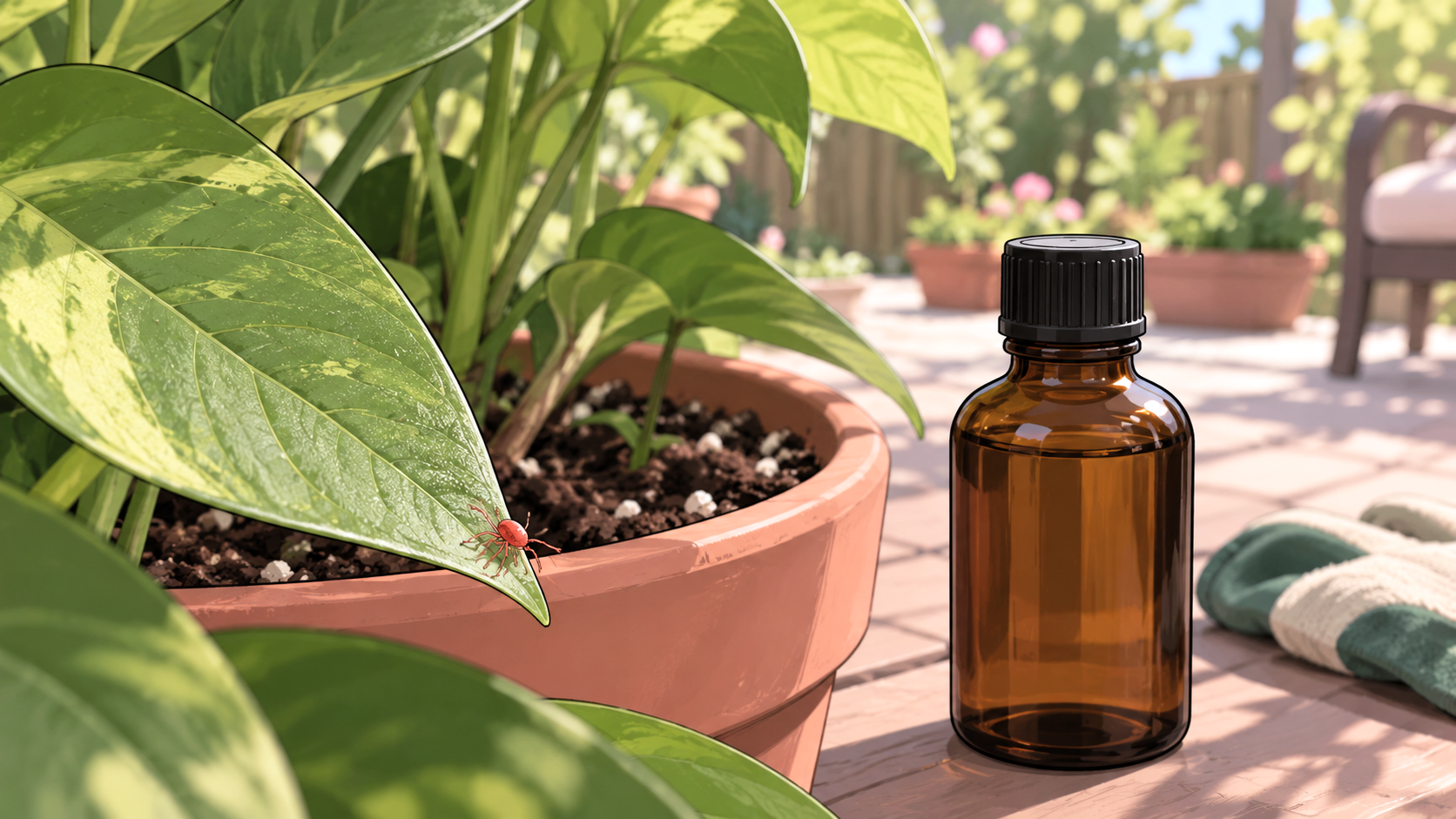
Neem oil can kill mites, but there is not enough clover-mite-specific evidence to treat any bottle of neem oil as a proven solution for a clover mite infestation. Registered neem-derived pesticides are used against mites and other arthropods, yet their effectiveness depends on the active ingredient, product label, spray coverage, pest stage, and application site. A neem product labeled only for other pests should not be assumed to control clover mites. The label deserves close attention because “neem oil” can describe chemically different pesticide products. Azadirachtin and clarified hydrophobic extract of neem oil are both neem-derived active ingredients, but they do not work identically.
Neem Products Can Work in Different Ways
Azadirachtin is extracted from neem seeds and can disrupt feeding, molting, mating, and egg laying in susceptible arthropods. Clarified hydrophobic extract of neem oil is the remaining oil after most azadirachtin and related compounds have been removed. EPA recognizes both as biopesticide active ingredients, and registered products containing them can target various mites.
Clarified neem oil formulations generally depend heavily on direct spray coverage to affect exposed mites, while azadirachtin-based products can also interfere with feeding, development, and reproduction in susceptible arthropods. These differences matter because a product that disrupts pest development is not necessarily an immediate contact killer. Neither mechanism establishes dependable effectiveness against clover mites without evidence for the specific formulation and application. Clover mites can occur in large outdoor populations, so treating a handful of visible individuals does not address the broader conditions responsible for clover mites repeatedly returning.
The Label Matters More Than the Word “Neem”
Do not buy a neem product solely because another neem formulation controls mites. EPA lists registered products containing clarified hydrophobic neem oil at different concentrations, and permitted pests, plants, rates, and application methods can differ between labels. Cold-pressed neem oil, azadirachtin products, and clarified neem oil formulations should not be treated as interchangeable.
Check the product’s current labeling for authorized treatment sites, application methods, and pest claims. A product explicitly labeled for clover mites offers a clearer basis for expecting control. In the United States, certain uses against pests not named on the label may be permitted under FIFRA Section 2(ee), provided the treatment site is authorized and no other applicable restriction prohibits the use. That legal exception does not establish that the product will effectively control clover mites. A formulation suitable for ornamental plants may not be authorized for lawns, building perimeters, or indoor floors. The same considerations apply when comparing neem with a conventional insecticide for clover mites.
The registrations discussed here concern United States pesticide products. Neem formulations sold or used in Canada and other countries must meet the applicable national and local requirements, and their permitted treatment sites may differ. Neem-derived pesticides also require environmental precautions: prevent contamination of water and follow the exact product’s restrictions concerning pollinators, weather, application frequency, and sensitive plants. An EPA registration does not authorize use of the same formulation in another country.
Neem Makes More Sense on Plants Than on Walls or Floors
Neem-derived pesticides are primarily useful where a labeled product can adequately reach the pest on permitted plant material. That can make them relevant when correctly identified mites are feeding on ornamentals or other authorized plants. It is less convincing to spray neem across siding, concrete, windows, or indoor floors simply because mites happen to be crawling there.
Location can reveal whether a plant treatment is even addressing the source. Clover mites normally feed on grasses and numerous other plants, while individuals seen on concrete may merely be crossing the surface. Indoor migrants likewise do not require plant oil sprayed throughout a room. Vacuuming clover mites already inside avoids unnecessary residues and removes them immediately.
Neem Oil Can Injure Plants
Plant-derived does not mean plant-safe under every condition. Neem and other horticultural oils can cause phytotoxicity when applied at excessive concentrations, to sensitive plants, or during unfavorable weather. Heat can increase that risk, and oil sprays require careful use when temperatures are high.
Follow the plant restrictions and temperature directions on the product you use rather than relying on a homemade concentration. Test sensitive ornamentals if the label recommends it, avoid treating plants excluded by the label, and do not assume adding extra oil improves control. If mites are damaging indoor plants, treatment should remain specific to clover mites on houseplants rather than becoming a general spray for every nearby plant.
Neem Is Not Automatically the Best Choice for a Large Outdoor Population
A large clover mite migration around a building presents a different challenge from a small group on a plant. The population may occupy turf, vegetation, protected foundation areas, and other sites that cannot be thoroughly covered with a contact-oriented neem spray. Habitat changes and exclusion may provide more lasting value, particularly where favorable conditions around the foundation attract clover mites.
For someone specifically trying to avoid synthetic pesticides, neem can be considered alongside the broader options for natural clover mite control, but it should not displace measures with clearer preventive value. A persistent heavy infestation may require a different labeled treatment or professional assessment rather than increasingly frequent neem applications.
Questions About Neem Oil and Clover Mites
Does pure neem oil work better than a ready-to-use neem pesticide?
Not necessarily. Concentration alone does not determine effectiveness, and an undiluted product may require preparation before use. A registered ready-to-use formulation already provides directions for its permitted sites and pests. EPA also maintains registrations for 100% neem oil pesticide concentrates, which still must be used according to their individual labels.
Can neem oil be sprayed when bees are visiting flowers?
Do not assume so. EPA’s neem guidance notes label precautions against application when honeybees are actively visiting flowers. Follow the pollinator restrictions on the exact product.
Will neem oil destroy clover mite eggs?
Do not assume every neem formulation controls eggs. Activity against pest stages varies by product and active ingredient. Clover mite eggs can also occupy protected sites, so even a product with ovicidal activity must reach the target to affect it.
Should neem be sprayed preventively around the house?
Routine spraying without an identified target is unnecessary. Excluding clover mites before they enter addresses migration without repeatedly applying pesticide to surfaces where no active infestation has been established.