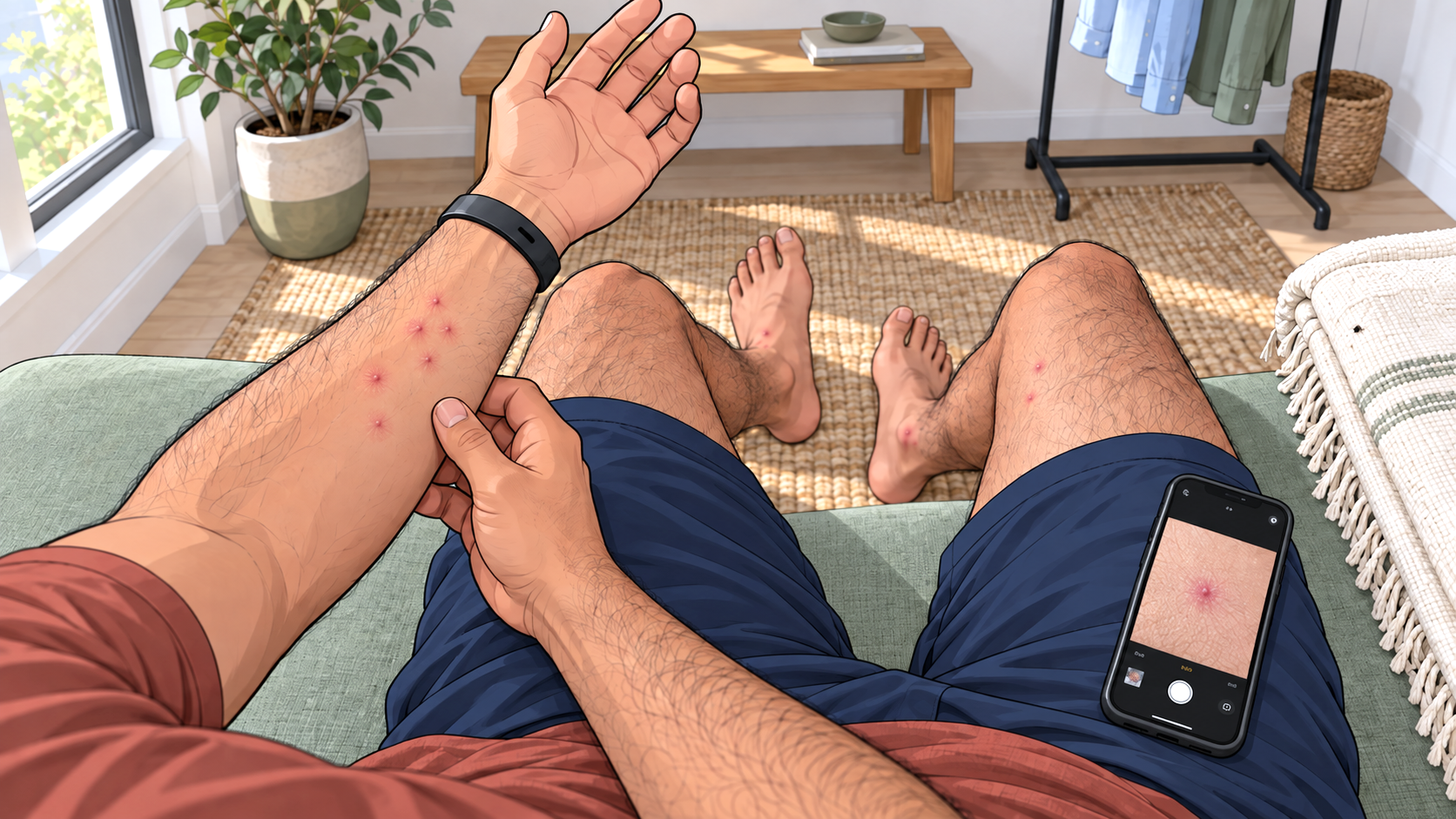
Bed bug bites can appear almost anywhere, but exposed areas of the body are affected most often. Arms and legs are particularly common sites, while the face, neck, trunk, back, and other areas can also be involved. Checking your skin can help you notice a new reaction, but it cannot confirm that you have bed bugs. Bite appearance and location vary too much for either to serve as a reliable diagnosis on their own.
Where Bed Bug Bites Most Often Appear
A 2026 systematic review of published bed bug case reports found that the arms were affected in 71.4% of 84 patients, followed by the legs in 59.5% and the trunk in 34.5%. The abdomen appeared in 20.2% of cases, the face and back in 19% each, and the neck in 15.5%.
Those percentages shouldn’t be treated as the odds that a particular person will be bitten in each location. The review was based mainly on individual case reports and small case series, and the authors rated the underlying evidence as predominantly very low quality. What the findings do support is the broader observation that the extremities, particularly exposed ones, are common sites for bed bug reactions.
Check Skin That Was Exposed While You Slept
Start by looking at areas that were uncovered during sleep. Depending on what you wore and how you slept, that might include your arms, legs, hands, neck, face, shoulders, or feet.
Bed bugs commonly feed on exposed skin, although bites aren’t restricted to those locations. Clothing can inhibit access, but reactions can still occur elsewhere on the body. The 2026 review documented bites on the trunk, abdomen, back, buttocks, scalp, eyelids, and even the ear canal.
This variability is why certain body areas are bitten more often without any location being exclusive to bed bugs.
Look at the Reaction, But Don’t Diagnose Bed Bugs From It
Bed bug reactions vary considerably. They may appear as small spots, itchy raised bumps, larger swollen areas, or other inflammatory reactions. Some people develop no visible reaction at all.
Bites may occur individually, in clusters, or in lines. The 2026 review found a linear pattern in 45.2% of the reported patients, meaning more than half of the cases didn’t show that pattern. The authors also emphasized that linear arrangements aren’t unique to bed bugs.
So-called “breakfast, lunch and dinner” lines therefore aren’t proof of an infestation. Why bed bug bites sometimes appear in lines or clusters explains the pattern, but identifying the pest still requires evidence from the environment.
Compare New Marks With Your Usual Skin
When checking your body, concentrate on new or changing marks rather than trying to match every spot to a photograph online. Look at the areas that were exposed while you slept, then check the rest of your skin if you have unexplained reactions elsewhere.
Keep in mind that bed bug reactions can look different between people and can change with previous exposure. Bed bug bites have a wide range of appearances, so size, redness, swelling, or arrangement alone can’t identify their cause.
Always Check the Sleeping Area Too
A body check is most useful as a reason to investigate your surroundings, not as a bed bug test.
If you notice suspicious marks, inspect the mattress, box spring, bed frame, headboard, and nearby furniture for live bugs, eggs, shed skins, fecal spots, and other physical evidence. Finding and correctly identifying bed bugs or their characteristic evidence is much more meaningful than the location of a skin reaction.
If you’re trying to determine whether bed bugs are actually responsible, how to tell if you have bed bugs covers the environmental evidence that matters.
Questions About Checking Your Body for Bed Bug Bites
Should you check your body every morning if you suspect bed bugs?
You can monitor new skin reactions while investigating a suspected infestation, but repeated body checks won’t confirm or exclude bed bugs. Put more effort into inspecting and monitoring the sleeping area.
Do bites in a straight line mean you have bed bugs?
No. Bed bug bites can occur in lines or clusters, but neither pattern is unique to bed bugs. The 2026 systematic review found linear lesions in fewer than half of the reported cases.
Can bed bug bites appear on covered parts of your body?
Yes. Exposed areas are commonly affected, but bites aren’t confined to them. Published cases include reactions on the trunk, abdomen, back, and buttocks as well as exposed extremities.