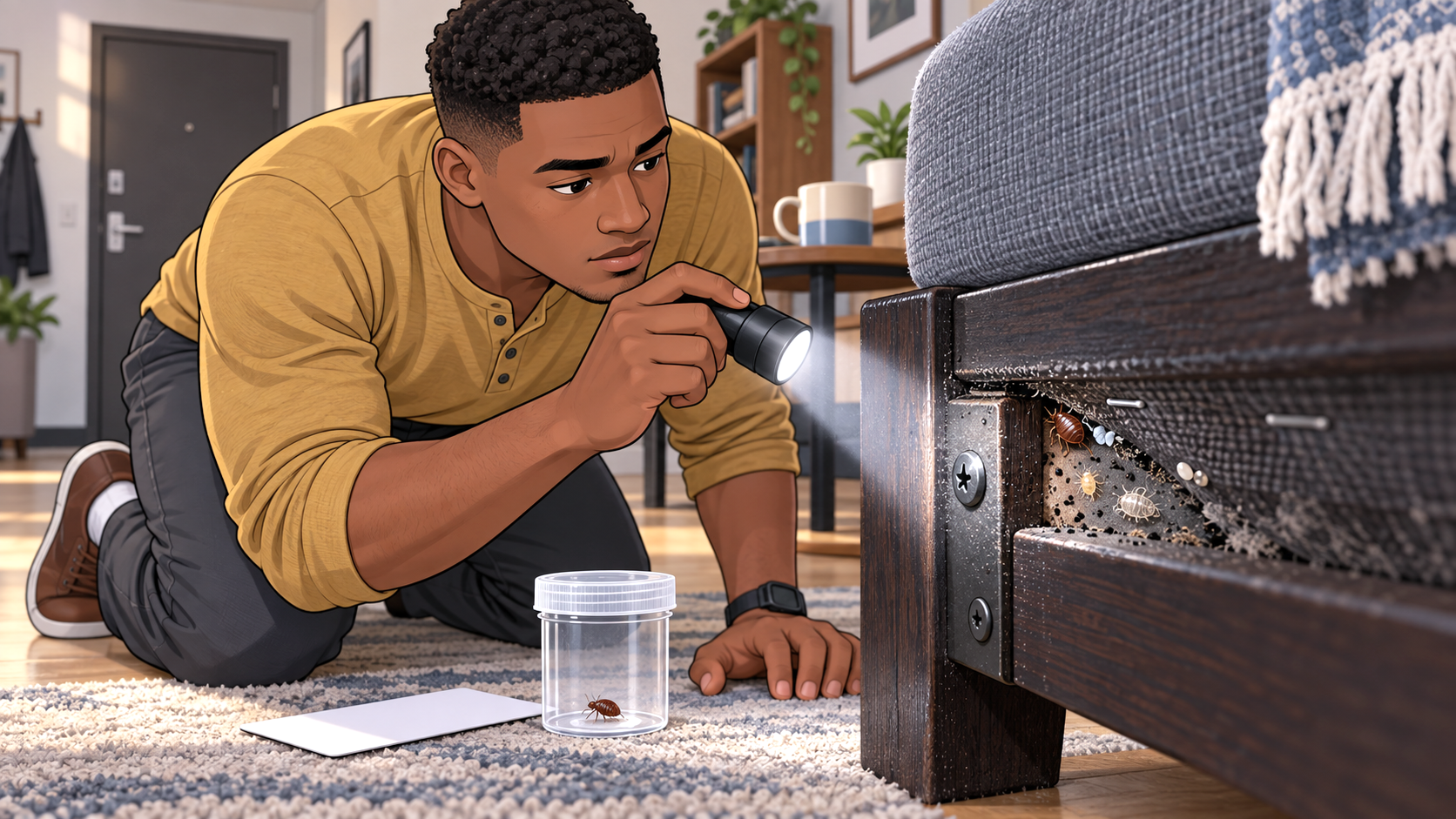
The strongest way to tell if you have bed bugs is to find physical evidence and correctly identify it. A live or dead bed bug provides much stronger confirmation than bite marks alone, which can resemble reactions caused by other insects and skin conditions.
Don’t rule bed bugs out simply because nobody is being bitten, either. Some people develop little or no visible reaction. Confirmation should come from inspecting the sleeping area for the bugs themselves and the evidence they leave behind.
Finding an Actual Bed Bug Is the Clearest Confirmation
A collected bed bug that is correctly identified gives you the most direct answer. In a Toronto shelter investigation published by the CDC, researchers classified an infestation as confirmed when an entomologist or pest control professional identified a collected specimen as a bed bug.
That was the study’s case definition rather than a universal rule that every homeowner must follow, but the underlying principle is useful: identification of the pest itself is far stronger evidence than symptoms alone.
Adult bed bugs are visible to the naked eye. Nymphs are smaller and paler but can also be seen. Because several bugs can be mistaken for bed bugs, an uncertain specimen is worth having identified by a pest professional, extension service, or other qualified expert.
Bite Marks Can’t Confirm Bed Bugs
Bites are poor diagnostic evidence because reactions vary considerably between people. Some develop itchy raised marks, while others show little or no reaction.
A field study of apartments with confirmed infestations found that only about 68% of residents reported symptoms they attributed to bed bug bites. That means the absence of bites can’t rule out an infestation.
The reverse is equally important. Itchy bumps don’t prove bed bugs because mosquitoes, fleas, other arthropods, allergic reactions, and skin conditions can produce similar marks. Even a line or cluster of bites isn’t specific enough to identify the cause.
Look for Physical Evidence Around the Bed
If you can’t find a live bug immediately, inspect for eggs, shed skins, fecal spots, and other evidence around likely harborages. These signs become much more persuasive when several appear together in places where bed bugs typically hide.
Start with mattress seams and piping, the box spring, bed-frame joints, screw holes, the headboard, and nearby upholstered furniture. A systematic room-by-room inspection reduces the chance of overlooking a small population.
Correctly identified eggs and shed skins can also provide valuable physical evidence. Newly hatched bed bug nymphs are especially small and pale, so identification becomes more difficult at the earliest life stages.
Don’t Identify a Bed Bug From Color or Size Alone
Several household insects can look surprisingly similar to bed bugs at a glance. Shape, body proportions, antennae, hairs, and other anatomical features can matter when distinguishing closely related or similar-looking species.
Bed bugs have two four-segmented antennae, but antennae alone aren’t enough to identify an uncertain specimen. Bat bugs and swallow bugs, for example, can resemble bed bugs closely enough that magnification may be needed to separate them reliably.
If you find something suspicious, capture it intact rather than crushing it beyond recognition. A small sealed container or clear tape can preserve a specimen for identification.
What to Do If You Still Can’t Confirm Bed Bugs
Repeated unexplained skin reactions or suspicious marks around a bed justify a careful inspection, but avoid repeatedly applying pesticides when you still don’t know what pest you’re dealing with.
Monitoring devices can help detect low-level activity when a visual inspection finds nothing. A professional inspection is also reasonable when the evidence remains ambiguous, particularly before committing to an expensive or extensive treatment. Knowing when to call an exterminator for bed bugs becomes especially useful when you’ve found suspicious evidence but can’t identify its source.
Questions About Confirming Bed Bugs
Can you have bed bugs without finding a live bug?
Yes. Small infestations can be difficult to locate, and you may find eggs, shed skins, fecal spotting, or other evidence before seeing a live bug. Continue inspecting or use monitoring rather than assuming the absence of a visible bug means the home is clear.
Do shed skins or eggs count as evidence?
Yes. Correctly identified bed bug eggs and shed skins are physical evidence of bed bug activity. The difficulty is making sure they have actually been identified correctly rather than assuming every pale shell or tiny white object came from a bed bug.
Can a doctor confirm bed bugs from your bites?
A doctor can evaluate and treat the skin reaction, but the appearance of bites alone generally can’t establish that bed bugs caused them. Confirming the pest requires evidence from the environment.
21 thoughts on “How to Tell If You Actually Have Bed Bugs”