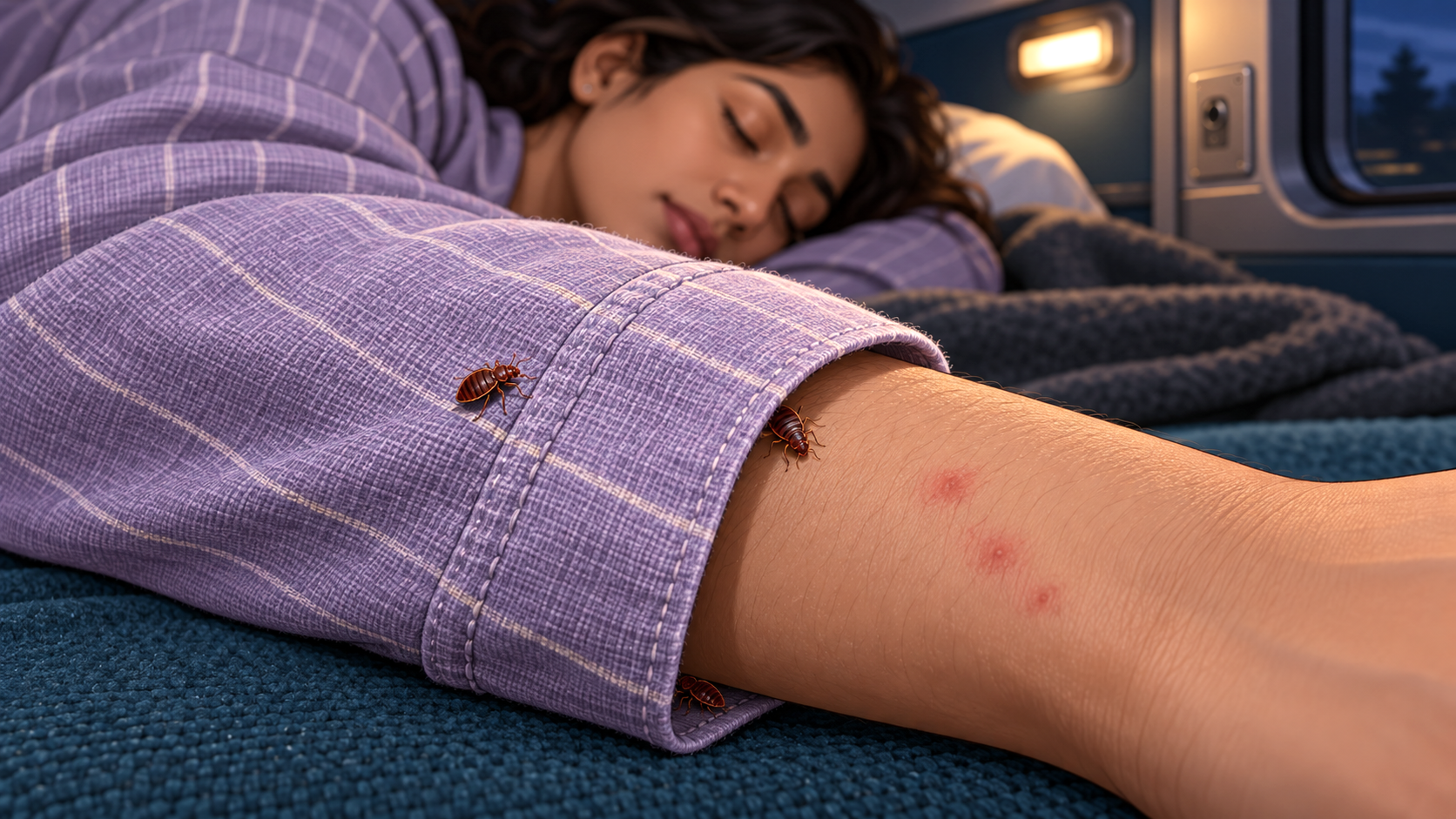
Mosquitoes can sometimes bite through thin clothing, so it is reasonable to wonder whether bed bugs can do the same thing.
Bed bugs generally feed on exposed skin rather than biting through clothing. Clothing can therefore reduce the amount of skin immediately available to them, but it is not dependable protection. Bed bugs can reach uncovered areas around sleeves, collars, waistbands, ankles, and other openings, and loose clothing can give them room to crawl underneath. So if you wake up with bites despite wearing pajamas, you should not assume the insects pierced straight through the fabric.
How a Bed Bug Actually Bites
Bed bugs feed using specialized piercing-sucking mouthparts. When the insect is not feeding, its beak-like mouthpart is held beneath the body. During feeding, specialized structures within it penetrate the host’s skin so the bed bug can take a blood meal.
Purdue University’s bed bug biology overview describes this piercing-sucking feeding system. Bed bugs do not have chewing mouthparts that cut holes through clothing before reaching the skin.
That makes exposed skin the easiest feeding surface. If clothing separates the insect from the body, the bed bug can instead move until it reaches an accessible area.
The practical distinction is more useful than treating every fabric as either completely bite-proof or completely useless. Clothing can obstruct access to skin, but ordinary clothes are not designed or tested as bed bug barriers.
How Bed Bugs Reach Skin Around Your Clothes
Clothing has openings everywhere a bed bug needs them.
A long-sleeved shirt still leaves potential access around the collar and cuffs. Pajama pants have a waistband and ankle openings. Shirts can ride upward while you sleep, sleeves can move, and loose fabric can create space between the garment and your body.
A bed bug does not need to overcome the fabric when it can move around it.
Bed bugs locate hosts partly through cues that include carbon dioxide and body heat. Once near a sleeping person, they can move across bedding or clothing until accessible skin is available.
That helps explain why bites are commonly noticed on areas such as the face, neck, arms, and hands. The CDC notes that bite marks can occur on the face, neck, arms, hands, and other body parts while a person is sleeping.
However, bite location alone cannot prove that bed bugs caused a skin reaction. Other insects and skin conditions can produce similar marks.
Can Bed Bugs Crawl Under Your Clothes?
Yes. This is one reason covering your body does not guarantee that you will avoid bites.
Loose clothing can leave enough space for a bed bug to move beneath the fabric and reach skin directly. Openings around cuffs, collars, waistbands, and pant legs provide possible routes.
This does not mean bed bugs normally live underneath clothing while it is being worn. They are not body-dwelling parasites like lice. They usually hide in the environment near places where people rest and emerge to feed.
Clothing can also become relevant in a different way because bed bugs can occasionally hide in or travel with garments when given the opportunity. Bed bugs can be associated with clothing and travel with belongings, but that is different from living permanently on a person’s body.
Does Wearing Long Pajamas Prevent Bed Bug Bites?
Long pajamas can reduce the amount of immediately exposed skin, but they should not be treated as a bed bug-control method.
A fitted long-sleeved shirt and full-length pants cover more skin than shorts and a T-shirt. That may make some areas less accessible. However, openings remain around the neck, wrists, waist, and ankles, and clothing can shift as you sleep.
Trying to eliminate every opening by adding more layers also does nothing about the infestation itself. The insects remain in the room and continue seeking a host.
This is why sleeping in increasingly restrictive clothing is not a practical substitute for confirming and treating the source of the problem.
What About Bed Sheets and Blankets?
Sheets and blankets create another physical layer, but they are not reliable protection against bed bug bites either.
Bedding shifts throughout the night and rarely forms a sealed barrier around the body. A bed bug can move across or around loose bedding until it finds accessible skin.
Purpose-built bed bug mattress encasements serve a completely different function. They are designed to enclose a mattress or box spring so bed bugs already inside cannot escape and new bugs cannot easily establish themselves within the enclosed item. They are not simply ordinary sheets made thicker.
That distinction matters because mattress encasements protect and simplify inspection of the mattress; they do not create a protective shell around the person sleeping on it.
If You Are Fully Covered but Still Waking Up With Bites
Do not use clothing as a test for whether bed bugs are present.
If unexplained skin reactions continue, inspect the sleeping area for physical evidence. Look carefully around mattress seams, the box spring, bed frame, headboard, and nearby cracks and crevices for live bed bugs, shed skins, eggs, or characteristic spotting.
The exact inspection process is covered in how to tell if you have bed bugs.
This is more reliable than diagnosing an infestation from bites alone. Some people develop obvious reactions to bed bug bites, others show little or no visible reaction, and several unrelated conditions can resemble insect bites.
If you are waking up with bites but cannot find bed bugs, the absence of obvious insects does not prove they are present or absent. Look for physical evidence before deciding what pest you are dealing with.
Washing Your Clothes Does Not Make Them Bite-Proof
Treating clothing and using clothing as protection are two different issues.
Heat can kill bed bugs when the insects themselves reach a lethal temperature for sufficient time. A clothes dryer is therefore useful for treating suitable items, and using a dryer against bed bugs can be part of an infestation-management plan.
However, once you put the treated clothes back on, they are ordinary clothing again. Washing or drying them does not give the fabric any continuing ability to repel bed bugs or prevent the insects from reaching uncovered skin.
The same distinction applies when getting bed bugs out of clothing. Treating infested garments can remove bugs from those items, but the room itself still needs to be addressed if an infestation remains.
Clothing Is Not a Substitute for Bed Bug Control
If bed bugs are confirmed, focus on the infestation rather than trying to dress in a way that makes yourself inaccessible.
Bed bug management typically combines careful inspection with methods appropriate to the infestation, such as laundering or heat-treating suitable belongings, vacuuming, mattress or box-spring encasements, interceptors, targeted pesticide applications where appropriate, or professional treatment.
The exact combination depends on the situation. Bed bugs hide in narrow spaces, reproduce over time, and can be difficult to eliminate when control reaches only the insects that are immediately visible.
Clothing can cover skin. It cannot remove bed bugs from a bed frame, headboard, furniture seam, baseboard, or another hiding place.
Other Questions About Bed Bugs and Clothing
Can bed bugs bite through socks?
Bed bugs generally seek accessible skin rather than relying on feeding through the sock itself. However, a sock has an opening at the top and can shift during sleep, so wearing socks does not guarantee that your feet or ankles will remain inaccessible.
Can bed bugs bite through jeans?
Jeans create a substantial physical layer between the insect and your skin, but they still have openings around the waist and ankles. A bed bug can also reach other exposed parts of the body. Jeans should therefore not be considered bed bug protection.
Can bed bugs bite through leggings?
Close-fitting leggings reduce direct access to the skin they cover, but they still have openings and are not designed or tested as bed bug-proof protective clothing. Do not use the absence or presence of bites beneath leggings to diagnose an infestation.
Can bed bugs bite through blankets?
A blanket can obstruct direct access to covered skin, but it is loose bedding rather than a sealed barrier. Bed bugs can move around its edges or reach skin exposed when the blanket shifts.
Does washing and drying clothes protect you from future bites?
Treating clothing can kill bed bugs that are actually on or in those garments when the treatment is sufficient. It does not provide residual protection against bed bugs elsewhere in an infested room.
What should I do if bed bug bites are itching?
For uncomplicated reactions, basic symptom relief may help while the infestation is addressed. Treating bed bug bites at home covers those measures. Seek medical care for severe or concerning reactions rather than assuming every reaction can be managed at home.
Can bed bug bites cause an allergic reaction?
Yes. Reactions vary between people, and some individuals can develop more pronounced responses. Allergic reactions to bed bug bites should be distinguished from the more common localized itching and redness.
One thought on “Can Bed Bugs Bite Through Your Clothes?”