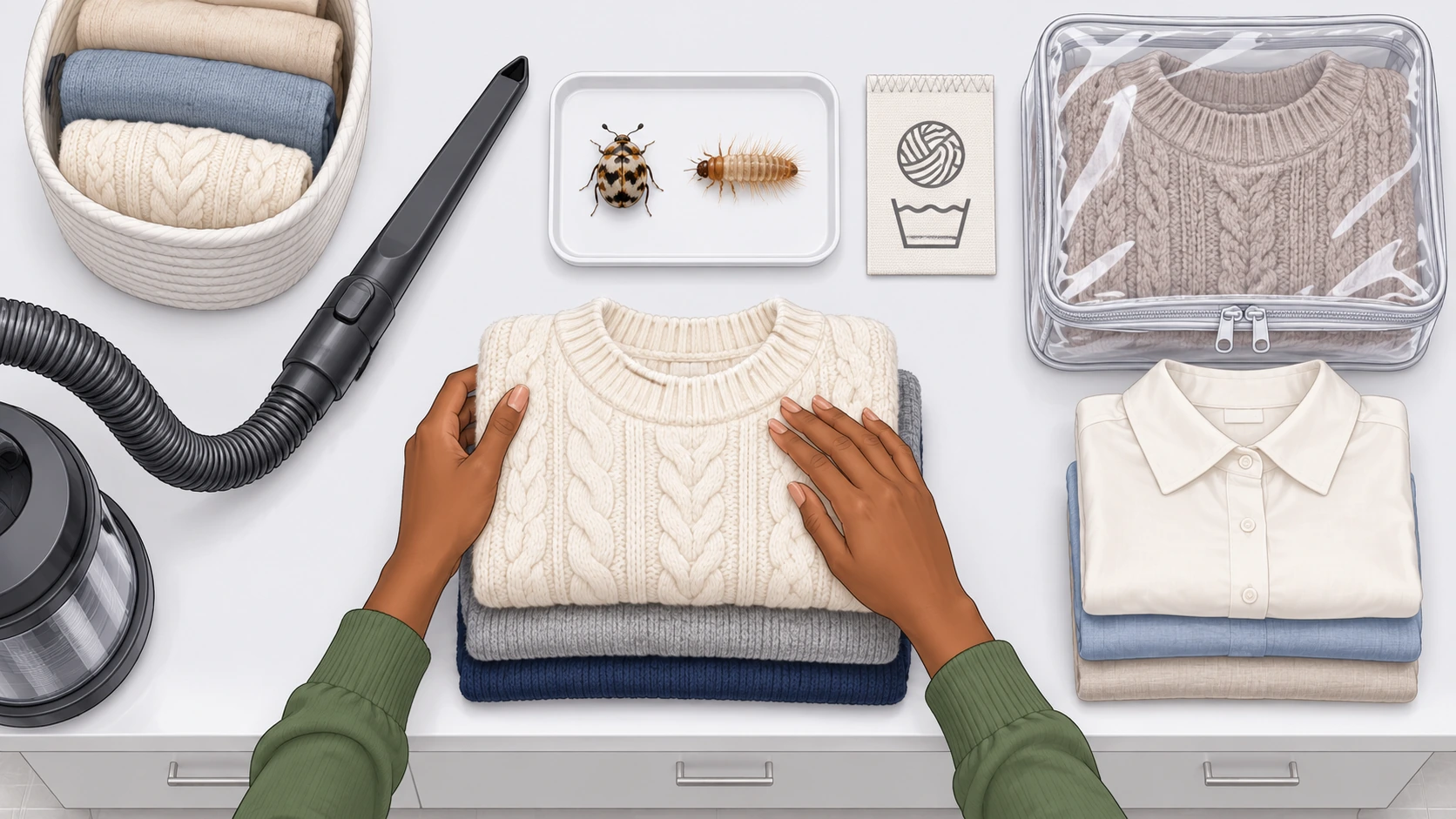
The most dependable way to get rid of carpet beetles naturally is to remove their food sources, clean the areas where larvae develop, and treat or discard infested belongings without relying on pesticides. This approach focuses on sanitation, physical removal, suitable textile treatments, and restricting access to materials that support larval development.
The word naturally can be misleading when researching carpet beetle control. Cedar oil, vinegar, essential oils, and other household substances are frequently promoted as natural solutions, but applying something with a strong smell does not establish that an infestation has been eliminated.
We recommend starting with the actual breeding conditions. Carpet beetle larvae feed on materials such as wool, fur, feathers, animal hair, dead insects, and accumulated organic debris. Removing those resources addresses the reason the insects can continue developing inside a home.
A nonchemical approach can be sufficient when the infestation is accessible and the affected materials can be cleaned or removed. Concealed larvae inside furniture, inaccessible building spaces, or heavily infested belongings can make the process considerably harder.
What Does Natural Carpet Beetle Control Actually Involve?
Natural carpet beetle control means using physical and nonchemical methods to reduce the existing population and remove the conditions supporting its development.
The main components are source removal, cleaning, appropriate treatment of susceptible belongings, and restricting further access to clean materials.
These methods address different parts of the problem. Cleaning removes accessible insects and debris. Treating affected belongings addresses larvae inside materials. Removing concealed food sources prevents other larvae from continuing to develop.
The distinction matters because a room can look clean while a breeding source remains hidden inside furniture or stored animal-derived material.
The University of California’s carpet beetle management guidance emphasizes sanitation and exclusion as the foundation of control. It also explains that insecticides may be unnecessary when food sources are removed and affected areas are kept clean. <Cite ref=”turn793340search0″/>
For most householders, we would organize the nonchemical response around four priorities:
-
Establish where carpet beetles are developing.
-
Remove or clean materials supporting the larvae.
-
Eliminate accumulated debris in surrounding areas.
-
Check whether new activity continues after cleaning.
The order matters. Cleaning a room without treating an infested garment, for example, can leave the original source untouched.
Remove the Materials That Allow Carpet Beetles to Develop
Carpet beetle larvae need suitable food to complete their development. Many common household species use animal-derived materials, although the available foods vary between species.
Wool garments, fur accessories, feather-filled furnishings, natural-fiber rugs, dead insects, and accumulated pet hair can all support larval feeding.
Some less obvious sources deserve attention too. Old spider webs, dried bird nests, rodent remains, and insect accumulations inside neglected spaces may support dermestid development.
Start with the materials where you have found actual larvae or feeding evidence. Inspect nearby belongings before assuming the infestation is restricted to one item.
Heavily infested belongings that cannot reasonably be cleaned may need to be discarded. Seal them before removal so loose larvae and debris are less likely to spread through the house.
A lightly affected item may be recoverable through an appropriate cleaning or treatment method. Valuable textiles and delicate furnishings should be assessed before attempting aggressive cleaning.
The feeding materials used by carpet beetle larvae help explain why removing ordinary floor dust alone may not address an infestation supported by wool, fur, or concealed animal material.
Check Beyond the Carpet
The name carpet beetle can make homeowners concentrate entirely on floor coverings. However, larvae may develop in many other household locations.
Stored clothing, upholstered furniture, closets, feather-filled items, and spaces beneath heavy furniture can all contain suitable material.
A concealed source may also exist in an attic or another rarely accessed part of the building. Do not assume that repeated adult sightings around a window mean the larvae are developing beside that window.
For buildings containing old bird nests, animal remains, or accumulated debris, the source may require a more careful investigation. The carpet beetle problems associated with attics, insulation, and air ducts explain why some infestations continue despite cleaning the visible living areas.
Clean the Areas Where Larvae and Organic Debris Accumulate
Regular cleaning is one of the most useful nonchemical controls because carpet beetle larvae can develop in accumulated organic debris.
Vacuuming accessible surfaces removes some larvae, adults, eggs, and the materials on which they feed. Pay particular attention to areas that are rarely disturbed, including beneath furniture, closet floors, carpet edges, and upholstery crevices.
Remove accumulated hair, lint, dead insects, and old spider webs. These materials can provide suitable food even when the surrounding carpet or furniture appears clean.
After vacuuming an infested area, empty the collection container or remove the vacuum bag promptly. Seal the collected debris before placing it in an outdoor trash receptacle. Larvae and other beetle stages may remain alive in collected material.
The nonchemical cleaning measures for carpet beetles emphasize removing potential breeding materials and safely disposing of collected insects. <Cite ref=”turn393756view1″/>
Cleaning an accessible floor will not necessarily reach material inside a wall void, deep furniture filling, or inaccessible duct. Repeated activity in those locations calls for a more focused investigation rather than simply cleaning the same surfaces more frequently.
Our separate guide to how often to vacuum for carpet beetles and whether it works addresses vacuuming frequency, priority locations, and the limitations of this method.
Treat Affected Fabrics Without Using Insecticides
Clothing, blankets, rugs, and other susceptible belongings need treatment appropriate to their construction.
Washing, professional dry cleaning, heated drying, and controlled freezing are among the nonchemical options used for suitable materials. The correct choice depends on the fabric, its care instructions, and whether the treatment can reach the insects inside it.
For example, a washable wool garment may require a different approach from a delicate fur accessory or an upholstered antique chair. Applying excessive heat or moisture can damage a valuable item even when the intention is to eliminate insects.
Do not assume that sunlight, ordinary airing, or a brief period outdoors will kill every stage inside a thick fabric.
The nonchemical treatment options for infested clothing and household materials cover the conditions and limitations of washing, drying, and freezing. Detailed exposure requirements belong there rather than being reduced to a universal home remedy.
For an item that cannot be washed or safely treated at home, professional textile cleaning or specialist treatment may be preferable to experimenting with household substances.
Are Cedar, Essential Oils, and Other Natural Repellents Reliable?
Cedar, peppermint oil, clove oil, and vinegar are frequently marketed or discussed as natural carpet beetle solutions. Their presence in household pest advice should not be confused with evidence that they can eliminate an established infestation.
Cedar chests are not a dependable substitute for removing infested material and cleaning the surrounding area. Their effectiveness varies with the wood, the condition of the material, and the concentration of volatile oils. Cedar oils also dissipate over time.
The carpet beetle management recommendations on cedar and fabric protection specifically caution against relying on cedar chests to repel carpet beetles. <Cite ref=”turn793340search0″/>
Essential oils and scented household mixtures present a similar problem. A strong smell does not establish that larvae concealed inside fabric or furniture have been killed. Spraying a scent onto an affected surface may also introduce staining, material-compatibility, or irritation concerns.
We would not make these substances the foundation of a nonchemical removal plan. A clean, treated textile in an insect-proof container is a more defensible approach than relying on an unverified scent treatment.
Individual substances require their own evidence and formulation-specific assessment. Those comparisons are separate from the broader nonchemical control framework developed here.
Store Clean Belongings So They Stay Separate From Infested Materials
Once susceptible items have been cleaned or otherwise appropriately treated, protect them from further exposure.
Tightly sealed storage containers or suitable garment bags can help separate clean textiles from insects moving through closets and storage areas.
The condition of the items matters. Placing an infested garment in an airtight container without treating it first can simply confine the infestation inside the container.
Before sealing a storage box, examine the contents and remove loose organic debris. Keep clean garments separate from belongings that remain under inspection.
Where a closet contains persistent activity, inspect its shelves, floor edges, and nearby accumulated debris before returning the stored materials.
A long-term carpet beetle prevention plan covers the continuing storage and maintenance measures that help protect cleaned belongings.
How to Tell Whether Nonchemical Control Is Working
The result should be judged by evidence of continuing development, not simply by whether the room looks cleaner.
Finding an old shed skin after cleaning does not necessarily mean live larvae remain. Cast skins can persist long after the insect has moved or completed development.
Fresh live larvae, newly accumulating shed skins, and continuing feeding damage deserve further investigation.
Check the original infested material and nearby locations again. If activity continues in the same item, its cleaning method may have been unsuitable or may not have reached the concealed insects.
If larvae appear in a different room, another food source may have been missed. Adult beetles can also enter from outdoors, so an occasional adult does not automatically prove that nonchemical control has failed.
The method for finding where carpet beetles are actually coming from is useful when the original breeding material remains uncertain.
Nonchemical control is most practical when you can access the affected materials and remove the supporting conditions. It becomes harder when the larvae develop inside inaccessible furniture, building cavities, or materials that cannot be cleaned or treated safely.
When Natural Methods May Not Be Enough
Some infestations cannot be resolved easily through ordinary household cleaning.
Deeply embedded larvae inside upholstered furniture, concealed animal remains, or inaccessible building spaces may continue supporting activity after the visible areas have been cleaned.
Valuable textiles that cannot tolerate household treatment may also require professional attention.
A qualified pest-management professional can investigate concealed sources and explain whether further nonchemical treatment is practical. Specialist textile or storage services may be more appropriate when the affected belongings are delicate or valuable.
The general decision process for getting rid of carpet beetles provides the broader starting point when you need to determine whether to continue with household removal or arrange professional assistance.
A persistent infestation is not a reason to start applying increasingly concentrated household mixtures. When the source cannot be reached, a more suitable treatment plan is needed.