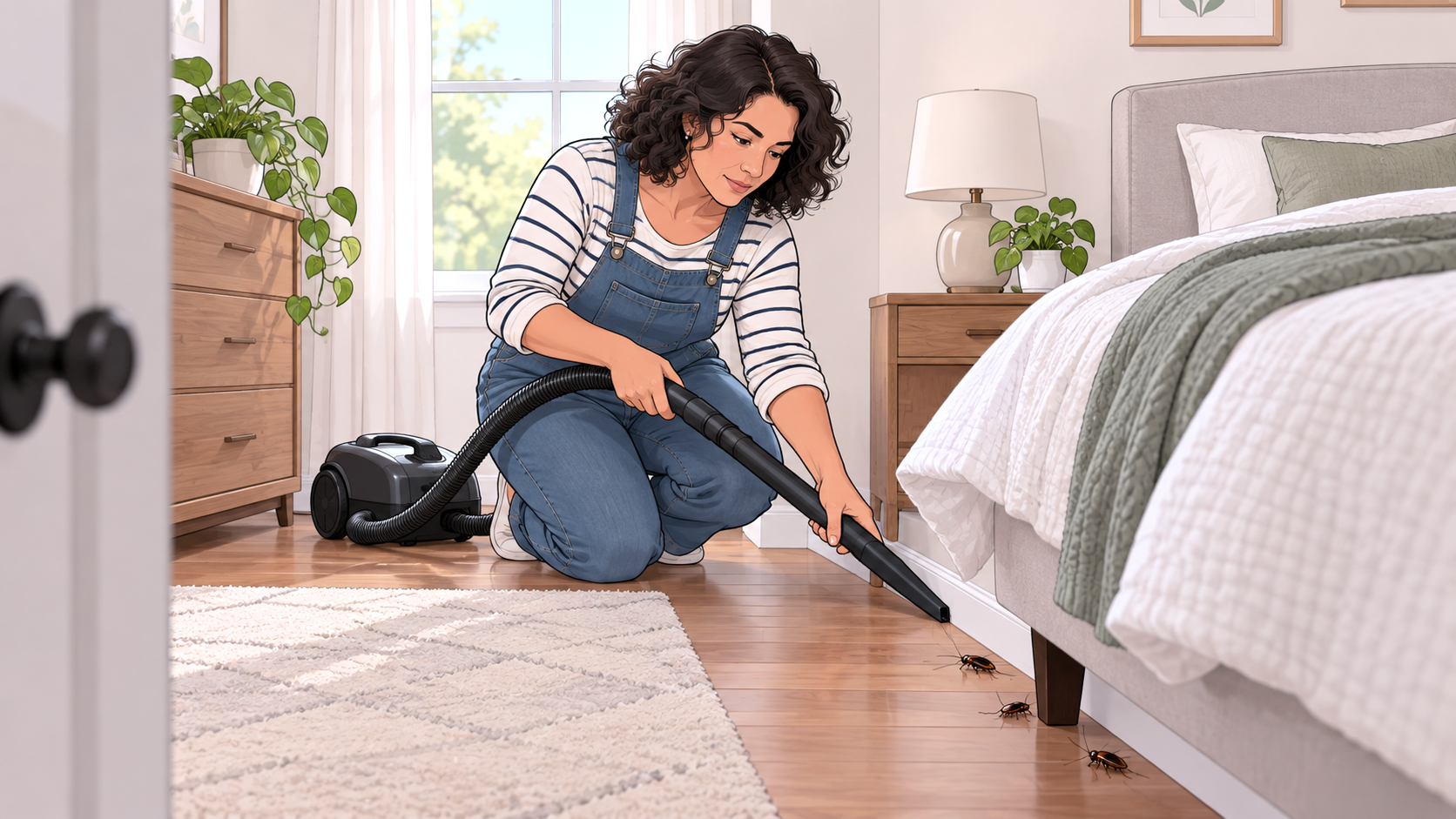
A bedroom cockroach infestation needs more than a quick spray along the baseboards. Cockroaches can occupy dresser joints, upholstered furniture, closets, headboards, and concealed spaces around walls. Treating the exposed floor while leaving these locations undisturbed may allow the population to persist.
To get rid of cockroaches in the bedroom, locate their activity with sticky monitors, remove insects and contaminated debris, reduce clutter, and use appropriately labeled cockroach baits in inaccessible locations. Keep pesticides away from bedding, pillows, clothing, and surfaces that regularly contact skin.
Bedroom infestations require particular care because people spend extended periods sleeping there. Treatment should reduce both cockroach activity and unnecessary exposure to insecticides.
Start With the Furniture, Not the Mattress
The first inspection should focus on furniture joints and concealed surfaces rather than assuming cockroaches occupy the mattress itself. Examine the underside of the bed frame, connections between the headboard and frame, hollow furniture components, dresser drawer runners, and the rear edges of bedside tables.
Use a flashlight to inspect accessible openings without dismantling electrical equipment or damaging furniture. Look for live insects, attached egg cases, shed skins, and concentrated dark spotting. The University of California’s cockroach management guidance identifies these forms of evidence as useful indicators of occupied shelter.
Brown-banded cockroaches (Supella longipalpa) deserve special attention in bedrooms. According to Texas A&M University’s entomology program, they commonly occupy dry indoor locations, including closets, upholstered furniture, upper walls, and the undersides of furnishings. German cockroaches may also appear in bedrooms, but activity involving brown-banded cockroaches often requires inspecting higher parts of the room.
Check the mattress surface and removable bedding for insects, but avoid treating every fabric seam as an established cockroach hiding place. The reasons cockroaches sometimes appear on beds do not always involve insects living in the mattress.
Empty Closets and Drawers in Manageable Sections
A crowded wardrobe can conceal an active population behind stored possessions. Rather than emptying the entire bedroom at once, inspect one drawer, shelf, or storage compartment before proceeding to the next.
Remove clothing and personal items, checking the interior corners and underside of each drawer. Pay particular attention to cardboard shoe boxes, stacked papers, picture frames, and items that have remained undisturbed.
The Penn State Extension profile of brown-banded cockroaches identifies dressers, closets, picture frames, and elevated furniture as common shelters. These insects may also attach their egg cases to concealed surfaces rather than leaving them loose on the floor.
If an egg case is found, remove it carefully along with any visible insects. The different locations where cockroaches lay their eggs can help explain why inspecting furniture surfaces is necessary even when no adult cockroach is visible.
Replace damaged or insect-contaminated cardboard storage with clean, close-fitting containers. Launder clothing when it has been visibly contaminated, but avoid treating unaffected garments with insecticide. Keep inspected belongings separate until their storage spaces have been cleaned.
Vacuum Cockroaches and Their Remains Before Applying Treatment
Vacuuming can immediately remove accessible cockroaches, egg cases, shed skins, and accumulated debris. Use a crevice attachment along accessible furniture joints, baseboards, closet corners, and underneath the bed.
The EPA’s integrated pest management guidance for housing managers recommends using a vacuum with a HEPA filter when removing cockroaches and their debris to reduce airborne allergen exposure.
After vacuuming, empty the collection compartment or remove the bag according to the manufacturer’s instructions. Seal the collected material in a disposal bag so that captured insects cannot escape. Wipe washable hard surfaces with detergent and water, drying them thoroughly before returning belongings.
Cockroach body fragments and fecal material can contribute to indoor allergens. The EPA’s indoor particulate matter guidance recommends damp dusting and HEPA-filtered vacuuming to reduce the redistribution of allergen-containing dust.
This is particularly important around sleeping areas, where contaminated dust can accumulate on surfaces close to the face. The health concerns associated with cockroach droppings make debris removal worthwhile independently of whether the insects are still alive.
Place Sticky Monitors Where Bedroom Activity Occurs
Sticky traps are useful for determining whether cockroaches are concentrated around the bed, closet, or another part of the bedroom. Position them along wall edges beside dressers, beneath furniture, and near suspected movement routes, following the trap manufacturer’s instructions.
Avoid placing exposed adhesive where it can contact bedding, children, or pets. Number the traps and record their locations so that captures can be compared over successive inspections.
The Rutgers University guidance on cockroach monitoring recommends strategically positioned sticky traps because low-level activity can be missed during ordinary visual inspection.
Do not expect equal catches throughout the room. Brown-banded cockroaches may occupy elevated furniture and wall spaces, so repeated sightings high on a wardrobe should prompt closer examination of that area rather than relying entirely on floor traps.
A mixture of adults and immature insects can suggest ongoing development nearby. The physical signs associated with cockroach harborages are useful when interpreting captures alongside evidence found in furniture.
Use Baits in Protected Locations Away From Sleeping Surfaces
Cockroach baits are generally preferable to widespread insecticide spraying when an established population requires chemical treatment. However, they must be positioned where cockroaches actually encounter them and where people and pets cannot access the pesticide.
Choose a bait specifically labeled for indoor cockroach control. Depending on the product, suitable locations may include inaccessible furniture gaps, protected baseboard crevices, or enclosed spaces adjacent to confirmed activity. Never place exposed bait on pillows, mattresses, clothing, or accessible bedside surfaces.
The University of California’s cockroach control recommendations explain that baits act relatively slowly and must be located close to insect activity. Brown-banded cockroaches can be particularly challenging because females carrying egg cases may feed less frequently.
In children’s bedrooms, enclosed bait stations may reduce opportunities for accidental contact, but a station is not automatically childproof or petproof. Follow all label restrictions and keep every pesticide placement inaccessible. The EPA’s guidance on preventing childhood pesticide poisoning specifically identifies cockroach baits and sprays as products requiring secure handling.
Avoid combining baits with repellent sprays around the same locations unless the labels permit it. Cockroaches may avoid contaminated bait placements, reducing treatment effectiveness. If activity persists inside upholstered furniture or inaccessible wall cavities, a pest-management professional may be better equipped to evaluate those areas.
Keep Cockroach Spray Off Mattresses, Pillows, and Clothing
Spraying an entire bedroom creates unnecessary pesticide exposure and may fail to reach the insects sheltering inside furniture and construction gaps.
Do not apply ordinary cockroach sprays directly onto mattresses, bed sheets, pillows, blankets, upholstered headboards, or clothing unless the specific product expressly authorizes that application. Products approved for baseboards or cracks are not automatically suitable for surfaces that remain in prolonged contact with human skin.
The EPA recommends treating targeted pest locations instead of spraying entire rooms. It also advises using baits and crack-and-crevice treatments where appropriate.
Total-release foggers are particularly unsuitable as a routine bedroom solution. Their pesticide mist can settle across exposed belongings without penetrating the narrow refuges occupied by cockroaches. The EPA’s fogger safety guidance also identifies inhalation, fire, and explosion hazards associated with improper use.
The possible effects of cockroach sprays on humans and pets depend on formulation and exposure. When treatment is necessary, follow the label’s occupancy, ventilation, and reentry requirements rather than assuming the bedroom is safe once the spray appears dry.
Remove Clutter and Close Unnecessary Hiding Spaces
Reducing bedroom clutter makes remaining cockroach activity easier to locate and limits the shelter available to insects.
Remove empty cardboard boxes, paper bags, and unnecessary storage materials from beneath the bed and inside closets. Store retained possessions in clean containers, keeping frequently used items accessible for inspection. Avoid placing piles of clothing directly against walls or beneath furniture.
Once insects and debris have been removed, seal suitable gaps along baseboards, furniture-adjacent wall joints, and service penetrations. Do not block ventilation openings or interfere with electrical installations.
The EPA’s integrated pest management recommendations emphasize reducing clutter and closing pest entry points as part of preventing indoor pest activity.
Bedroom housekeeping should not become an exhaustive cleaning ritual. The ability of cockroaches to occupy even clean homes means that removing clutter and improving access to suspected harborages is more useful than repeatedly disinfecting already clean surfaces.
Check Whether Cockroach Activity Is Declining
Leave monitoring devices in their recorded positions while assessing the treatment. Check them periodically and compare captures from the bed area, closet, and other previously affected locations.
A declining catch suggests reduced activity, but one empty trap does not demonstrate that the infestation has ended. Cockroaches may remain inside protected furniture spaces, and immature insects can appear after egg cases hatch.
If captures continue around the same dresser or wardrobe, revisit the accessible joints and surrounding gaps before introducing more pesticide. When activity appears throughout several bedrooms or adjoining rooms, the infestation may extend beyond the area initially inspected.
Persistent captures of adults and nymphs, repeated sightings inside furniture, or continuing activity despite appropriate bait use justify professional evaluation. In apartments, cockroaches can move through connected indoor spaces, so treating one bedroom without addressing a wider population may produce only temporary improvement.
The aim is sustained reduction in live activity while keeping the sleeping environment free from unnecessary pesticide deposits. Bedroom treatment is most effective when the insects’ actual resting locations determine what is cleaned, monitored, and treated.