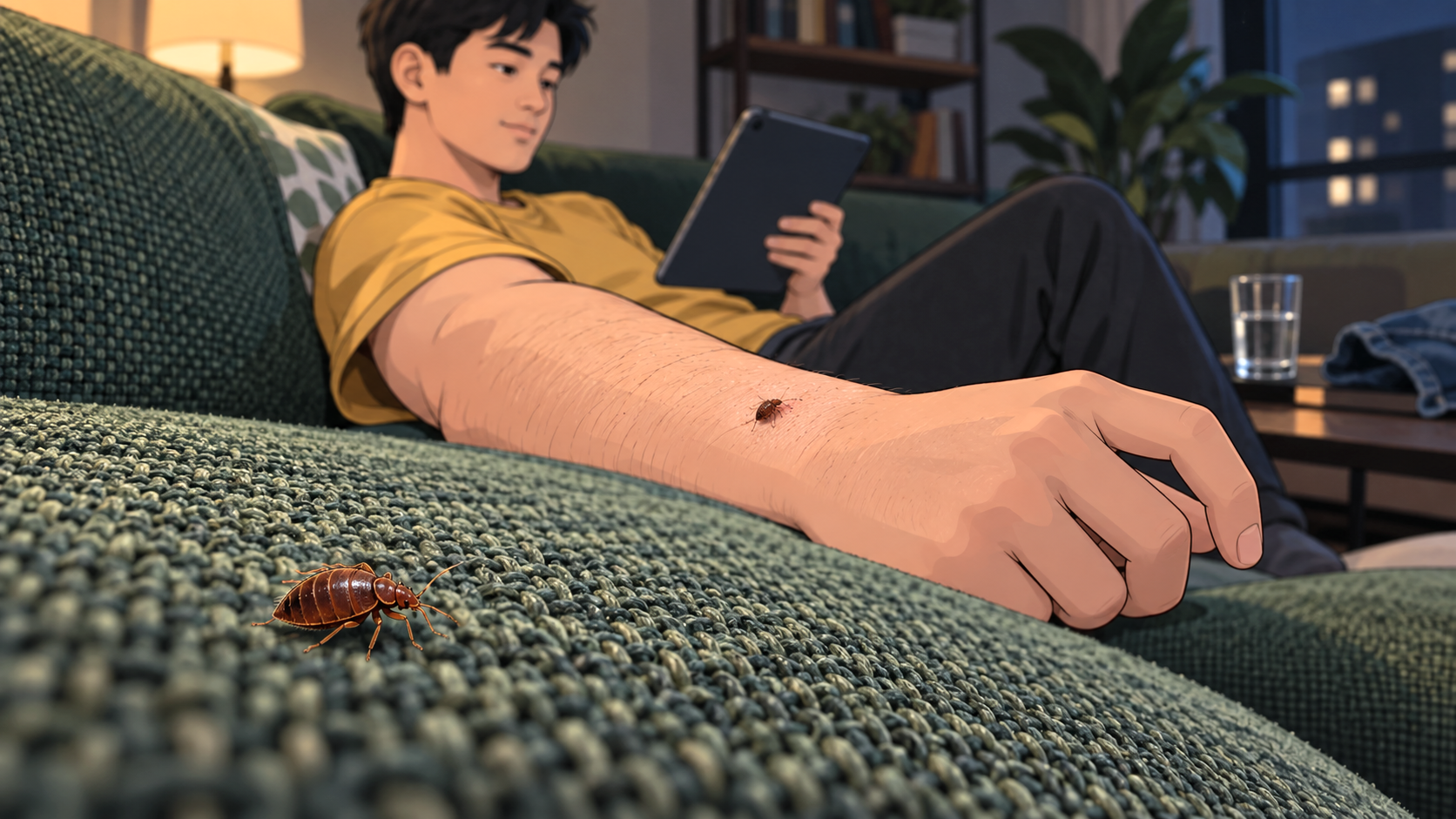
Most people don’t feel a bed bug biting them while it feeds. Feeling one crawl across your skin is possible, but the sensation isn’t reliable enough to tell you whether bed bugs are present. A crawling, prickling, or biting sensation by itself also doesn’t confirm an infestation. Bed bugs are best identified through the insects themselves and the physical evidence they leave behind.
Can You Feel a Bed Bug Bite?
Bed bug bites are typically painless while they’re happening. Clinical literature describes anesthetic compounds in bed bug saliva, along with anticoagulant and other compounds that assist feeding.
The Cleveland Clinic likewise notes that people generally don’t feel the bite while a bed bug is feeding. Instead, the first noticeable sign may be itching, redness, swelling, or another skin reaction that develops afterward. Reactions vary considerably between people. Some develop obvious itchy marks, while others show little or no visible reaction. That means neither feeling a bite nor developing one afterward is necessary for bed bugs to be present.
Can You Feel a Bed Bug Crawling on You?
You could potentially feel a bed bug moving across your skin, particularly while you’re awake, but there isn’t a dependable crawling sensation unique to bed bugs.
Adults are only about 5 to 7 millimeters long, while nymphs are considerably smaller. Bed bugs are also primarily active at night, although hungry bugs can seek hosts during daylight.
Because of their small size and feeding behavior, whether someone notices one crawling will depend on the circumstances and the person’s sensitivity. A crawling sensation therefore isn’t a useful way to confirm or rule out bed bugs.
A Crawling Sensation Doesn’t Prove Bed Bugs Are Present
People can experience sensations described as crawling, prickling, tingling, or insects moving across the skin when no insect is actually present.
A persistent sensation of insects crawling on or under the skin without a physical cause is known medically as formication. It can have numerous causes and shouldn’t be self-diagnosed as either bed bugs or a medical condition.
If unexplained crawling sensations continue despite finding no physical evidence of insects, particularly if they’re persistent or distressing, discussing them with a healthcare professional is appropriate.
Look for Physical Evidence Instead
The EPA specifically warns that bites are a poor indicator of a bed bug infestation because they can resemble other insect bites, rashes, hives, and other skin conditions. Some people don’t react to bed bug bites at all. More useful evidence includes live bed bugs, pale eggs and eggshells, shed skins, dark fecal spots, and rusty or reddish stains associated with crushed bugs.
Inspect mattress seams and tags, the box spring, bed frame, headboard, and nearby cracks and furniture. A more extensive room-by-room bed bug inspection can help when the initial search doesn’t reveal the source. If you’re experiencing skin reactions but haven’t found an insect, how to tell if you have bed bugs explains which physical signs provide stronger evidence.
Questions About Feeling Bed Bugs
Can you wake up because a bed bug is biting you?
It’s possible to wake while a bed bug happens to be feeding, but the bite itself is typically painless. Waking at the same time doesn’t establish that the bite woke you.
Can bed bugs crawl on you without biting?
Yes. A bed bug can move across skin without immediately feeding, so crawling and biting aren’t necessarily simultaneous.
Does feeling itchy at night mean you have bed bugs?
No. Itching has many possible causes, and bed bug bites don’t always itch. Look for physical evidence rather than using itching alone to diagnose an infestation.
Does feeling bugs crawling on you mean the infestation is severe?
No. There is no established relationship between the intensity of a crawling sensation and the size of a bed bug infestation.