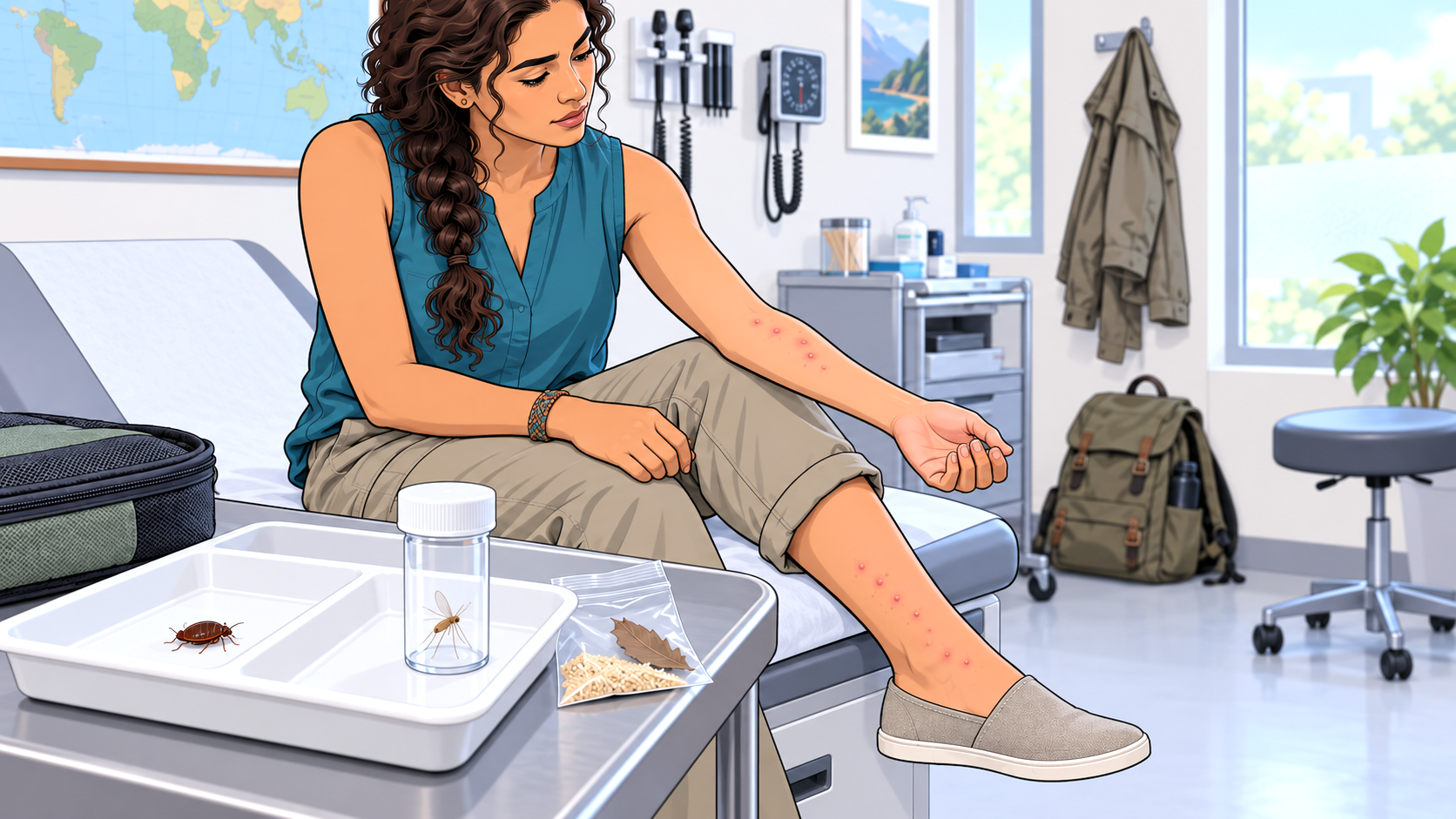
A sand fly bite you don’t feel happening is normal, not a warning sign on its own. What actually matters is where you were bitten and whether a sore shows up weeks later, since that combination is how doctors in parts of the South now think about this bite differently than they did a decade ago.
Sand fly bites are usually painless and go unnoticed until the next day. The bigger difference is disease risk: sand flies in parts of Texas, Oklahoma, and Arizona can transmit leishmaniasis, a parasitic infection causing skin sores, something bed bugs have never been shown to do.
Small, Silent, and Easy to Miss
The CDC notes that sand flies capable of transmitting disease are only about one fourth the size of a mosquito, sometimes even smaller, and are silent enough that people often don’t notice being bitten at all. The bite itself frequently isn’t discovered until the following day. This overlaps in one way with bed bugs, which are also known for painless bites, but the mechanism is different. A bed bug’s saliva contains an anesthetic that actively numbs the area, while a sand fly’s bite goes unnoticed largely because the insect itself is so small and quiet that the act of biting doesn’t register.
Where This Actually Matters in the US
This isn’t a pest that only matters if you’re traveling internationally anymore. The CDC states that locally acquired cases of cutaneous leishmaniasis in the US have been identified mostly in Texas, with some cases reported in Arizona and Oklahoma. American Family Physician notes that sand flies capable of transmitting the parasite have actually been found as far north as Maryland and Delaware, even though confirmed local disease transmission remains concentrated in the South. Texas’s own health department tracks the disease directly, describing it as a parasitic condition spread by infected sand flies that can result in skin sores or, less commonly, spread to internal organs. None of this means the average sand fly bite is dangerous. It means the geography actually matters here in a way it doesn’t for a bed bug bite, which carries the same near-zero disease risk no matter where in the country it happens.
The Skin Sore That Can Follow Weeks Later
This is the detail that separates a sand fly bite from every other bite covered in this series. The CDC describes cutaneous leishmaniasis as typically developing within a few weeks or months after a sand fly bite, starting as a small bump or nodule that can go on to become an ulcer with raised edges and a central crater, sometimes described as having a volcano-like shape. These sores are usually, though not always, painless, and can persist or change appearance over time rather than resolving in days the way a normal bite does. A rarer, more severe form called mucosal leishmaniasis can affect the nose, mouth, or throat and, per the CDC, can be life threatening. A bed bug bite never progresses this way. It’s a single, self-limiting reaction that resolves within days to a couple of weeks and never turns into an open sore.
Why This Is Different From Every Other Bite in This Series
Every other pest bite compared on this site eventually circles back to the same reassurance about bed bugs: they’re not known to spread disease. Sand flies break that pattern entirely. They’re a confirmed, currently tracked disease vector in specific parts of the United States, not a hypothetical or purely overseas risk. That doesn’t make sand flies something to panic over, since the actual number of confirmed US cases remains small relative to the population living in and around the affected states, but it does mean this particular comparison isn’t just about itching and bump size the way most of the others are.
What Actually Warrants a Doctor’s Visit
If you’ve spent time outdoors at dusk or after dark in Texas, Oklahoma, Arizona, or another area with documented sand fly activity, and a bump from that exposure turns into a sore that isn’t healing normally over several weeks, that’s worth a doctor’s evaluation rather than continued home care. There’s currently no vaccine or preventive medication for leishmaniasis, so prevention comes down to reducing exposure itself, using an effective repellent, covering skin during peak dusk-to-dawn activity hours, and being aware of the risk if you live in or travel through an affected region. That’s a fundamentally different response than checking for a bed bug infestation, which is about inspecting where you sleep rather than managing outdoor exposure in specific parts of the country.
Common Questions About Sand Fly Bites vs Bed Bug Bites
Does every sand fly bite carry a risk of leishmaniasis? No. Only a bite from a female sand fly actually carrying the Leishmania parasite can transmit it, and the CDC’s own data shows confirmed US cases remain uncommon relative to the population in and around the affected states.
Can leishmaniasis actually be treated? Yes. American Family Physician notes that pentavalent antimony is the standard first-line treatment and can be obtained through the CDC, though the right treatment approach should come directly from a healthcare provider evaluating the specific case.
Is leishmaniasis contagious from person to person? Not through casual contact. The CDC notes some Leishmania species can rarely spread through shared needles or blood transfusions, which is an entirely separate route from an actual sand fly bite and not a concern for everyday contact with someone who has it.
How is this different from just having a bad bug bite reaction? A normal bite reaction resolves within days regardless of what caused it. A sore that keeps changing shape, develops raised edges or a central crater, or shows up weeks after the fact is behaving in a way no ordinary bite reaction does, which is exactly why it needs a medical evaluation rather than more time.
This post reflects our own research and isn’t a substitute for advice from a licensed pest control professional or a doctor. If you’ve developed a slow-healing sore after spending time in an area with known sand fly activity, see a healthcare provider rather than treating it as a typical bug bite. See our full disclaimer for more.