You can tell whether head lice are gone by completing the prescribed treatment schedule and checking for living lice over the following two to three weeks. The strongest evidence that treatment has worked is the continued absence of live, crawling lice, not the disappearance of every nit or the immediate end of itching.
One inspection immediately after treatment cannot establish that an infestation is completely over. Some products kill crawling lice without reliably killing every egg, so newly hatched lice may appear later unless the treatment schedule addresses them. Other products work differently and may not require a second application.
The most useful approach is to follow the instructions for the exact treatment used, examine the hair at appropriate intervals, and interpret what you find. Old nits, dead insects, and lingering scalp irritation do not carry the same meaning as a living louse.
When Should You Check for Head Lice After Treatment?
The first check should follow the directions for the product you used. For many topical head lice medications, examining the hair approximately 8 to 12 hours after application provides useful early information about how the insects have responded.
This first examination is not a final clearance check. It can reveal whether lice are dead, moving sluggishly, or apparently unaffected by the medication.
If a few lice are still moving slowly 8 to 12 hours after treatment, the medication may still be working. Their movement alone does not justify immediately applying another dose. If the lice appear just as active as before treatment, or no dead lice are found, seek advice from a healthcare professional before using the product again.
The early response to head lice medication should be interpreted alongside the product’s instructions rather than used as an independent reason to repeat treatment.
After this initial assessment, continue checking at regular intervals. For many treatments, public-health guidance recommends examining the hair every two to three days for the next two to three weeks.
The usual time needed to eliminate head lice depends partly on whether the treatment requires another application and whether any surviving eggs can hatch.
A person who finds no living lice the morning after treatment has encouraging early evidence. They have not yet completed the observation period needed to determine whether the infestation has remained controlled.
A Practical Head Lice Checking Schedule
The schedule below illustrates the general checking period recommended after many head lice treatments. It is not a replacement for the label on your particular product.
| When to check | What the findings can tell you |
|---|---|
| About 8–12 hours after treatment, when applicable | Whether crawling lice appear dead, sluggish, or still normally active |
| Every 2–3 days afterward | Whether living lice are still present or appear during the follow-up period |
| On the product’s specified retreatment date, if required | Whether the scheduled second application is due, regardless of itching |
| After completing all required applications | Whether living lice remain despite following the treatment instructions |
| Through approximately 2–3 weeks of follow-up | Whether repeated examinations continue to show no live lice |
For a treatment that requires a second application, the date of that application is determined by the product, not by this table. Some medications require retreatment around a week or more after the first application, while others have different directions or do not routinely require retreatment.
The recommended frequency for repeating head lice treatment must therefore be considered separately from the frequency of checking the hair.
You can make the process easier to track by recording the date of each application, the date of each examination, and whether any living lice were actually found.
For example, a record that says “Day 3: no live lice found” is more informative than “Day 3: scalp still itchy.” It records the evidence relevant to whether the infestation remains active.
If you discover a living louse, note when it was found in relation to the most recent treatment. The timing can affect how the finding should be interpreted.
What Does It Mean If You Find No Live Lice?
Repeated examinations that find no living lice are reassuring, particularly after the full treatment schedule has been completed.
A single negative examination is less conclusive because head lice are small, move quickly, and can remain hidden among hair strands. The reliability of the observation depends on how carefully the hair was examined.
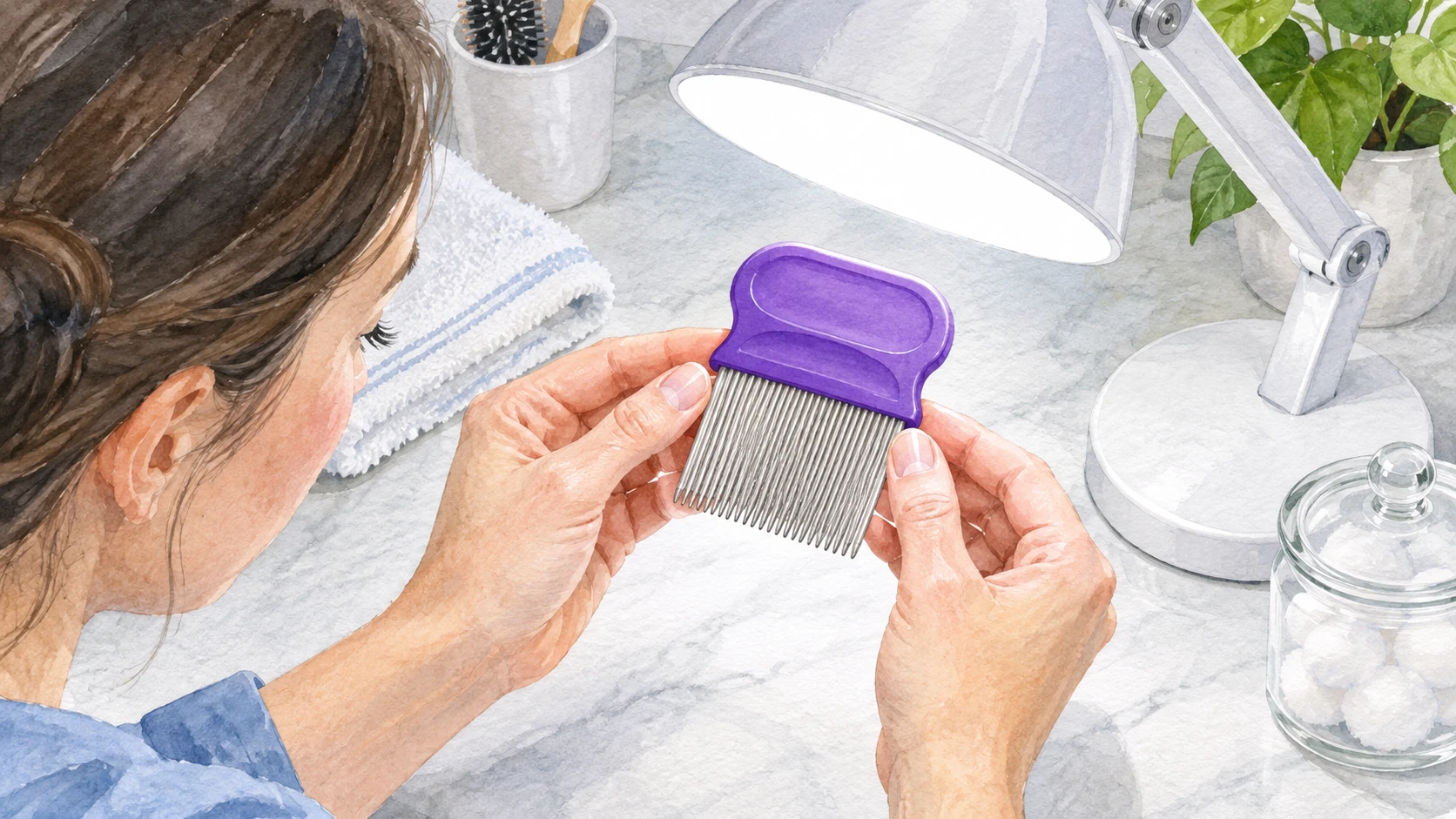
A fine-toothed lice comb can improve the chance of detecting insects that might be missed during a visual inspection. When examining the hair, pay attention to the scalp, behind the ears, and around the nape of the neck.
The reliability of a head lice examination depends on examining the hair systematically rather than looking briefly at the most visible areas.
If several examinations over the recommended follow-up period reveal no living lice, and all required treatment steps have been completed, there is increasing reason to conclude that the infestation has been eliminated.
That conclusion is evidence-based rather than an absolute guarantee. No single home examination can prove that every insect or viable egg is absent.
A person who has completed treatment and repeatedly finds no living lice should not continue applying medication solely to obtain greater certainty. Unnecessary applications can irritate the scalp and may violate product directions.
Does Finding Dead Lice Mean the Treatment Worked?
Finding dead lice after treatment is evidence that at least some insects were killed. It is a useful observation, but it does not establish that every louse or viable egg has been eliminated.
The difference between a dead insect and one that is moving slowly is especially relevant shortly after treatment. Some medications do not kill all affected lice instantly.
A louse that moves sluggishly during the early post-treatment period may still be affected by the product. By contrast, lice that remain as active as they were before treatment raise concern that the medication has not had the expected effect.
The assessment of head lice after medication includes observing insect activity before deciding whether professional advice is needed.
Finding several dead lice and no living ones is encouraging. However, the result must still be interpreted within the treatment schedule, particularly when the product does not reliably kill unhatched eggs.
There is also no requirement to find a particular number of dead insects before considering a treatment successful. If only a few lice were present initially, there may be very few bodies to discover afterward.
The important evidence is whether living lice continue to be found, not whether enough dead insects have been collected to account for an estimated original population.
Can Head Lice Be Gone Even If Nits Are Still Attached?
Yes. Nits and empty egg cases can remain attached to hair after living lice have been eliminated.
Female head lice attach eggs firmly to individual hair shafts. The adhesive can keep an egg case in place even after it has hatched or become nonviable. As hair grows, older cases may gradually move farther from the scalp.
This means that visible nits do not automatically represent an active infestation. Some are remnants of earlier egg-laying activity rather than evidence that living insects remain.
The difference between nits and evidence of active head lice is especially important during post-treatment examinations.
Nits located farther than approximately one-quarter inch from the scalp are generally old, empty, or unlikely to hatch. Nits close to the scalp deserve more careful interpretation, but their position alone does not prove that treatment failed.
A person may therefore finish the required treatment course, repeatedly find no crawling lice, and still notice attached egg cases.
The limitations of nit-only findings explain why clearing every visible case is not the same as confirming that an infestation has ended.
Do not use additional medication simply because old nits remain. If newly discovered eggs close to the scalp create uncertainty, a healthcare professional can help interpret the finding in light of the product used and the completed treatment schedule.
What If You Find a Live Louse Several Days After Treatment?
A living louse discovered several days after treatment requires attention, but its meaning depends on the medication and the stage of the treatment schedule.
Some products do not reliably kill all eggs. A louse that hatches after the first application may be found before the scheduled second application. That possibility is one reason certain products require retreatment at a specific interval.
Finding a newly hatched louse before the next scheduled application does not necessarily mean that the entire treatment plan has failed. The medication may have been intended to eliminate those newly emerged insects during the second application.
However, this explanation should not be applied to every product. Treatments differ in their effects on eggs and newly hatched lice, and the appropriate interpretation depends on the actual instructions.
The development of head lice from eggs to adults provides the biological reason that follow-up extends beyond the day of the first application.
If living lice are found after all required applications have been completed, the evidence is more concerning. The infestation may not have been eliminated, and further assessment is appropriate.
Do not assume that every living insect found after treatment requires an immediate extra application. The timing of the finding, the product’s directions, and professional guidance should determine the next step.
How Do You Know Whether a Second Treatment Is Still Needed?
The need for a second application is primarily determined by the treatment product’s instructions.
Some head lice medications require another application because eggs may survive the initial treatment and hatch later. Other products have different schedules, and some do not routinely require a second application.
A person who sees no living lice after the first application should not automatically skip a second application that the product specifically requires.
Conversely, someone using a treatment that does not call for routine retreatment should not apply another dose merely because they still notice nits or scalp itching.
The clinical guidance on treatment intervals distinguishes medications that require retreatment from those with different directions. Those differences are important when interpreting the results of follow-up examinations.
If you no longer have the product packaging, confirm the instructions with a pharmacist or healthcare professional rather than guessing when to repeat the application.
The purpose of the follow-up schedule is to detect remaining living lice while completing treatment safely. It is not a reason to increase the frequency or amount of medication beyond what is directed.
Can Your Scalp Still Itch After the Head Lice Are Gone?
Yes. Itching can continue after successful treatment because the scalp may remain inflamed from earlier feeding or become irritated by the treatment itself.
The immune response responsible for itching does not necessarily disappear as soon as the lice die. Some people experience lingering discomfort for several days or longer.
Consequently, itching alone is a poor measure of whether an infestation is still active. Someone may continue scratching despite having no living lice, while another person with live lice may experience very little itching.
The causes of itching after lice treatment need to be distinguished from physical evidence that living insects remain.
If repeated examinations find no live lice and the treatment schedule is complete, persistent mild itching does not independently justify another application.
Increasing redness, painful sores, pus, significant swelling, or itching that persists without improvement may warrant medical assessment. Those findings concern the condition of the scalp and should not automatically be interpreted as treatment failure.
When Should You Ask for Help Confirming That Lice Are Gone?
Professional advice is useful when follow-up findings remain uncertain or when living lice persist despite completing the treatment as directed.
Contact a healthcare professional or pharmacist if lice appear normally active soon after treatment, if living lice are still being found after the full course, or if the instructions for retreatment are unclear.
The possible explanations for head lice treatment not working should be considered before repeating medication without guidance.
A clinician can also help when someone repeatedly identifies suspected lice or nits but cannot confidently determine whether the objects are genuine. Incorrect identification can lead to unnecessary additional treatment.
For children, persistent scalp irritation, painful sores, or signs of infection deserve medical attention independently of whether live lice are present.
Avoid combining treatments, using more medication than directed, or repeating an application ahead of schedule in an attempt to achieve certainty. A careful assessment is safer than assuming that every uncertain finding represents surviving lice.
The Most Reliable Sign That Head Lice Are Gone
The absence of living lice during one examination is encouraging, but it is not the final measure of success. The stronger conclusion comes from completing the product-specific treatment schedule and repeatedly finding no crawling lice over the recommended follow-up period.
Dead insects show that some lice were killed. Old nits may remain attached after the infestation ends. Itching can continue while the scalp recovers. None of these findings, by itself, establishes that living lice are still present.
Complete the treatment as directed, check every two to three days when that schedule applies, and use live-lice findings to judge whether further assessment is needed. If the full course is finished and no living lice are found throughout follow-up, there is good reason to consider the infestation resolved.