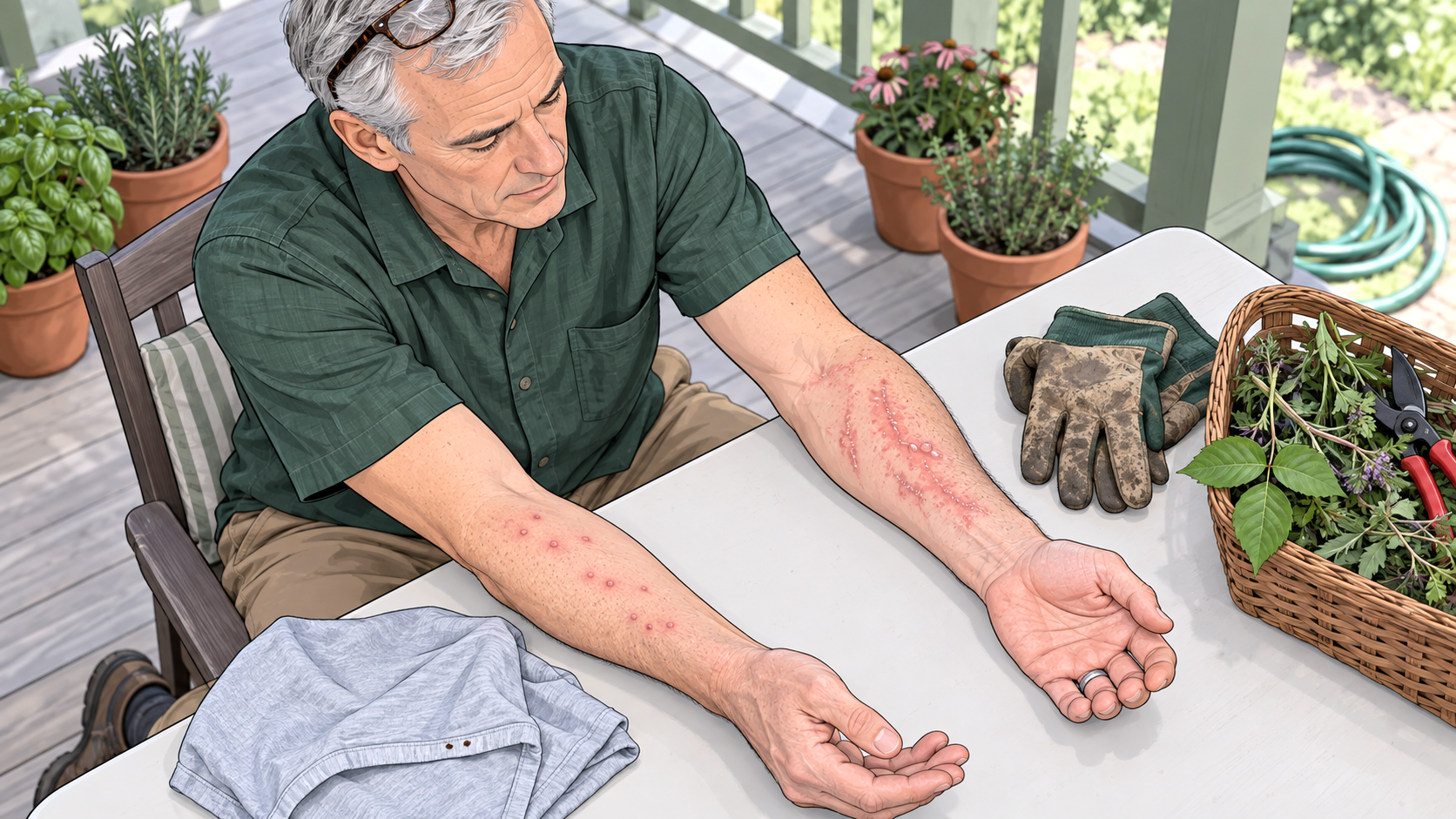
A poison ivy rash that shows up on your arm three days after it appeared on your wrist isn’t spreading. It’s just catching up. Poison ivy rash often appears in streaks or lines where the plant actually brushed against skin, unlike a bed bug bite cluster from repeated feeding. The rash also isn’t contagious. It only spreads through contact with urushiol oil still on skin, clothing, or objects, never through touching the rash or blister fluid itself.
Why It Looks Like It’s Spreading When It Isn’t
This is the single biggest misconception about poison ivy, and it’s worth clearing up before anything else. The FDA states plainly that even if blisters break, the fluid inside them is not plant oil and cannot further spread the rash. Mayo Clinic confirms the same thing directly: blister fluid doesn’t spread the rash at all. What actually happens is that different areas of skin absorb urushiol, the plant’s oil, at different rates, so a section that picked up more oil develops a visible reaction sooner while another exposed area takes a few more days to catch up. The rash isn’t traveling anywhere. It was all caused by the same original contact, just showing up on its own timeline. Bed bug bites don’t work this way at all, since each new bite mark reflects an actual, separate feeding event rather than a delayed reaction to something that already happened.
The Line Pattern Bed Bugs Never Produce
Poison ivy has its own distinctive shape, and it comes from something bed bugs simply don’t do. Mayo Clinic notes that the rash often forms in a straight line, because that’s the literal path the plant took brushing across skin. A bed bug can also leave bites in a line, but for a completely different reason, repositioning and feeding again nearby when interrupted mid-meal rather than tracing a single physical contact point. Both patterns can look linear, but one comes from a plant dragging across skin once and the other from an insect returning to feed multiple times.
How Long This Actually Lasts
Poison ivy runs on its own clock, and it’s a longer one than most bug bites. Mayo Clinic describes the reaction typically starting 12 to 48 hours after exposure and lasting about two to three weeks total. A bed bug bite can take considerably longer to even appear, sometimes up to two weeks, but once visible it usually resolves within days rather than stretching out for weeks the way a poison ivy rash does.
The Oil Persists Longer Than You’d Guess
Here’s a detail that changes how people should actually handle gear after an exposure. NIOSH warns that urushiol can remain active on the surface of objects for up to five years, meaning a pair of forgotten gardening gloves, hiking boots, or tools tucked away in a garage could still trigger a reaction on the next person who handles them, long after anyone would think to connect it back to poison ivy. This is a common enough problem that CDC research estimates poison ivy and its relatives affect 10 to 50 million Americans every year. Nothing about a bed bug problem carries this kind of long-delayed, object-based re-exposure risk, since the insects themselves need to be physically present to cause a bite.
What Actually Stops the Cycle
Since the oil itself is the entire problem, breaking the cycle means removing it rather than treating the skin reaction as something that spreads on its own. Washing exposed skin, clothing, and any tools or gear promptly with soap and water gets rid of urushiol before it can cause a second exposure or get transferred to someone else’s skin. Burning poison ivy is worth avoiding specifically, since inhaling the smoke can cause a serious respiratory reaction. None of this overlaps with how you’d handle an actual bed bug problem, which requires inspecting the sleeping area itself for physical evidence rather than washing away a plant oil.
Common Questions About Poison Ivy vs Bed Bug Bites
Can a pet give you poison ivy after walking through it? Yes, indirectly. The oil clings to fur without causing a reaction in the animal itself, but it can transfer to your skin when you pet or bathe them, so gloves are worth using if you suspect recent exposure.
Does scratching a poison ivy rash actually make it worse? It won’t spread the rash to new areas, since the myth about blister fluid causing that has been debunked, but scratching can still break the skin and introduce a genuine infection, which is a real reason to avoid it regardless.
Is anyone actually immune to poison ivy? True immunity is uncommon. The amount of urushiol needed to trigger a reaction is extremely small, and most people who come into contact with it will react to some degree.
Could someone end up with both poison ivy and bed bug bites from the same trip? Yes, easily, since the two have nothing to do with each other. Time outdoors near poison ivy followed by a night in an infested rental or cabin could produce both at once, with no connection between them beyond bad timing.
This post reflects our own research and isn’t a substitute for advice from a licensed pest control professional or a doctor if you’re dealing with a rash or reaction that concerns you. See our full disclaimer for more.