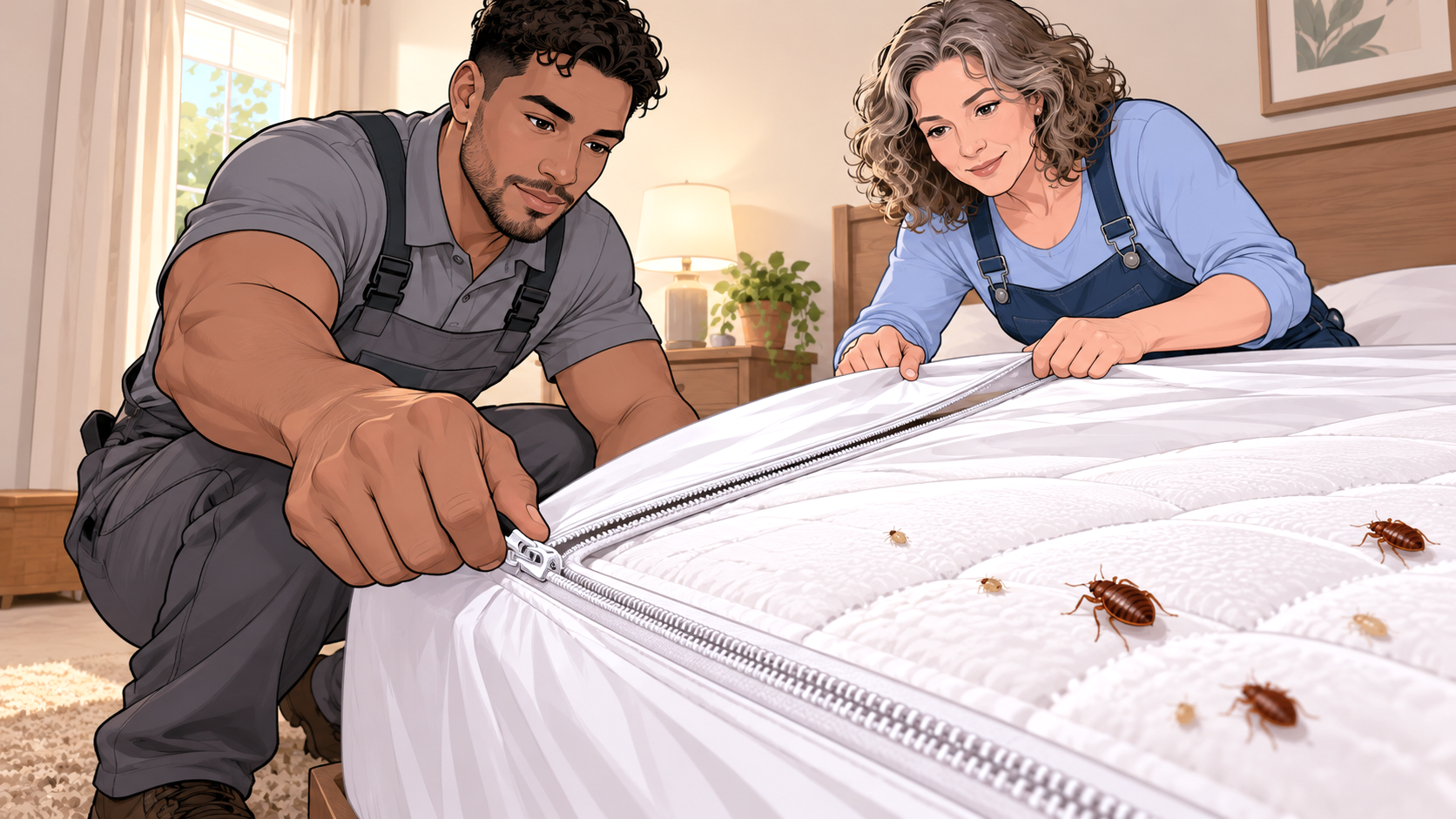
You usually do not need to throw out a mattress simply because it has bed bugs. An intact mattress can often remain in the treatment program and be enclosed in a bed-bug-proof encasement. Disposal becomes more reasonable when the mattress is badly damaged, cannot be treated effectively, or has openings that give bugs inaccessible places to hide. Replacing the mattress without treating the rest of the infestation can also put the new mattress into the same infested environment.
A Mattress With Bed Bugs Is Not Automatically Ruined
Bed bugs on a mattress are unpleasant, but their presence does not make the mattress structurally unusable. The insects commonly occupy seams, piping, labels, folds and nearby parts of the bed because these locations put them close to a sleeping host. They can also occupy the box spring, frame, headboard and surrounding furniture, which means removing the mattress may eliminate only one portion of their hiding space.
Federal bed bug control guidance specifically advises people not to discard furniture when the bed bugs can be safely eliminated from it and recommends protective covers that completely enclose mattresses and box springs. A properly fitted encasement traps bugs already inside while removing many of the seams and folds that provide accessible mattress harborages.
Keeping the mattress can also preserve a useful part of the treatment setup. Once the mattress has been carefully checked for bed bugs and treated according to the pest-control plan, the bed can be isolated from walls and surrounding furniture. Interceptors beneath suitable bed legs can then help detect bugs attempting to reach or leave the sleeping area.
Damage to the Mattress Can Change the Decision
The physical condition of the mattress matters more than the mere presence of bugs. A mattress with intact fabric and accessible seams is easier to inspect, treat and enclose than one with large tears, open cavities or deteriorated material that exposes its interior.
Health Canada specifically recommends discarding a bed when bugs are found inside a box spring or where holes and worn areas allow them to lay eggs in locations that are difficult to reach for treatment. A severely damaged mattress can present the same practical difficulty. Bugs hidden deep inside inaccessible layers may escape vacuuming, steam or other targeted measures.
Small cosmetic marks are different from structural openings. Bed bug stains on a mattress do not by themselves make it necessary to discard the bed. The decision is more strongly influenced by whether the mattress remains physically sound and whether the pest-control method can reliably incorporate it. A pest-control professional can assess this before disposal. Throwing the mattress away first removes the opportunity to determine how heavily it was infested and whether surrounding parts of the bed also contain bugs.
An Encasement Can Let an Infested Mattress Stay in Use
A bed-bug-proof encasement completely surrounds the mattress and closes with a secure zipper. Bugs trapped inside lose access to the sleeper, while the smooth exterior reduces the number of folds and seams available for new bugs to conceal themselves.
The encasement needs to be specifically designed for bed bug management and durable enough to remain intact. Federal preparation guidance recommends sturdy covers with zippers that close completely and advises leaving them in place long enough for trapped bed bugs to die inside. Because unfed bed bugs can survive for extended periods, removing an encasement prematurely can release insects that were successfully contained.
The cover also needs regular inspection for tears and zipper problems. A hole defeats the containment function and can create another concealed opening. Bed bugs found on the outside of an encasement do not necessarily mean bugs have escaped from inside; insects elsewhere in the room can crawl onto the covered mattress while searching for a host.
An encasement is therefore a management tool rather than a stand-alone extermination method. Field studies of integrated bed bug programs have used mattress and box-spring encasements alongside steam, interceptors and other controls, and similar research has incorporated encasements within multi-method treatment programs rather than relying on the cover alone. The possibility of bed bugs living around a mattress cover still requires the rest of the room to be addressed.
Throwing Away the Mattress Does Not Remove Bugs From the Bedroom
A mattress can be the most obvious infested object without being the only one. Bed bugs may occupy the box spring, screw holes in the frame, joints in the headboard, nightstands, upholstered furniture, baseboards and nearby cracks. Health Canada recommends inspecting and vacuuming the mattress, box spring, frame, baseboards and surrounding furniture rather than treating the mattress as an isolated source.
Replacing only the mattress leaves those other harborages untouched. A newly delivered mattress can then become accessible to surviving bugs as they emerge to feed. Bed bugs are capable of finding a sleeping host from nearby harborages, so a clean replacement does not function as a barrier against an active infestation.
The bed frame deserves particular attention because bed bugs can remain in metal frames and headboards as well as wooden ones. Removing the soft part of the bed while leaving an occupied frame can create the false impression that the primary source has been removed.
If the Mattress Must Go, Contain It Before Moving It
An infested mattress should not be carried uncovered through a hallway, elevator, stairwell or shared entrance. Bugs and eggs can remain on seams and damaged fabric, creating opportunities for insects to fall off while the mattress is moved.
Health Canada recommends wrapping discarded infested beds in plastic and sealing the edges before taking them to the trash. Federal guidance also advises destroying or clearly marking discarded infested furniture so another person does not unknowingly take it home and acquire the infestation.
Local waste rules still apply. Some municipalities have specific procedures for mattresses, bulky furniture or pest-infested items, so arrange disposal before moving the mattress from the room. The safest route and containment method may also differ in an apartment building where common areas have to be protected.
A mattress that cannot be treated needs the same careful handling as other bed-bug-infested furniture being discarded. Leaving an unwrapped mattress beside a dumpster or on a curb can transfer the problem to another household if someone retrieves it.
Do Not Use Black Plastic and Sunlight as a Substitute for Treatment
Wrapping an infested mattress in black plastic is useful for containment during disposal, but putting the wrapped mattress in the sun is not a dependable way to make it safe for reuse.
Researchers tested this method using both foam and innerspring mattresses. The sun-facing surfaces reached 85°C, yet the underside of the thick mattress never exceeded 35°C, and parts of the thinner mattress also remained too cool. The uneven temperatures allowed potential refuge from lethal heat, leading the researchers to conclude that black-plastic solar heating was unsuitable for bed bug control.
Professional bed bug heat treatment uses controlled heating, air circulation and temperature monitoring rather than assuming the interior of an object matches its surface temperature. A mattress that is being retained needs to fit within the actual treatment plan rather than receive an improvised heating attempt.
Keep the New Mattress Protected If Replacement Is Necessary
If damage or another practical reason makes replacement appropriate, bring the new mattress into the home according to the pest-control professional’s instructions. Ideally, the active infestation should already be under control so the replacement does not immediately become another harborage.
Inspect the delivery process as well. Bed bugs are effective hitchhikers on furniture and other transported items, and federal prevention guidance recommends checking beds, couches and secondhand furniture before bringing them inside. It also recommends using a high-quality encasement to reduce hiding places on mattresses and box springs.
Once the bed is set up, keep it separated from the wall where practical, prevent bedding from touching the floor and place interceptor cups beneath appropriate bed legs. These measures make later activity easier to detect without treating the new mattress itself as proof that the infestation has ended.
Questions About Keeping or Discarding an Infested Mattress
Can you sleep on a mattress while it is inside a bed bug encasement?
Yes, provided the encasement is designed for normal mattress use, fits correctly and remains undamaged. Continue following the wider treatment plan because bugs elsewhere in the room can still reach the outside of the cover.
What about the box spring?
Box springs can provide extensive interior hiding space, particularly when fabric is torn or bugs have entered the internal structure. Its condition and accessibility need to be assessed separately from the mattress rather than assuming both pieces can be handled identically.
Should you buy a new bed before the exterminator arrives?
Usually, replacing furniture before the infestation has been assessed can complicate control. The technician may need to inspect the existing bed to locate harborages and determine how widely the bugs have spread.
Can you donate a mattress after treating it for bed bugs?
Do not donate a mattress unless you are certain it is free of bed bugs and the receiving organization accepts used mattresses under local rules. A mattress still known or suspected to contain live bugs should never be passed to another household.