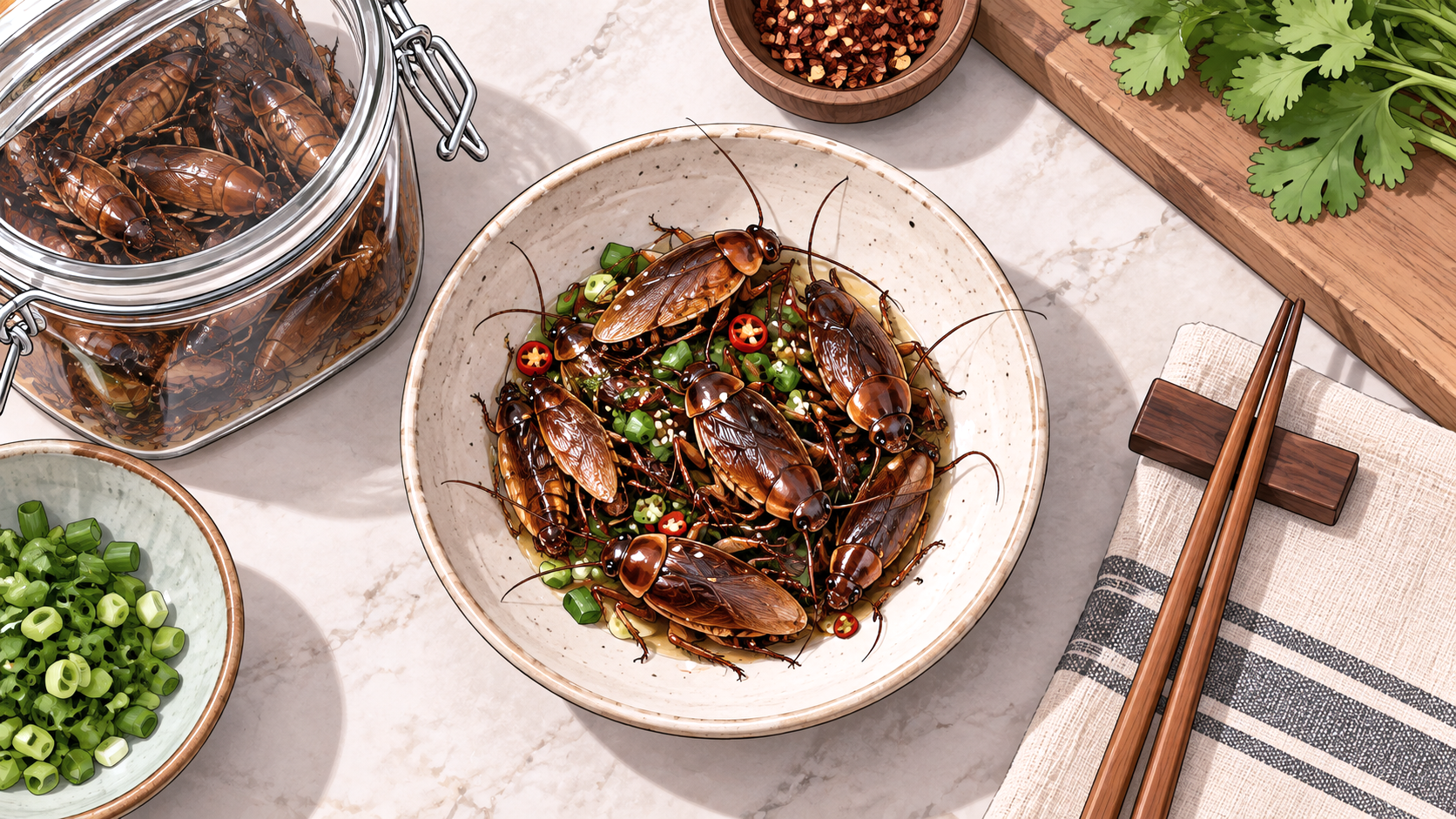
Some cockroach species are edible and have been consumed by humans, but that does not make wild or household cockroaches safe to eat. Cockroaches raised under controlled conditions for human consumption are fundamentally different from insects collected from kitchens, drains, sewers, or other uncontrolled environments. Edible cockroaches contain protein, fat, and other nutrients, but they can also present microbial, chemical, and allergy hazards. Their safety depends on the species, what they were fed, how they were raised, and how they were processed. Even farm-reared insects should not automatically be considered safe for human consumption.
Which Cockroach Species Are Eaten by Humans?
Cockroach consumption is much less familiar than eating crickets, grasshoppers, or mealworms, but certain species have been investigated and consumed as food.
A 2024 systematic review titled Edible Cockroaches as Food and Feed identified several cockroach species associated with human consumption or potential food production.
These include the American cockroach (Periplaneta americana), Australian cockroach (Periplaneta australasiae), death’s head cockroach (Blaberus craniifer), and Oriental cockroach (Blatta orientalis). The review also discusses reported consumption in countries including Thailand, Vietnam, and Mexico.
However, inclusion in research on edible insects does not mean every population of a species is suitable for eating. An American cockroach raised under controlled food-production conditions has a different exposure history from one found inside a sewer.
The differences among cockroach species also prevent all cockroaches from being treated as a single interchangeable food source. Their nutritional composition, biological characteristics, and suitability for cultivation can vary.
Cockroaches are not generally a staple protein source, and the commercial food industry surrounding them remains far less established than that of several other edible insects.
Why You Should Never Eat a Household Cockroach
A cockroach collected from a home has an unknown history of contact with contaminants. It may have traveled through drains, garbage, spoiled food, contaminated surfaces, or areas treated with pesticides.
A systematic review published in the Journal of Medical Entomology identified numerous medically important bacterial species associated with cockroaches. Researchers found particularly diverse bacterial contamination among German and American cockroaches.
The review of bacterial contamination in cockroaches demonstrates why an insect found in an uncontrolled environment cannot be assumed hygienic merely because it appears clean.
Potential chemical exposure is equally important. Household cockroaches may encounter insecticide residues, cleaning chemicals, and other substances unsuitable for ingestion. Their appearance cannot reveal whether such contaminants are present.
The ability of cockroaches to groom their bodies does not remove every microorganism or chemical residue they encounter. Washing a captured cockroach also cannot reliably address everything it may have ingested or accumulated internally.
Do not catch, cook, or eat cockroaches found in a house, restaurant, drain, garden, or other uncontrolled location.
Food-Grade Rearing Is Different From Breeding Cockroaches as Pets
Cockroaches can be bred for reptile feed, research, and other purposes, but those uses do not establish that the insects meet human food-safety requirements.
A colony maintained for animal feeding may receive a different diet, undergo different health monitoring, and be processed under standards that do not apply to food intended for people.
The European Food Safety Authority (EFSA) identifies several factors that influence the hazards associated with edible insects: species, production methods, feed substrates, developmental stage, and processing conditions.
Its assessment of insects used as food and feed found that microbiological risks can be comparable to those of conventional unprocessed animal protein sources when insects are reared using appropriate feed materials. This was a general assessment of edible insects, not certification that every farmed cockroach is safe.
A separate scientific review comparing wild-harvested and farm-reared edible insects found that production systems and processing methods affect food-safety hazards.
Controlled rearing can reduce certain risks, but it cannot eliminate every possibility of contamination. Food producers must still consider hygienic handling, suitable feed, storage conditions, processing, and applicable regulations.
Buying cockroaches from a pet shop or feeder-insect supplier is therefore not equivalent to purchasing an approved food product.
Are Cockroaches Nutritious?
Cockroaches contain macronutrients that can contribute to human nutrition, including protein and fat. Their nutritional profiles also include amino acids and minerals, with amounts varying among species and production conditions.
The 2024 systematic review of edible cockroaches examined their potential as alternative protein sources and discussed differences in composition and possible uses in processed foods.
However, published protein percentages require careful interpretation. Values measured on a dry-weight basis can appear substantially higher than values for fresh insects because much of their water has been removed.
Protein estimates can also be inflated when researchers calculate protein from total nitrogen without adequately accounting for nitrogen present in chitin and other nonprotein compounds.
EFSA discusses this limitation in its evaluation of edible insects as novel foods, explaining that insect composition and protein measurements require careful assessment.
A claim that cockroaches are exceptionally high in protein does not establish that they are nutritionally superior to conventional foods. Their digestibility, nutrient bioavailability, preparation, and serving size all affect their dietary value.
Nor does a high nutrient concentration compensate for contamination or allergy risks.
Can Eating Cockroaches Cause Allergic Reactions?
Yes. Cockroach proteins can be allergenic, and insect consumption raises concerns about both direct sensitization and cross-reactivity with other arthropod allergens.
Some allergenic proteins are similar across insects, crustaceans, and mites. Tropomyosin and arginine kinase are among the proteins that may contribute to cross-reactive allergic responses.
A scientific examination published in the EFSA Journal describes allergen cross-reactivity among edible insects and other arthropods. It identifies the potential for reactions involving proteins related to those found in crustaceans and house dust mites.
People with shrimp, crab, other shellfish, or mite allergies may therefore face additional concerns when consuming insect-based foods. However, having one of these allergies does not establish that a person will react to every insect species.
Cockroach allergy can also involve proteins associated with the insects themselves rather than their suitability as food. The health concerns associated with cockroach droppings include allergen exposure, although inhaling contaminated dust and eating an insect are different exposure routes.
Anyone with a known insect or crustacean allergy should avoid experimenting with cockroach consumption without appropriate medical advice. Cooking does not guarantee elimination of allergenic proteins.
Does Cooking Make Cockroaches Safe to Eat?
Cooking can reduce microbial hazards in appropriately produced edible insects, but it cannot make an unknown cockroach automatically safe.
Boiling, roasting, and frying can destroy many microorganisms when suitable temperatures and processing conditions are achieved. Their effectiveness depends on the initial contamination, the method used, and the characteristics of the food.
The 2019 review of edible insect safety found that thermal processing generally improved microbiological safety. However, it also emphasized that wild harvesting and controlled rearing present different potential hazards.
Certain chemical contaminants are not eliminated through ordinary cooking. Pesticide residues, heavy metals, and some heat-stable substances may remain even after bacteria have been destroyed.
Food-grade processing also involves more than applying heat. Insects may need appropriate handling before cooking, protection from contamination afterward, and controlled storage to prevent microbial growth.
The Food and Agriculture Organization’s edible-insect program recognizes both the potential nutritional value of insects and the need to manage food-safety hazards throughout production.
Consequently, frying a cockroach collected from an apartment or garden is not a dependable way to make it edible.
Are Cockroaches Legally Approved as Food?
Legal acceptance varies by country and sometimes by the specific species, product, and processing method.
In the European Union, insects marketed as novel foods generally require authorization under the applicable regulatory framework. The approval of one insect species does not authorize unrelated species, and authorization of a particular preparation does not necessarily cover every possible form of that insect.
EFSA evaluates applications for novel foods, but its scientific safety assessments are distinct from the regulatory decisions that permit products to enter the market.
The European Commission’s novel-food framework explains that new foods must satisfy applicable safety and authorization requirements before being marketed in the EU.
A company advertising farm-raised cockroaches as edible should therefore be able to identify the species, demonstrate that the product is intended for human consumption, and comply with local food regulations.
No universal legal designation makes all farmed cockroaches food-grade. Regulations also change, making the country of sale and the specific product important considerations.
What if You Accidentally Swallow a Cockroach?
Accidentally swallowing a cockroach does not mean you will necessarily become ill. The outcome depends on the insect’s condition, potential contaminants, and the person’s health.
Do not induce vomiting or take antibiotics without medical advice. If the person feels well, there is generally no specific treatment required solely because an insect was swallowed.
Seek medical attention if symptoms such as persistent vomiting, severe abdominal pain, bloody diarrhea, or fever develop. Difficulty breathing, throat swelling, or faintness after ingestion requires emergency care because these can indicate a severe allergic reaction.
The CDC’s food-poisoning guidance identifies severe dehydration, bloody diarrhea, persistent vomiting, and high fever among symptoms that warrant medical evaluation. Accidental ingestion is different from deliberately eating a cockroach whose origin and chemical exposure are unknown. The absence of symptoms after one incident cannot establish that household cockroaches are suitable for consumption.