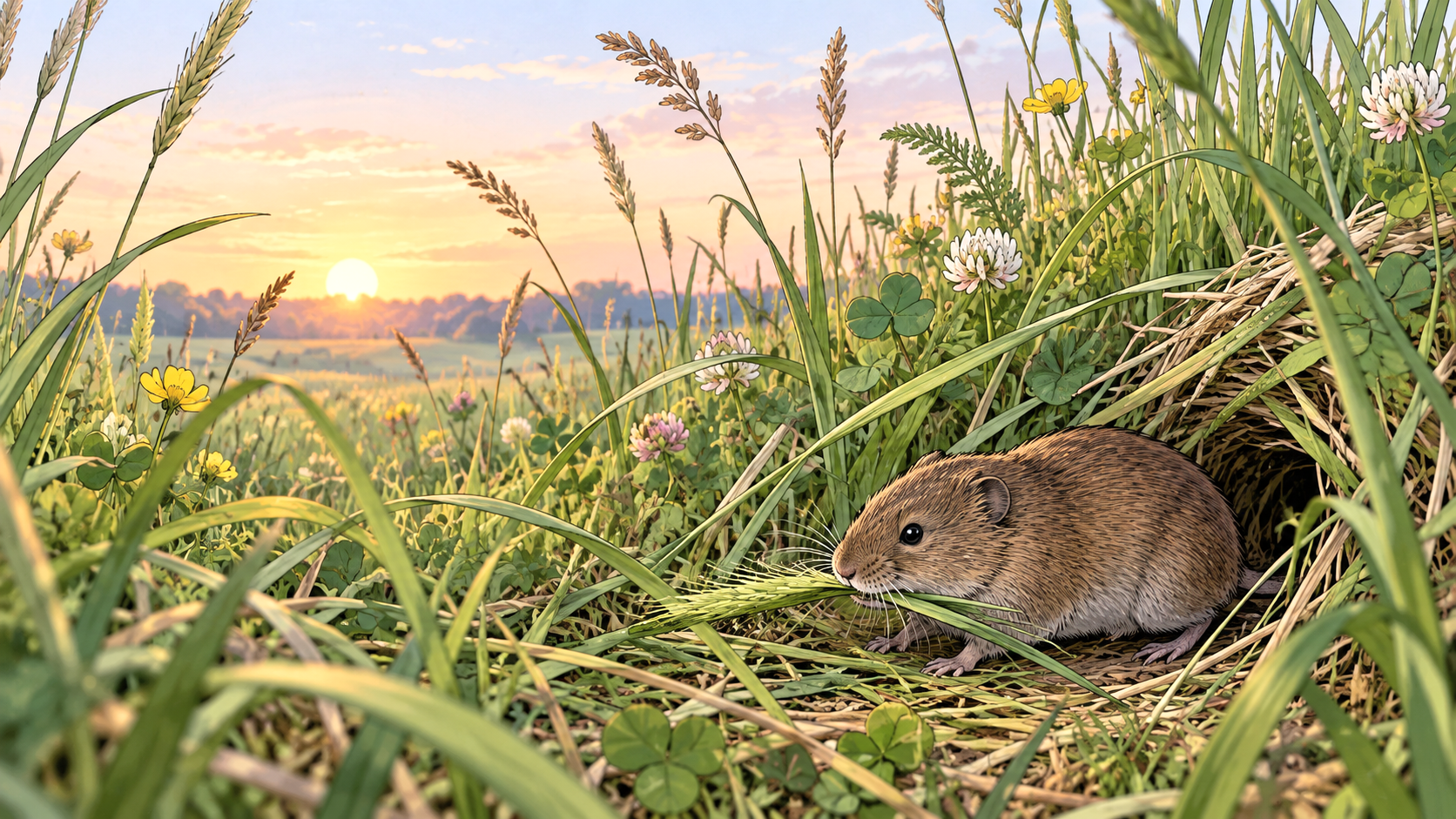
A vole is a small, ground-dwelling mammal that resembles a mouse and lives mainly in grassy areas, fields, gardens, and other places with protective vegetation. Voles feed largely on plants and are often called meadow mice or field mice. They are part of the natural wildlife around many homes, but their feeding and tunneling activities can damage lawns, garden plants, and young trees.
Unlike animals that occasionally wander across a yard, voles may establish regular feeding routes beneath grass and ground cover. Their presence can remain unnoticed until damaged vegetation or exposed trails reveal where they have been living.
What Do Voles Actually Do?
Much of a vole’s life takes place close to the ground, where vegetation provides food and shelter. These animals move through established pathways, feed on nearby plants, and retreat into covered spaces. They use both surface routes and underground burrows, although the balance varies among species. The University of California’s vole information describes animals that remain active throughout the year, including during periods of snow cover. Their movements are not limited to darkness, so voles can be active during the day and at night.
Feeding occupies much of their activity. Grasses, herbaceous vegetation, seeds, and underground plant tissues provide food, while bark becomes particularly important for some voles during colder months. The range of foods that voles eat helps explain why they occupy both natural grasslands and cultivated properties. They can use vegetation for several purposes at once, obtaining nourishment while remaining hidden from predators.
Voles also reproduce rapidly under favorable conditions. Their populations fluctuate with food availability, habitat conditions, and other environmental pressures. The National Park Service’s account of prairie voles describes animals that remain active through winter and use shallow burrows and surface pathways. This combination of continued activity and reproductive potential allows vole populations to become locally abundant without homeowners noticing individual animals regularly.
Why Do Voles Live Around Houses?
A residential property can provide the same basic conditions that support voles in natural habitats. Thick grass, spreading ground cover, leaf litter, and sheltered garden edges create protected spaces where these animals can move and feed. A yard bordering an overgrown field or wooded area may also provide easy access to suitable habitat.
The amount and arrangement of vegetation influence where voles spend their time. An open section of closely maintained lawn offers less cover than a densely planted border, while mulch and low-growing plants can conceal movement near shrubs. Their preferred surroundings vary, but a suitable vole habitat generally provides both food and protection. The Internet Center for Wildlife Damage Management also documents how vole activity differs between surface-dwelling and underground-dwelling forms.
Because voles primarily occupy outdoor habitats, finding one near a foundation does not establish that a building is infested. The more relevant concern is often the vegetation and landscaping immediately surrounding the structure.
Are Voles the Same as Moles or Mice?
Voles are frequently mistaken for mice because of their general appearance, and their name creates additional confusion with moles. Yet these animals differ in their feeding habits and how they use the ground.
The most useful difference for homeowners is that voles consume vegetation directly, while moles primarily hunt soil-dwelling invertebrates. A property with damaged plant roots and surface feeding routes therefore presents a different problem from one with raised soil tunnels. The differences between voles and moles become especially useful when the animal itself has never been seen.
Mice create another identification problem because small mammals can appear similar during brief encounters. The vole-versus-mouse comparison involves both physical characteristics and the circumstances surrounding a sighting. A small brown animal crossing the grass cannot be identified reliably from its location alone.
Why Are Voles Sometimes Considered Pests?
The concern begins when ordinary feeding activity damages plants that homeowners want to keep. Voles can clip grass, consume bulbs and roots, and gnaw bark near the base of trees. Their feeding may leave visible trails through lawns or cause planted areas to decline without an obvious aboveground explanation.
Not all vole activity causes substantial damage. A few animals living along a field boundary may have little effect on a property, while feeding around a newly planted tree can have serious consequences. Natural Resources Canada’s description of vole damage identifies bark feeding as a concern for young trees, particularly during winter. Severe vole damage to trees and bark can interfere with the movement of water and nutrients through the plant.
Grass damage is often more visible than serious. Winding trails may appear after snow melts, even where the voles themselves are no longer present. The University of Nebraska’s wildlife damage guidance distinguishes this kind of lawn injury from the potentially greater losses caused by damage to valuable trees and shrubs. A homeowner assessing signs of voles in the yard should therefore consider the affected plants and the extent of injury rather than assuming every visible trail requires intervention.
Do Voles Have a Useful Role in Nature?
Voles form part of the food supply for numerous predators, including owls, hawks, foxes, weasels, and snakes. Their feeding also connects vegetation with the animals that hunt them. The National Park Service’s observations of red-backed voles illustrate how these small mammals occupy forest habitats and support several predator species.
This ecological role does not make damage to a home garden insignificant. It does, however, explain why finding a vole outdoors is not automatically a pest-control emergency. An animal living undisturbed beyond the landscaped portion of a property presents a different concern from repeated feeding around vulnerable plantings.
What Should You Do When You Notice a Vole?
First determine whether the animal is causing damage or simply occupying nearby vegetation. Check affected grass, garden beds, and the bases of vulnerable trees for feeding evidence. A single sighting provides little information about the extent of activity, and an old runway does not establish that voles are still using it.
Where damage is occurring, the response should reflect the plants at risk and whether activity is continuing. Reducing excessive protective cover and protecting vulnerable vegetation are common starting points, while getting rid of voles requires a response suited to the location and severity of the problem. Avoid applying rodenticides or setting traps merely because a small animal has appeared in the yard. Misidentification can lead to unnecessary treatment and risks to other wildlife.
A vole living in an outdoor habitat is a normal part of the local environment. The homeowner’s decision begins with observable plant damage, not the animal’s presence alone.