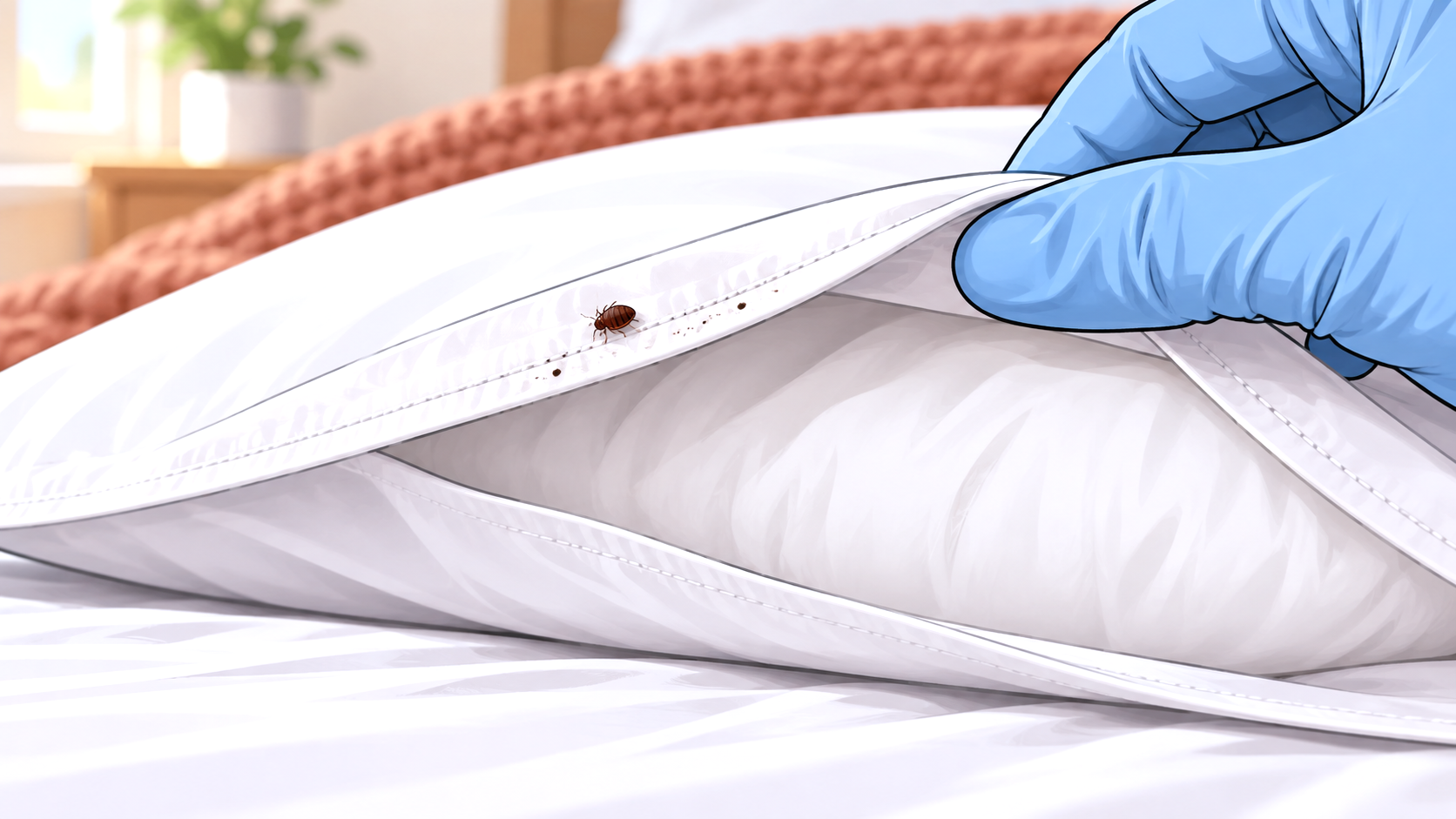
Bed bugs can hide on pillows. A pillow sits directly in the area where bed bugs commonly concentrate, and its seams, folds, piping, labels, and zippers can provide protected hiding places. That doesn’t mean pillows are a preferred habitat or that bed bugs normally burrow deep into pillow filling. Mattresses, box springs, bed frames, and headboards generally provide many more suitable harborages. Still, a pillow shouldn’t be ignored when inspecting or treating an infested bed.
Where Bed Bugs Hide on a Pillow
Bed bugs favor narrow, protected spaces close to a resting host. On a pillow, the first places to inspect are stitched seams, piping, folds, labels, zipper tracks, and the opening around a zipper.
Look for the same evidence found elsewhere around an infested bed: live bugs, pale eggs or eggshells, shed skins, and dark fecal spots.
A pillow with holes, torn seams, or a damaged zipper may provide additional hiding places inside the outer covering. However, there isn’t good evidence that bed bugs specifically prefer down, memory foam, polyester, or another pillow filling.
If you’re checking the rest of the bed at the same time, signs of bed bugs on a mattress are often more useful because mattresses offer far more seams, folds, labels, and protected edges to inspect.
How to Treat a Pillow for Bed Bugs
Start with the pillow’s care label. Don’t automatically wash or heat a pillow if its manufacturer doesn’t permit it.
For dryer-safe items, heat can be useful. The EPA recommends placing suitable bedding and clothing in a clothes dryer on high heat for 30 minutes and notes that washing alone generally won’t kill bed bugs. The important part is the dryer exposure rather than simply putting an item through a washing machine. Dryer heat can kill bed bugs when appropriate items receive sufficient heat.
Some foam, latex, down, decorative, or specialty pillows have different care requirements and may be damaged by high heat. Follow the manufacturer’s instructions rather than risking damage to the pillow.
Do You Need a Bed Bug Pillow Encasement?
Bed bug encasements are much more firmly established for mattresses and box springs than for pillows. A pillow encasement therefore shouldn’t be treated as an essential part of every bed bug treatment.
If you choose one, it needs to fully enclose the pillow without openings that a bed bug could crawl through. A loose pillowcase isn’t an encasement because the open end still allows insects to enter and leave.
An encasement also doesn’t treat the rest of the bed. Bugs can still occupy the mattress, box spring, frame, headboard, nightstand, baseboards, and other nearby harborages.
You Usually Don’t Need to Throw the Pillow Away
Finding a bed bug on a pillow doesn’t automatically mean the pillow has to be discarded.
A pillow that can safely withstand an appropriate dryer treatment may be treatable without replacement. Other pillows may require a different approach depending on their materials and construction.
More importantly, throwing away the pillow while leaving the surrounding infestation untreated won’t solve the problem. Bed bugs found on a pillow should prompt a careful inspection of the entire sleeping area rather than treatment of the pillow alone.
Questions About Bed Bugs and Pillows
Can bed bugs lay eggs on pillows?
Yes. A female bed bug can attach individual eggs to suitable protected surfaces, so seams, folds, and other sheltered areas of a pillow could potentially contain eggs.
Can bed bugs live inside memory foam pillows?
There isn’t good evidence that bed bugs specifically prefer memory foam. An intact pillow is more likely to provide accessible hiding places around seams, covers, and zippers than deep inside solid foam.
Can bed bugs hide in decorative pillows?
Yes. Throw pillows and cushions can provide seams, folds, zippers, and other hiding places, particularly when they’re close to an infested bed or frequently used upholstered furniture.
Should you wash pillows if you have bed bugs?
Follow the pillow’s care label. If it’s dryer-safe, appropriate dryer heat can be useful against bed bugs. Don’t assume every pillow can tolerate high-temperature washing or drying.