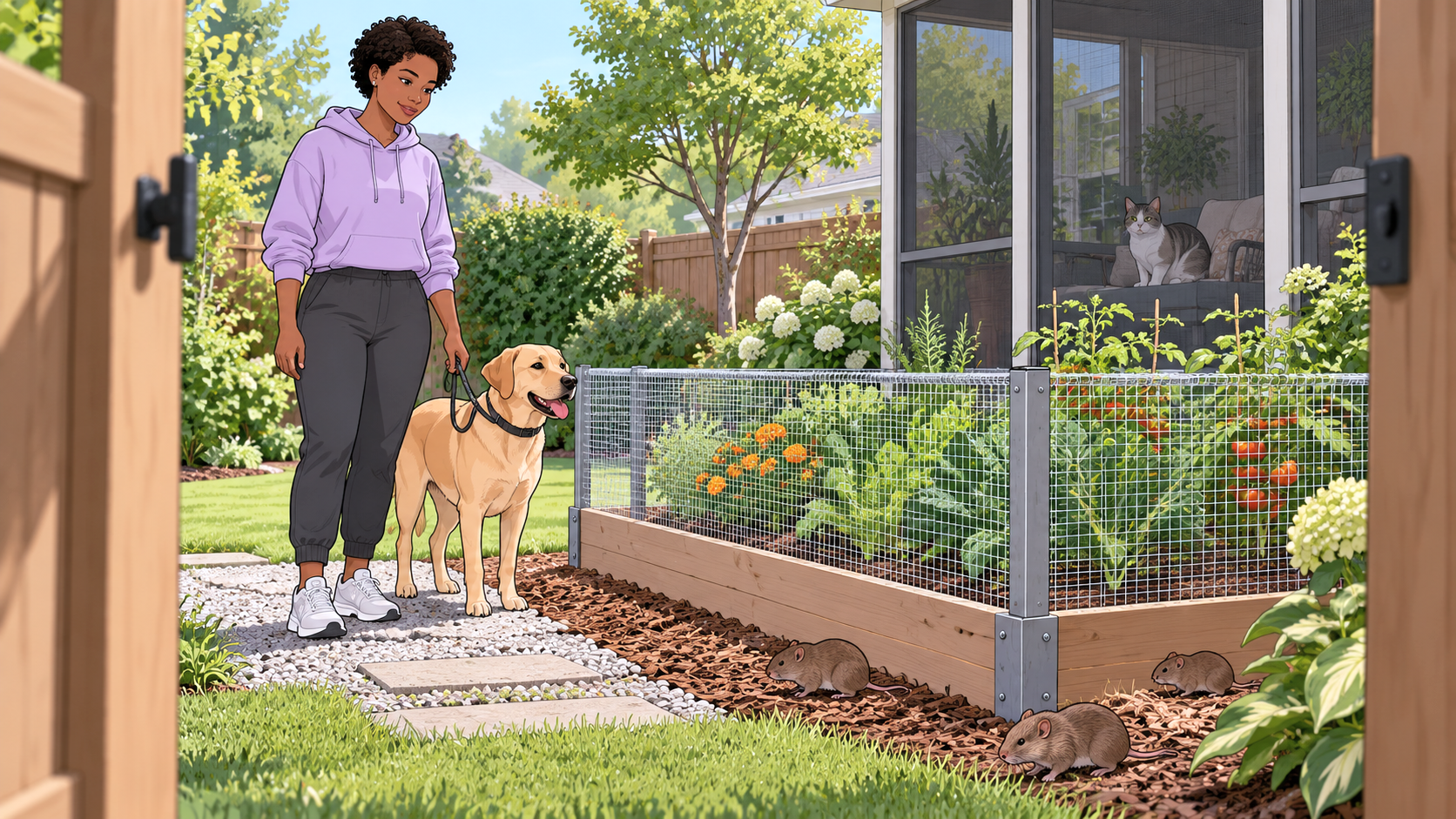
To get rid of voles without harming dogs or cats, use physical barriers and habitat changes first, and keep pets completely away from any traps or control equipment. Avoid exposed rodent bait, accessible snap traps, and products whose labels do not authorize vole control. No lethal method is automatically pet-safe, even when the equipment is covered or described as tamper-resistant.
A dog that digs through mulch and a cat that hunts small rodents face different hazards. Both can encounter traps or toxic bait, but cats may also investigate trapped animals or carry dead voles away. Choosing a control method therefore requires attention to how your pets actually use the property.
Choose Methods That Do Not Expose Pets to Traps or Poison
Physical exclusion offers the most direct way to protect vulnerable plants without introducing a toxic substance or killing wildlife. Fine-mesh fencing, appropriately fitted tree guards, and barriers beneath raised beds can prevent vole access to particular plantings. These measures remain useful even when animals continue living beyond the protected area. For garden fencing, metal mesh with openings no larger than 1/4 inch can exclude voles when its lower edge is buried to prevent tunneling. Dogs can damage lightly installed barriers by digging or pushing against them, so secure the material and inspect disturbed sections. Avoid leaving sharp wire ends exposed where paws or noses can contact them.
Reducing unnecessary ground cover is another nonchemical option. Voles use dense vegetation for shelter, and removing excessive weeds and accumulated plant debris can make vulnerable planting areas less attractive. Ordinary mowing and selective vegetation management are preferable to introducing pesticides when the problem is confined to sheltered garden borders. These measures also have limits. A barrier protects the area it encloses, while habitat management reduces favorable conditions without guaranteeing population elimination. The nonchemical management of voles includes several approaches, but keeping pets away from treatment equipment remains a separate requirement whenever physical control is introduced.
A Covered Snap Trap Is Not Automatically Safe for a Dog or Cat
Snap traps can injure paws, noses, tongues, and other exposed tissue. Dogs may investigate attractive bait, while cats can paw at openings or attempt to retrieve a captured animal. A simple cardboard box placed over a trap provides concealment but is not a reliable barrier against a determined pet.
For vole control, snap traps are sometimes covered with boxes, roofing material, or similar structures to reduce access by non-target animals. Such covers must be assessed for the animals actually present. A loose cover that a dog can overturn or a cat can reach beneath does not adequately separate the pet from the mechanism.
A secure enclosure must prevent pets from reaching the trap with their paws or mouths and resist being moved or opened. If that level of separation cannot be maintained, trapping should not occur in an area accessible to pets. Supervision alone is an unreliable substitute when equipment remains outdoors between inspections.
There is also a legal restriction to resolve before trapping. Some vole species receive wildlife protection, and killing, capturing, or relocating animals may require authorization. The legal status of vole trapping varies by species and jurisdiction. When those requirements are uncertain, continue using exclusion and habitat changes until the responsible wildlife authority confirms what is permitted.
Live traps do not eliminate animal-welfare concerns. Captured voles can suffer stress, injuries, or exposure while confined, and relocation is neither universally legal nor reliably successful. A trap that avoids immediately killing the vole can still present a hazard to a curious pet.
Why Rodenticide Bait Stations Do Not Guarantee Pet Safety
Rodenticide bait creates two separate exposure routes. Primary poisoning occurs when a pet consumes the toxic bait directly. Secondary poisoning occurs when an animal eats prey containing rodenticide residues. Preventing access to the bait does not necessarily eliminate exposure through poisoned rodents.
Commercial bait stations differ in their protective features. Some are designed to resist tampering by children and dogs, while others offer less protection or are unsuitable for outdoor use. A tamper-resistant bait station reduces access under specified conditions but does not make the poison harmless.
Dogs may dig up or disturb bait, and cats can encounter poisoned prey. The secondary-poisoning risks of rodenticides also differ among active ingredients. Anticoagulant products can leave residues in poisoned animals, while other rodenticides present different toxicological hazards.
There is an additional problem with using products marketed for household rats and mice. Their labels do not automatically authorize treatment of voles. Some vole-control toxicants are restricted to certified applicators or particular nonresidential locations. Rodenticide registration and application restrictions govern which animals, sites, and methods are permitted.
For a household with roaming pets, we would prioritize exclusion rather than attempt to make a toxic bait application safe through placement alone. The specific hazards of vole poison around dogs and cats depend on the product, exposure route, and circumstances of use.
Keep Pets From Interfering With Control Areas
A treatment area should be inaccessible to pets whenever hazardous equipment is present. Closing a garden gate is useful only when the fence prevents the animal from entering underneath, jumping over it, or pushing through a loose section.
Access control needs to account for predictable behavior. A dog that routinely digs beside the vegetable garden can reach equipment concealed under soil or mulch. A cat that hunts along the rear fence may investigate the same sheltered pathways used by voles. Equipment placed in those locations can attract attention even when it is hidden from view.
If professional treatment is necessary, tell the provider whether your pets roam freely, dig, hunt, or enter planting beds. Ask which products and equipment will be used, whether those methods are authorized for voles, and precisely how pet access will be prevented. The precautions for pesticide use around pets include checking product-specific restrictions rather than relying on a general assurance that an application is safe.
Pet food should also be stored securely, with spilled kibble removed from outdoor feeding areas. Keep pet bowls and toys away from any restricted treatment zone so the animals have no additional reason to investigate it.
Pet Exposure Risks Continue After a Vole Has Been Caught
A dead vole can attract a hunting cat or scavenging dog. Pets may remove carcasses from control areas, and poisoned animals can create exposure after leaving the original bait location. The risk of pets consuming poisoned rodents is one reason carcass management forms part of responsible rodent control.
Avoid leaving captured or dead animals accessible. Anyone handling a wild vole should use suitable protection and avoid direct skin contact. The health concerns associated with dogs and cats contacting voles also include bites and infections, independently of pesticide exposure.
If a pet may have reached a toxic bait, contact a veterinarian or animal poison-control service immediately. Do not wait for symptoms or attempt to induce vomiting without professional instructions. Keep the product packaging or label available so the exact active ingredient can be identified. Suspected ingestion of a vole is a separate veterinary assessment because the circumstances and possible exposures differ.
Compare Control Options Before Allowing Pets Back Into the Area
The methods available for vole control have different exposure concerns.
| Method | Main concern for dogs and cats | Suitable approach |
|---|---|---|
| Buried metal-mesh barriers | Sharp edges or unsecured material | Fasten securely and inspect exposed sections |
| Vegetation management | Garden tools and disturbed debris during work | Keep pets away during maintenance |
| Snap traps | Mechanical injury and access to captured animals | Use only where complete pet exclusion is possible and trapping is lawful |
| Live traps | Contact with trapped wildlife and trapping equipment | Prevent pet access and verify capture and relocation rules |
| Rodenticides | Direct bait ingestion and poisoned prey | Avoid where exposure cannot be reliably prevented; use only when specifically authorized |
For example, a household with two dogs using the entire backyard can protect a small group of shrubs with secured mesh guards without restricting access to the rest of the lawn. Installing traps throughout that same yard would create multiple locations requiring continuous protection against accidental contact. The barriers solve the immediate plant-access problem without adding those hazards.
After protection is installed, inspect the vulnerable plants for fresh injury and check that pets have not disturbed the materials. Continued vole damage in the yard may justify reassessing the affected area, but it does not automatically justify introducing toxicants or exposed traps.
Where ongoing losses require more intensive control, choose an appropriately qualified professional who can verify the species, applicable wildlife laws, product restrictions, and practical separation of pets from the treatment. A method that cannot be kept inaccessible to your dog or cat does not belong in an area the animal uses.