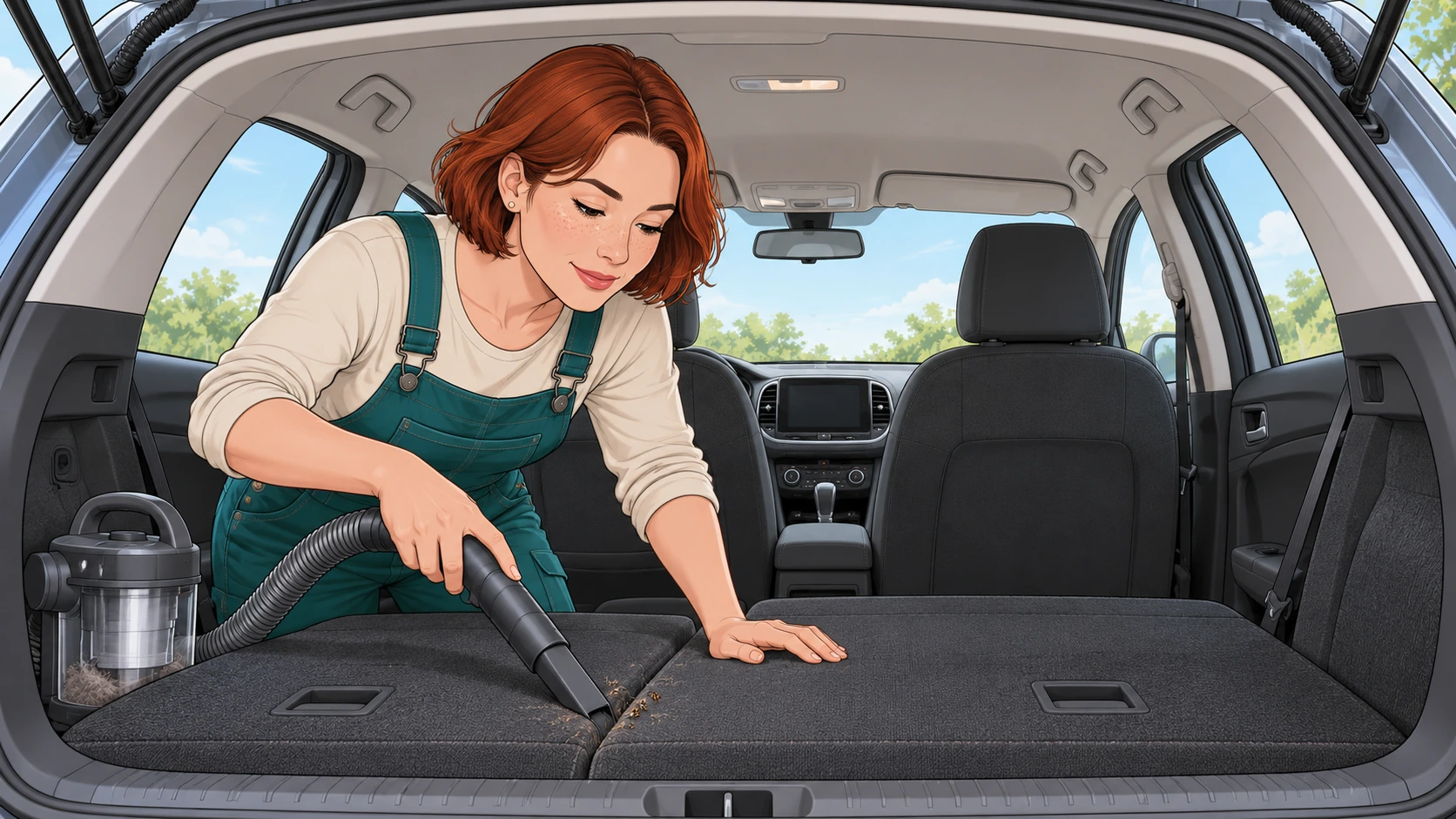
To get rid of carpet beetles in your car, remove the material supporting the larvae, clean the affected interior thoroughly, and check concealed areas where hair, food crumbs, and dead insects accumulate. Vacuuming the seats and floor is a useful start, but it may leave larvae and their food behind in seat seams, beneath carpeting, inside storage compartments, or around the trunk.
Vehicle interiors create several hiding places that are easy to overlook during ordinary cleaning. Pet hair can collect beneath removable mats, food crumbs can settle between seat cushions, and insects may remain inside fabric-covered areas that are rarely disturbed.
We recommend treating the vehicle as a collection of separate inspection areas rather than simply vacuuming the entire cabin and assuming the problem is resolved. The trunk, passenger compartment, seats, floor coverings, and accessible storage spaces should each be checked for live larvae and the material supporting them.
The objective is to remove the breeding source without damaging upholstery, electrical components, sensors, or other vehicle equipment. A routine interior detail may remove visible debris, but concealed feeding material can allow carpet beetle activity to continue.
1. Remove Everything From the Vehicle Before Cleaning
Begin by removing belongings that interfere with access to the interior. This includes floor mats, loose clothing, blankets, reusable shopping bags, pet bedding, stored food, and items kept in the trunk.
Examine these belongings before taking them indoors. A blanket containing carpet beetle larvae or shed skins could introduce the insects into a closet or laundry area if it is carried inside without inspection.
Pay particular attention to objects made from wool, fur, feathers, or other susceptible animal-derived materials. A stored pet blanket or fabric bag may contain the original feeding material rather than simply serving as a place where adult beetles happen to crawl.
Place suspicious belongings in separate bags or containers until they can be examined and cleaned appropriately.
Remove ordinary trash and discarded food packaging as well. Crumbs trapped in containers, paper bags, and forgotten snack wrappers can remain available to insects even when the visible seats and floor appear clean.
A completely emptied vehicle makes it easier to distinguish insects associated with the car’s interior from those that arrived on stored belongings.
2. Inspect the Places Where Carpet Beetles Can Hide
Do not restrict the inspection to the visible carpet and seat surfaces. Carpet beetle larvae can occupy protected spaces where food and debris accumulate.
Start with the passenger compartment. Move the front seats through their normal adjustment range and inspect the areas that become exposed. Check underneath the seats, along the carpet edges, and around the seat rails.
Examine the following locations:
-
Seat seams, stitching, folds, and gaps between cushions.
-
Beneath removable floor mats and along carpet edges.
-
Under the front and rear seats.
-
Around the center console and accessible storage compartments.
-
Inside door pockets and other places where debris accumulates.
-
Trunk carpeting, removable liners, and the spare-tire storage area.
-
Fabric-covered accessories and removable cargo organizers.
Look for live hairy larvae, hollow shed skins, and accumulated organic debris. Several findings together provide stronger evidence of an active source than an isolated adult beetle.
The underside of a seat deserves particular attention because loose hair, food particles, and other debris can collect there without being disturbed during normal cleaning.
A vehicle-specific explanation of why carpet beetles appear in cars helps distinguish an established feeding source from an adult beetle that simply entered the cabin.
Check for Food, Hair, and Animal-Related Debris
Carpet beetle larvae can use several materials found in vehicles. Pet hair and human hair may accumulate beneath seats, while food crumbs and dead insects can provide additional organic material.
A vehicle regularly used to transport dogs may contain substantial hair beneath the seating surfaces. Another may have an old bag of pet treats, dried food, or discarded snacks hidden in the trunk.
These materials deserve attention because visible beetles may be only one part of the problem.
Inspect the trunk and cargo compartment carefully. Stored blankets, old upholstery, animal bedding, and forgotten food supplies may provide feeding material away from the passenger seats.
Also look for dead insects and accumulations of organic debris around accessible interior edges.
3. Vacuum the Entire Accessible Interior
Once the source areas have been identified, vacuum the accessible interior surfaces thoroughly.
Use an automotive vacuum or a suitable vacuum cleaner with a narrow crevice attachment. Work through the seats, floor coverings, carpet edges, trunk carpeting, and accessible gaps.
Give particular attention to:
-
Seat seams and gaps between cushions.
-
Carpet edges beneath removable mats.
-
The spaces underneath seats.
-
Trunk corners and removable cargo liners.
-
Narrow gaps around accessible interior trim.
-
Areas where pet hair and food crumbs have accumulated.
Use attachments that fit the opening rather than forcing a large vacuum nozzle against delicate upholstery. Excessive suction or an unsuitable attachment can damage loose fabric, stitching, or fragile trim.
Move adjustable seats carefully while keeping the vacuum away from exposed electrical wiring and moving mechanisms. Never force equipment into powered seat tracks or openings that conceal wiring.
After cleaning, empty the vacuum container or remove its bag promptly. Seal the collected debris and dispose of it in an outdoor trash receptacle, since vacuumed material may contain living larvae.
The general vacuuming guidance for carpet beetles explains what this method can remove and why collected debris needs careful disposal.
Vacuuming is a physical removal method, not a guarantee that every concealed stage has been eliminated. Larvae inside inaccessible upholstery or material beneath the carpet may remain.
4. Clean the Seats, Floor Coverings, and Trunk Appropriately
After vacuuming, clean the affected surfaces using methods compatible with their materials.
Vehicle interiors contain several different materials. Fabric seats, synthetic carpeting, leather, vinyl, rubber mats, and plastic trim do not necessarily tolerate the same cleaners or moisture levels.
Check the vehicle manufacturer’s interior-care guidance before applying a cleaning product. Also follow the cleaner’s instructions and test it on a small, inconspicuous area when compatibility is uncertain.
For fabric seats and carpeting, use a suitable automotive upholstery cleaner when additional cleaning is needed. Avoid soaking the material, particularly around seat electronics, electrical connectors, and sensors.
Leather and synthetic leather require compatible products. Household detergents or aggressive solvents can discolor surfaces, damage protective finishes, or cause cracking.
Removable rubber floor mats can be cleaned separately using a method permitted by the manufacturer. Allow cleaned components to dry fully before reinstalling them.
Pay Attention to Seat Seams and Deep Upholstery
Carpet beetle larvae can remain in areas that ordinary wiping does not reach. Seat stitching, folds, concealed fabric edges, and the junction between cushions deserve attention when you find evidence nearby.
Vacuum accessible debris before applying any appropriate upholstery cleaner. This removes loose larvae and material rather than pushing everything deeper into the fabric.
Do not use excessive water to flush out the seams. Moisture entering seat mechanisms, electrical components, or foam can create additional problems unrelated to the insects.
The inspection and cleaning of carpet beetles in upholstered furniture covers the more demanding fabric and seam issues that may also arise with vehicle seating.
If larvae appear to be inside inaccessible seat construction, an automotive upholstery professional may be needed to assess whether the material can be opened and cleaned without damaging safety equipment.
5. Check the Trunk and Spare-Tire Compartment
The trunk is easy to overlook because it may contain belongings that remain untouched for months.
Remove loose cargo, storage containers, blankets, and removable trunk liners. Inspect the material underneath them for larvae, cast skins, dead insects, hair, and food debris.
The spare-tire compartment deserves particular attention when the vehicle has removable floor panels. Debris can accumulate beneath the liner without being disturbed during routine cleaning.
Also examine any fabric organizers, emergency kits, reusable bags, and stored animal bedding.
Vacuum accessible debris and clean suitable surfaces according to their material requirements. Do not remove fixed panels or electrical equipment simply to reach a suspected feeding location.
A few adult beetles in the passenger compartment do not establish that the trunk contains a breeding source. The inspection should follow the evidence found inside the vehicle.
If the trunk contains damaged natural-fiber material or a concentrated accumulation of larvae, isolate the affected belongings before returning clean items.
6. Check Beneath the Hood Only When There Is a Reason to Suspect a Hidden Animal Source
A vehicle can contain organic material outside the passenger compartment. Dead insects, feathers, animal hair, or nesting material may accumulate in accessible areas under the hood or around other protected spaces.
However, an adult carpet beetle found on a seat does not automatically justify dismantling the engine compartment.
Consider checking for an additional source when beetles repeatedly appear despite thorough interior cleaning, or when there are signs of rodent activity or nesting material.
Never inspect a hot engine compartment with bare hands. Park the vehicle safely, switch off the engine, remove the key or disable the vehicle according to its instructions, and allow hot components to cool before a visual inspection.
Keep hands, clothing, and tools away from fans, belts, electrical connections, and other moving or energized components. Do not remove protective covers or dismantle components simply to look for insects.
A suspected rodent nest or carcass requires additional care. Rodent urine, droppings, and nesting material can carry health hazards. The CDC’s vehicle-specific rodent cleanup instructions advise airing out the vehicle and following disinfection procedures before removing contaminated material. Do not vacuum or blow rodent waste and nesting debris into the air.
Where remains or nesting material are lodged in inaccessible engine components, arrange appropriate professional removal rather than reaching into the compartment yourself.
One thought on “How to Get Rid of Carpet Beetles in Your Car”