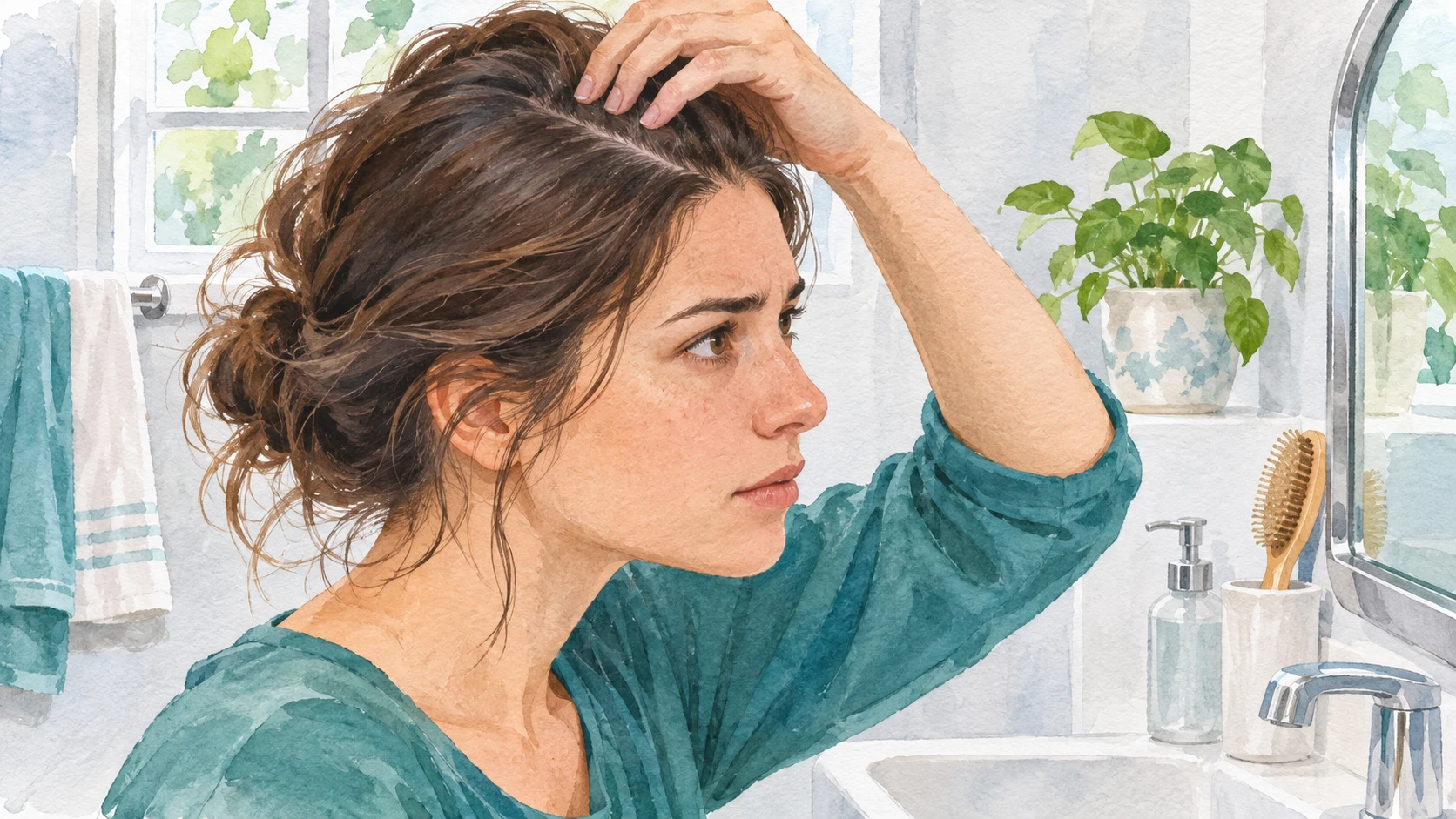
Your head can continue itching after lice treatment because the scalp may still be reacting to earlier lice bites, or the treatment itself may have irritated your skin. Persistent itching does not automatically mean you still have head lice. Even when treatment has killed the lice, the inflammation responsible for itching can take time to settle.
Some people notice that their scalp feels itchier immediately after applying a lice product. Others experience lingering discomfort for several days, despite having no new symptoms apart from the itching. Both situations can occur without an ongoing infestation.
The concern is understandable, particularly when you have already spent time treating your hair and removing lice. However, applying another treatment simply because your scalp still itches can expose your skin to additional irritation without establishing whether more treatment is necessary.
Your Scalp May Still Be Reacting to Earlier Lice Bites
Head lice feed on human blood, and their saliva can trigger an allergic response in the skin. This reaction causes much of the itching associated with an infestation. Killing the lice removes the source of new bites, but the existing immune response does not necessarily disappear immediately.
The inflammation can remain after the insects are gone. Skin that was already irritated may continue producing an itchy sensation while it recovers. In some cases, the discomfort lasts for weeks, even after the lice have been eliminated.
The delayed itching associated with head lice reflects how the immune system responds to louse saliva. The same biological process helps explain why itching may persist after treatment.
People also vary considerably in their reactions. Someone who experienced intense itching before treatment may continue feeling uncomfortable afterward, while another person may notice that the irritation fades relatively quickly.
The duration of itching cannot establish whether lice remain. A scalp that still feels irritated a week after treatment may be recovering, while someone with live lice could experience very little discomfort.
This variability also explains why someone can have head lice without itching. The sensation depends partly on individual sensitivity rather than simply on the presence or number of insects.
Lice Treatment Products Can Irritate the Scalp
Some head lice treatments can cause itching, redness, or a mild burning sensation. These reactions may develop during application or become noticeable afterward, particularly when the scalp was already sensitive from scratching.
Topical lice medications contain active ingredients and other formulation components that can irritate the skin. A person who experienced little discomfort before treatment might therefore notice itching after applying the product.
The recognized skin reactions associated with head lice medications include itching and mild burning. Such reactions do not, by themselves, establish that the medication failed.
There are several ways treatment-related irritation can become noticeable. A product may aggravate an already inflamed scalp, while repeated handling, washing, and combing can add physical irritation. Someone with a preexisting scalp condition may also find that the treatment makes their skin feel more uncomfortable.
The timing sometimes provides a useful clue. Itching that becomes noticeably worse during application, particularly when accompanied by burning or redness, raises the possibility of product irritation. However, timing alone cannot identify the cause.
Do not apply extra lice medication to relieve post-treatment itching. Using more than the labeled amount, combining products, or repeating applications earlier than directed can increase unwanted exposure.
The recommended intervals for repeating head lice treatment depend on the particular medication and its instructions. Persistent itching is not an independent reason to shorten those intervals.
How Long Can Your Head Itch After Lice Treatment?
Post-treatment itching can last several days and sometimes longer. The duration depends on the person’s skin response, the irritation that existed before treatment, and whether the product caused additional inflammation.
Mild itching that gradually improves is generally less concerning than discomfort that becomes increasingly severe or is accompanied by worsening skin changes.
Clinical guidance recognizes that scalp inflammation after topical lice treatment may persist for many days after the insects have been killed. The continued sensation alone is not a reason to repeat medication.
There is no universal day on which itching must stop. Some people experience relatively brief discomfort, while others need more time for their skin to recover.
A child who scratches occasionally three days after treatment may simply have lingering irritation. An adult whose scalp remains uncomfortable after a week could have the same explanation, although persistent or worsening symptoms deserve closer attention.
If itching continues beyond a week, particularly in a child, contacting a healthcare professional is reasonable. Earlier assessment is appropriate when the scalp becomes painful, increasingly red, swollen, or develops sores.
Rather than counting the days until every sensation disappears, pay attention to whether the skin is improving and whether there are signs of a more serious reaction.
Does Itching After Treatment Mean You Still Have Live Lice?
Itching cannot reliably distinguish lingering scalp inflammation from an ongoing infestation.
A person may continue scratching after successful treatment because their skin remains sensitive. Conversely, someone with living lice may have very little itching. These possibilities make symptoms an unreliable measure of whether treatment worked.
The most useful distinction is between a physical finding and a skin sensation. A live, crawling louse is meaningful evidence of lice activity. Itching, redness, and a crawling sensation are less specific because they can occur for other reasons.
The signs of an active head lice infestation include physical evidence that carries more weight than symptoms alone.
It is also common for nits or empty egg cases to remain attached to hair after treatment. Their continued presence does not automatically mean live lice are feeding on the scalp. The interpretation depends on the evidence rather than the amount of itching.
A person who finds suspected nits while experiencing persistent irritation should avoid assuming that the two observations prove an active infestation. Nits without visible live lice can occur for several reasons, including the presence of old egg cases.
When live lice are found after treatment, the situation deserves separate assessment. Depending on the product and timing, living insects may reflect incomplete treatment, newly hatched lice, or another exposure. The appropriate response depends on those details.
Our advice is to avoid making treatment decisions from itching alone. Physical evidence and the instructions for the specific treatment provide a more reliable basis for deciding what happens next.
Scratching and Combing Can Prolong Scalp Irritation
The scalp may already be sensitive by the time someone begins lice treatment. Repeated scratching before treatment can leave areas of irritated or damaged skin, even when there are no obvious open sores.
Treatment day may involve considerable handling of the hair. Separating sections, using a fine-toothed comb, and repeatedly passing the comb close to the scalp can add friction to areas that are already uncomfortable.
A person who continues scratching afterward may prolong that irritation. Fingernails can further damage the skin, particularly around areas that were previously inflamed.
The scalp can therefore remain uncomfortable for reasons unrelated to living lice. This is especially relevant when someone reports tenderness along with itching after extensive combing.
A gentle approach to subsequent hair handling is sensible, but follow the treatment product’s instructions regarding washing, conditioning, and additional applications. Some medications require a waiting period before the hair is washed again.
Repeatedly examining or aggressively combing an already irritated scalp solely because it still itches can make the discomfort harder to interpret.
If scratching has produced open sores, crusting, or worsening tenderness, the concern shifts from ordinary post-treatment itching to possible skin damage or infection.
When Post-Treatment Itching Needs Medical Attention
Most mild post-treatment itching does not require urgent medical care. Certain symptoms, however, should not be dismissed as an ordinary reaction to lice medication.
Contact a healthcare professional if the scalp develops increasing redness, swelling, warmth, significant pain, open sores, pus, or spreading irritation. These findings may indicate a skin infection or another condition requiring assessment.
Persistent itching that is not improving also deserves attention, especially when it interferes with sleep or normal activities. In children, a scalp rash or itching lasting more than seven days after treatment is a reasonable reason to contact a clinician.
The clinical warning signs associated with head lice and scalp irritation include suspected infection and prolonged symptoms after treatment.
A more immediate concern arises when someone develops a strong reaction shortly after applying a product. Marked swelling, widespread hives, or severe irritation warrants prompt medical advice. Difficulty breathing or swelling of the tongue or throat requires emergency medical assistance.
These symptoms should not be managed by applying another lice treatment.
The warning signs of scalp sores and secondary infection are particularly relevant when scratching has broken the skin. A clinician can distinguish an uncomplicated inflammatory reaction from a condition that needs medical treatment.
If you suspect an adverse reaction to a lice product, keep the packaging or product name available when seeking advice. The ingredients and timing of application may help the healthcare professional assess what happened.
Should You Repeat Lice Treatment Because Your Head Still Itches?
Persistent itching alone is not a reason to repeat lice treatment. Another application should depend on the product’s instructions and the evidence of ongoing lice activity, not simply on whether the scalp feels uncomfortable.
Some treatments require a scheduled second application because they do not reliably kill all unhatched eggs. Others have different instructions. Those differences are unrelated to whether a person continues scratching.
Applying treatment repeatedly in an attempt to stop itching can aggravate the very irritation causing the discomfort.
For someone who remains concerned about an ongoing infestation, the possible reasons head lice treatment may not work need to be considered separately from the scalp reaction.
When itching is the only remaining complaint, the more appropriate question is whether the skin is recovering normally or showing signs that warrant medical attention.
Do not combine lice medications, increase the amount used, or repeat a product ahead of its labeled schedule without professional guidance. If the scalp is severely irritated or the treatment instructions are unclear, speak with a healthcare professional before another application.
When the Itching Persists but No Live Lice Are Found
A scalp that continues itching after treatment can be frustrating, particularly when there is no visible evidence explaining the discomfort. Lingering inflammation and treatment-related irritation are both plausible explanations.
The absence of visible lice during a casual look is not definitive, but itching alone cannot establish that the infestation remains active either.
If the discomfort is mild and gradually improving, continued observation may be reasonable. Follow the product’s existing instructions without adding extra applications to address the sensation.
If the itching persists, becomes worse, or is accompanied by significant redness, pain, swelling, or sores, arrange a medical assessment. A healthcare professional can evaluate the scalp itself rather than assuming that every post-treatment symptom comes from living lice.
2 thoughts on “Why Does Your Head Itch After Lice Treatment?”