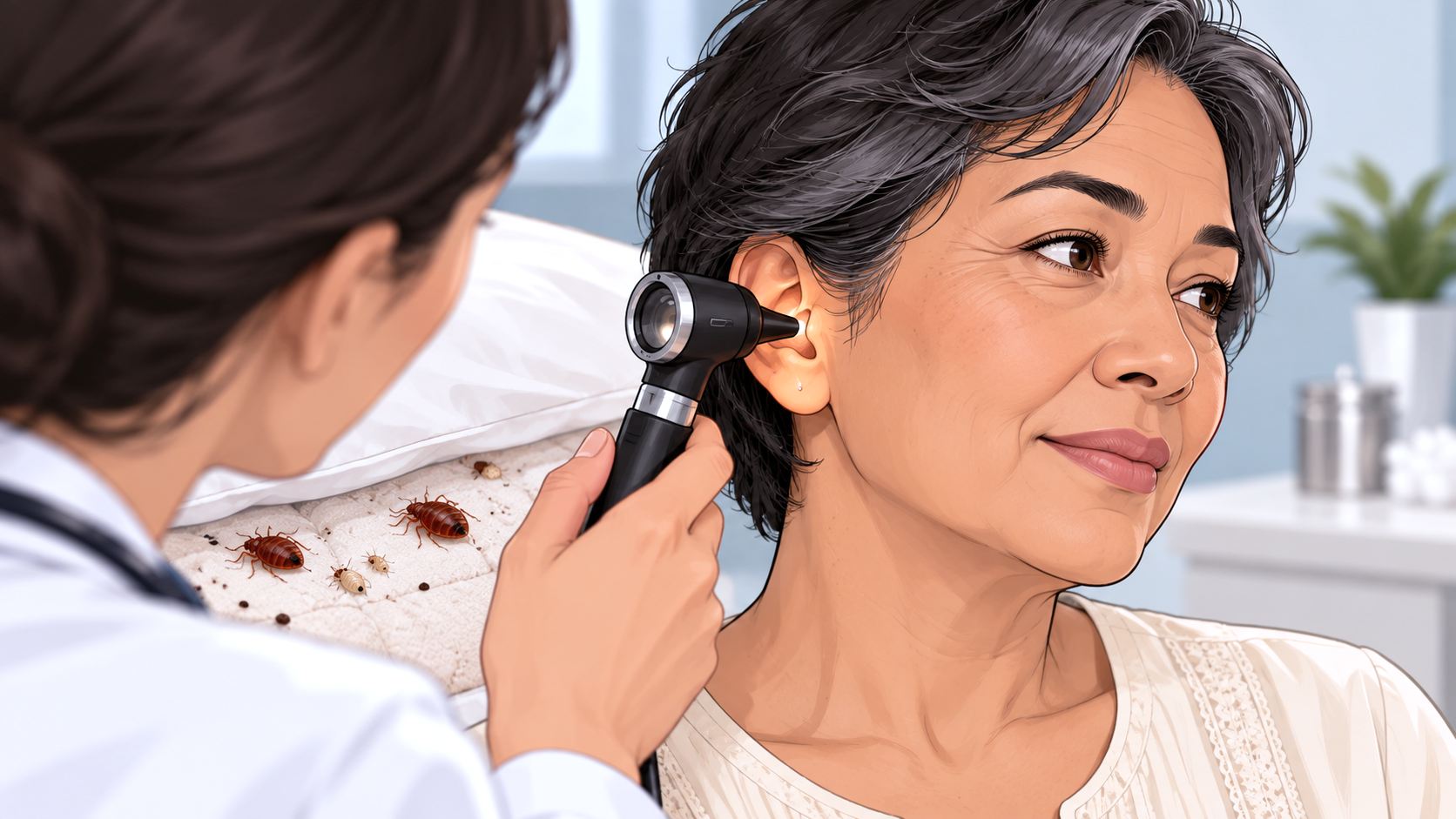
A bed bug can crawl into the external ear canal, but this appears to be very rare. A published medical case documented an engorged bed bug nymph attached near the eardrum. Bed bugs normally hide near sleeping areas, approach a host to take a blood meal and retreat rather than living inside the ear. If an insect is actually moving inside your ear, avoid probing for it with cotton swabs, tweezers or other objects. An insect lodged deeply in the canal is safer to remove under direct visualization by a healthcare professional.
One Bed Bug Has Been Documented Feeding Inside a Human Ear
The possibility is more than theoretical. A 23-year-old man sought medical care after two to three days of irritation, a blocked sensation and the feeling that something was moving in his right ear. Examination revealed a small dark object attached to the central portion of his eardrum. After removal, it was identified as an engorged nymph of Cimex lectularius, the common bed bug. The authors concluded that it had apparently taken a blood meal from the tympanic membrane.
The report is noteworthy precisely because ear involvement is unusual. Bed bugs are external blood-feeding parasites whose ordinary activity centers on moving between harborages and exposed hosts. They typically hide in mattresses, bed frames, headboards and nearby cracks when they are not seeking a blood meal. An open ear canal can physically admit a small insect, especially a nymph, but it is not a normal bed bug habitat.
Bed bug size makes accidental entry anatomically possible. Adults measure approximately 5 to 7 millimeters long, while immature stages are considerably smaller. The tiny nymph involved in the documented ear case had fed successfully before it was removed.
An Ear Canal Is Not Where Bed Bugs Establish an Infestation
Finding one bed bug in an ear would not mean bed bugs are breeding inside the person’s head. Their eggs, developing nymphs and adults normally occupy protected environmental harborages rather than completing the bed bug life cycle on the human body.
Their feeding behavior also differs from parasites adapted to remain on a host. Bed bugs emerge, locate accessible skin, take blood and move away afterward. Their ability to find a human host using carbon dioxide, body odors and heat does not require them to enter body openings.
The ear is therefore better understood as a place a wandering bed bug could accidentally enter and potentially feed, not somewhere it normally seeks out as a home. The documented case involved a single nymph rather than an established population inside the canal.
An Insect in the Ear Can Feel Like Movement, Fullness or Irritation
A live insect inside the external auditory canal can produce scratching or crawling sensations as it moves against sensitive canal skin. Other possible symptoms include itching, pain, a blocked or full feeling and temporary hearing changes. Foreign objects and insects in the ear can produce itching, pain, fullness or hearing loss, although symptoms vary with the object’s position and any resulting injury.
The man in the published bed bug case described both irritation and the sensation of movement. Examination showed only mild redness around the eardrum despite the nymph apparently having fed there. A bed bug inside an ear therefore does not necessarily produce severe pain.
A crawling feeling alone cannot identify the insect. Earwax, hair, skin irritation and other foreign bodies can create unusual sensations, while several insects can accidentally enter an ear. Similarly, feeling itchy while thinking about bed bugs can heighten awareness of minor sensations without an insect actually being present. Direct examination is far more reliable than trying to identify the cause from sensation alone.
Do Not Dig Into the Ear Trying to Find the Bed Bug
If something seems to be inside the ear, inserting a cotton swab, hairpin, finger, tweezer or similar object can push it farther down the canal. Deep manipulation also risks injuring the canal or eardrum. Traumatic eardrum perforation can cause sudden pain, bleeding, hearing loss, tinnitus or vertigo.
Medical removal techniques depend on the insect’s location and whether the eardrum is intact. Clinicians can immobilize a live insect before removing it with appropriate instruments, suction or, in selected circumstances, irrigation. Current procedural guidance lists lidocaine or warm mineral oil among options used for insect removal, but the condition of the eardrum affects which techniques and liquids are safe.
Home treatment becomes particularly inappropriate when there is severe pain, bleeding, known eardrum damage, ear tubes, dizziness, hearing loss or uncertainty about what is lodged inside. Multiple unsuccessful removal attempts can also cause swelling and make professional extraction more difficult.
An Insect That Comes Out May Still Leave Irritation Behind
Movement stopping does not necessarily prove that the entire insect has left the canal. Insect fragments can remain behind and irritate the delicate skin, which is one reason medical evaluation is advised after an insect has been in the ear. Examination can confirm that the canal is clear and assess any injury.
A bed bug that fed inside the ear could also leave a local inflammatory reaction. The ear case resolved without significant complications, but individual responses to bed bug saliva vary. Elsewhere on the body, bed bug bites can be raised, flat or swollen, and rare individuals develop stronger allergic responses. Pain, discharge, persistent hearing changes or worsening irritation after removal warrant medical attention. Injury can result from the insect, inflammation or attempts to extract it rather than from bed bug feeding alone.
Finding a Bed Bug in Your Ear Means the Sleeping Area Needs Inspection
An ear encounter may be rare, but identifying the insect as a bed bug creates a practical question about where it came from. Bed bugs usually remain close to places where people rest, so the surrounding bed, frame, headboard and nearby harborages deserve inspection.
Look for live insects, shed skins, eggs and characteristic fecal spotting rather than relying on bites. A systematic mattress check for bed bugs can reveal evidence around seams, labels and other protected areas, while bed bug interceptor cups can help detect insects moving to and from an appropriately isolated bed.
One insect in an ear does not reveal the size of an infestation. It does justify looking for environmental evidence because finding a bed bug in the house can represent anything from a recently introduced insect to an established population.
Questions About Bed Bugs Getting Into Ears
Can a bed bug lay eggs in your ear?
There is no evidence that human ear canals are normal bed bug egg-laying sites. Bed bugs ordinarily deposit eggs in protected environmental harborages rather than remaining on a person’s body to reproduce.
Can a bed bug crawl through your ear into your brain?
No. The external ear canal ends at the eardrum. A bed bug in the canal does not have an open passage from the ear into the brain.
Could a bed bug bite the outside of your ear without going inside it?
Yes. Bed bugs can feed on exposed skin, and ears may remain uncovered during sleep. Bed bugs can bite different exposed areas of the body without entering the ear canal.
Can a bed bug stay alive in your ear for days?
The documented patient experienced symptoms for two to three days before the bed bug nymph was removed. That case shows that short-term survival inside the canal is possible, but it does not establish the ear as a place where bed bugs normally remain long-term.