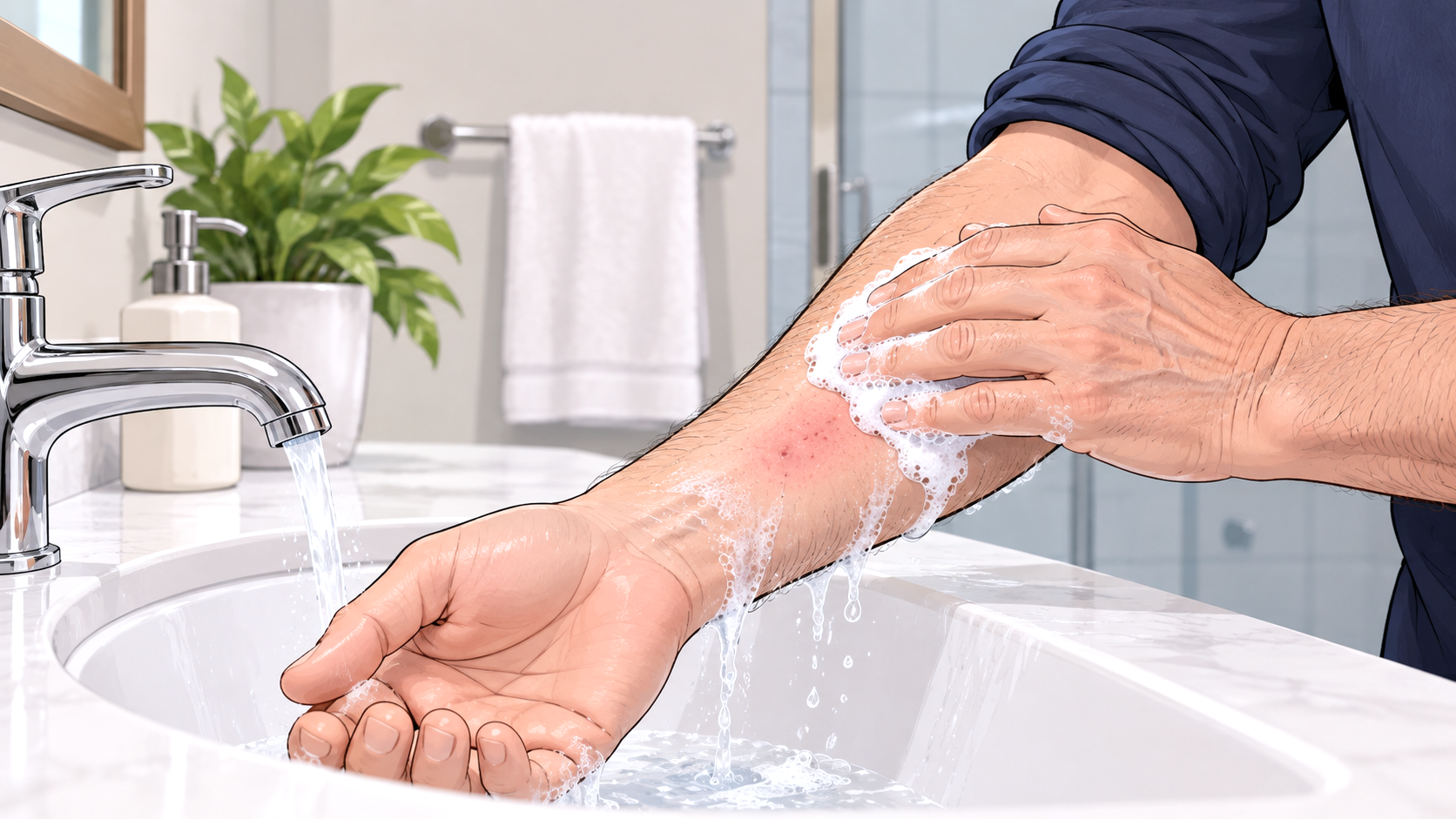
If you suspect a cockroach has bitten you, wash the affected skin with soap and water, apply a cold compress if it is swollen, and protect any broken skin with a clean dressing. Mild irritation can usually be managed at home, but increasing pain, spreading redness, warmth, or discharge may indicate an infection that needs medical attention.
There is no established cockroach-specific medication or antidote. Treatment follows the principles used for minor insect-related injuries and superficial wounds. Because cockroach bite marks cannot be reliably identified by appearance, care should be based on the condition of the skin and the symptoms present, even when the insect responsible is uncertain.
First Aid Immediately After a Suspected Cockroach Bite
Begin by washing your hands, then gently clean the affected area with mild soap and running water. Remove visible dirt without scrubbing or picking at damaged skin. If the wound is bleeding, apply gentle, continuous pressure with clean gauze or a cloth until the bleeding stops.
If the skin has been broken, pat the surrounding area dry and apply a thin layer of plain petroleum jelly to a small, superficial wound. Cover it with a sterile dressing, changing the dressing daily or whenever it becomes wet or dirty. The American Academy of Dermatology’s minor wound-care recommendations support keeping minor injuries clean, slightly moist, and protected while they heal.
Avoid applying rubbing alcohol, hydrogen peroxide, or concentrated antiseptics repeatedly to an open wound. These products can irritate healthy tissue and interfere with healing. Ordinary soap and water are generally sufficient for cleaning a minor injury.
Cockroaches do not possess the stingers found in bees or wasps, so there is no stinger to remove. Their chewing mouthparts and feeding behavior also mean that an injury should not automatically be treated as a venomous sting.
Relieving Itching, Swelling, and Pain
Localized itching or swelling can often be relieved without prescription medication. Apply a clean, cool, damp cloth or an ice pack wrapped in fabric for approximately 10–20 minutes. Never place ice directly against bare skin, particularly over damaged tissue.
For an itchy reaction on unbroken skin, a small amount of over-the-counter 1% hydrocortisone cream may help reduce inflammation. An oral antihistamine such as cetirizine or loratadine may also relieve itching when used according to its label. Avoid applying hydrocortisone directly to an open wound unless a healthcare professional recommends it.
The American Academy of Dermatology’s insect-bite treatment guidance recommends cold compresses, topical anti-itch treatments, and oral antihistamines for appropriate mild reactions. If the area is painful, acetaminophen (paracetamol) or ibuprofen may help, provided the medication is suitable for your age, health conditions, and other medicines. The Mayo Clinic’s insect-bite first-aid recommendations likewise include cold application and symptom-relieving medicines.
Avoid scratching, even when the irritation is persistent. Scratching can damage the protective skin barrier, introduce bacteria, and worsen inflammation. Children’s medications and products intended for delicate areas such as the face require particular care with age restrictions and label instructions.
How to Recognize an Infected Bite
A minor skin injury may initially be tender, slightly swollen, or irritated without being infected. Symptoms that progressively worsen, rather than gradually settle, deserve closer attention.
Signs of possible infection include increasing pain, expanding redness or discoloration, warmth, pus, unpleasant-smelling discharge, and swelling that continues to spread. On darker skin, inflammation may appear purple, brown, or darker than the surrounding area rather than distinctly red.
According to Cambridge University Hospitals’ clinical guidance on insect bites, skin infections sometimes develop two or three days after an insect-related injury, particularly when repeated scratching damages the skin. Red streaking, swollen glands, and flu-like symptoms can signal a more serious problem.
A small area of immediate redness or itching is not necessarily evidence of bacterial infection. The National Institute for Health and Care Excellence (NICE) explains that rapid-onset skin reactions are often inflammatory or allergic rather than infectious.
If you notice spreading inflammation, pus, increasing tenderness, or fever, seek medical assessment promptly. Rapidly spreading redness, severe pain, red streaks accompanied by illness, or marked swelling warrants urgent care.
When a Suspected Bite Requires Emergency Attention
A severe allergic reaction is a medical emergency regardless of which insect is thought to be responsible.
Seek emergency medical help immediately if a skin reaction is accompanied by difficulty breathing, throat tightness, swelling of the tongue or lips, fainting, severe dizziness, or sudden confusion. These symptoms can indicate anaphylaxis.
The NHS guidance on anaphylaxis emphasizes that a rapidly developing reaction may become life-threatening and requires immediate treatment.
If the person has a prescribed epinephrine (adrenaline) auto-injector, use it as directed and call emergency services. Do not wait to see whether symptoms improve after taking an antihistamine, because antihistamines cannot replace epinephrine in the treatment of anaphylaxis.
Severe allergic reactions specifically attributed to cockroach bites are not well characterized in medical literature. Cockroach allergy more commonly involves exposure to allergens in their body material and waste. Nevertheless, breathing difficulty or widespread swelling after any suspected insect encounter must be treated according to the symptoms rather than assumptions about the insect.
Do You Need Antibiotics for a Cockroach Bite?
Most minor insect-related skin injuries do not require antibiotics. Cleaning the affected area and protecting broken skin is usually sufficient when there are no signs of infection.
The NICE recommendations for insect bites and stings advise against routine antibiotic treatment when infection is absent. Antibiotics may become appropriate if a clinician identifies bacterial infection.
Applying antibiotic ointment automatically is not necessary either. The American Academy of Dermatology advises against routine topical antibiotics for uncomplicated minor wounds, partly because these products can cause additional skin irritation or allergic contact dermatitis.
Do not take leftover antibiotics or use prescription preparations without medical guidance. A clinician may need to examine a painful, draining, or spreading lesion to determine whether antibiotics are appropriate and whether another condition is responsible.
When to Check Your Tetanus Vaccination Status
Tetanus is not a characteristic consequence of cockroach bites, but vaccination status can become relevant whenever an injury breaks the skin.
The concern depends on the wound’s condition rather than the identity of the insect. Deep punctures, injuries containing dirt or other contaminated material, and wounds with damaged tissue carry greater tetanus risk than clean, minor abrasions.
The CDC’s wound-management recommendations advise a booster for someone who has completed their primary vaccination series when at least ten years have passed since their last dose for a clean minor wound, or at least five years for a dirty or major wound. People with unknown or incomplete vaccination histories may need additional assessment.
A superficial suspected bite does not automatically require a tetanus injection. If the skin is significantly broken, visibly contaminated, or your vaccination history is uncertain, a healthcare professional can determine whether further protection is necessary.
How Long Should a Suspected Cockroach Bite Take to Heal?
A minor superficial injury should begin improving over the following days, although healing depends on the depth of skin damage, whether the area is repeatedly scratched, and the person’s general health.
For a simple irritated patch, discomfort may diminish relatively quickly. An abrasion involving broken skin may take several days to a week or longer to close, depending on its size and location.
The NHS guidance on insect bites and stings indicates that uncomplicated reactions generally improve within a few days. A suspected cockroach-related injury should not be assigned an exact healing time solely because a cockroach may have caused it.
If the mark remains unchanged, continues enlarging, repeatedly reopens, or develops new symptoms, seek medical evaluation. People with diabetes, poor circulation, or weakened immune systems should obtain advice earlier for wounds that are not healing normally.
What if You Keep Developing New Marks?
Repeated skin lesions do not necessarily represent repeated cockroach bites. Treat each area according to its symptoms, but avoid repeatedly applying medications without establishing what is causing the problem.
Other insects, contact dermatitis, irritation from fabrics or cleaning products, and unrelated skin conditions can produce similar reactions. The American Academy of Dermatology recommends medical assessment for unexplained or worsening bite-like symptoms.
If the lesions recur, record when they appear, which body areas are affected, and whether an insect was actually observed contacting the skin. Clear photographs taken over successive days can help a clinician assess changes.
The locations where cockroaches hide during the day may establish that insects are active near a resting area, but their presence alone cannot identify the cause of a skin reaction. Similarly, cockroach grooming behavior does not determine whether contact with an individual insect will produce irritation.
Medical evaluation is especially appropriate when recurring marks interfere with sleep, fail to respond to ordinary care, or cannot be explained by direct observation. Identifying the actual skin condition is more useful than repeatedly treating every new lesion as a cockroach bite.