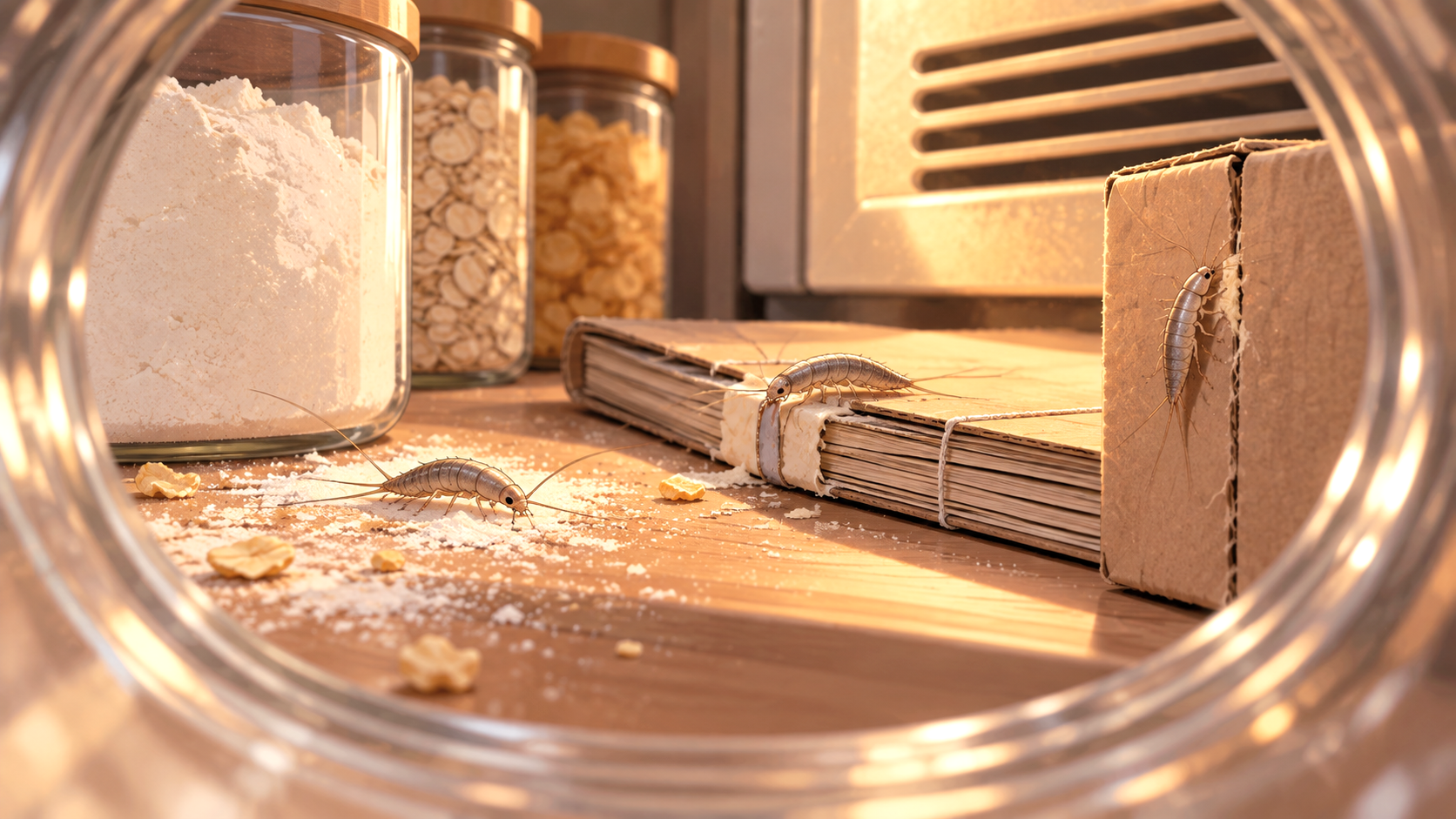
Firebrats eat a surprisingly broad range of foods and household materials, particularly things rich in protein, starch, or sugar. Their diet can include cereals, flour, pasta, pet food, book bindings, paper sizing, wallpaper paste, dead insects, fungi, and even household debris. This variety helps explain how firebrats can find enough to eat in parts of a home that appear to contain very little food.
They are not limited to carbohydrates, either. Although firebrats are famous for feeding on starchy materials, research summarized by Penn State Extension found that bristletails can prefer protein-rich foods, including dried beef, beef extract, and dead insects.
What Foods Do Firebrats Eat?
Dry pantry foods provide several things firebrats can use as food. Cereals, flour, pasta, and pet food are among the dry foods they feed on, particularly when these products are accessible rather than sealed inside containers.
Moist wheat flour has also been specifically documented as food for firebrats and silverfish. More broadly, materials high in protein, sugar, or starch can support their feeding. That means a firebrat wandering through a kitchen or pantry is not dependent on crumbs from sweet foods alone.
However, finding firebrats in a home does not necessarily mean they are living on human food. Their diet extends well beyond anything we would normally think of as edible.
Firebrats Eat Paper, Glue, and Book Bindings
Books and paper products can provide food because of the substances used to manufacture or bind them. Firebrats feed on starch in book bindings, sizing in paper, and paper associated with glue or paste. They may also attack wallpaper to reach the paste underneath it. These starchy paper products and adhesives can provide food even when no conventional food is nearby.
Their jaws are relatively weak, so firebrats do not chew paper in the way a caterpillar might remove a large piece of a leaf. Instead, they scrape or graze the surface. Continued feeding can eventually produce irregular areas of damage, including missing surface material and print. This ability to use paper-associated starches is one reason books, documents, cardboard, wallpaper, and similar materials can become relevant when investigating where firebrats are feeding.
Do Firebrats Eat Clothes?
Firebrats can feed on certain fabrics, particularly when starch or another suitable food is present. Starch used on clothing can attract feeding, but some textile materials themselves may also be susceptible.
One notable example is rayon. Firebrats have been documented to feed extensively on rayon, while silverfish generally cause much less damage to it. That does not mean every hole in clothing should be blamed on firebrats. Fabric damage has many possible causes, and firebrat feeding should be supported by other evidence rather than diagnosed from a hole alone.
Firebrats Also Eat Dead Insects and Fungi
A home does not have to contain exposed flour or damaged books to provide firebrats with food. Dead insects, certain fungi, household dust, and debris can also contribute to their diet. These less obvious food sources are particularly important because they can accumulate in cracks, voids, storage areas, and other places people rarely clean.
Protein can be especially attractive. Despite their reputation for eating carbohydrates, food-preference research summarized by Penn State found a preference for dried beef, beef extract, dead insects, and other protein-rich materials.
That broader diet helps explain why simply removing one obvious food source may not leave a firebrat with nothing to eat. An apparently empty utility area can still contain dead insects, organic debris, paper products, adhesives, or fungi that provide usable food.
How Long Can Firebrats Live Without Food?
Firebrats do not need to feed constantly. They can survive for extended periods without nourishment, which makes the absence of an obvious food source less reassuring than it might seem.
The University of California Statewide IPM Program notes that firebrats and silverfish can survive for several months without food. Their ability to persist between meals, combined with the variety of materials they can consume, means even sporadic access to food may be enough to keep individuals alive. This is also why finding firebrats does not necessarily reveal what they are eating. Their current hiding place and their food source do not have to be the same spot, although these insects may remain near a good food supply once they find one.
What Should You Check for If Firebrats Are Feeding Indoors?
Start with accessible dry foods such as flour, cereal, pasta, and pet food, especially packages that are open, damaged, or poorly sealed. Then consider less obvious materials nearby, including books, stored papers, cardboard, wallpaper adhesives, starched fabrics, dead insects, and accumulated debris.
Firebrats can exploit enough different foods that searching for one specific attractant is rarely useful. Instead, look at the collection of edible materials available around the places where you are finding them. If sightings are recurring, understanding what causes firebrats to get into a house can help determine why that particular area is supporting them in the first place.
Common Questions About What Firebrats Eat
Do firebrats eat cardboard?
Firebrats can use starches and adhesives associated with paper products, so cardboard and especially glued paper products may provide suitable feeding material. Their diet should not be reduced to cellulose alone because adhesives, sizing, debris, and contaminants on paper products can also provide food.
Do firebrats eat mold?
Certain fungi can serve as food for firebrats and silverfish. Fungi are among the less obvious food sources available indoors, alongside household dust, debris, and dead insects.
Do firebrats eat other insects?
They can feed on dead insects. Protein-rich material can be an important part of their diet, so firebrats should not be thought of as insects that survive entirely on starch and paper.
Do firebrats eat wood?
Wood is not listed among the characteristic foods in the major extension references on firebrat feeding. Finding firebrats around wooden structures therefore should not be treated as evidence that they are consuming or structurally damaging the wood.
Do firebrats eat human food?
Yes. Accessible cereals, flour, pasta, and pet food can all provide food. Keeping susceptible dry foods in tightly closed containers removes some of the easiest food sources available to them.
2 thoughts on “What Do Firebrats Eat? Foods and Materials They Feed On”