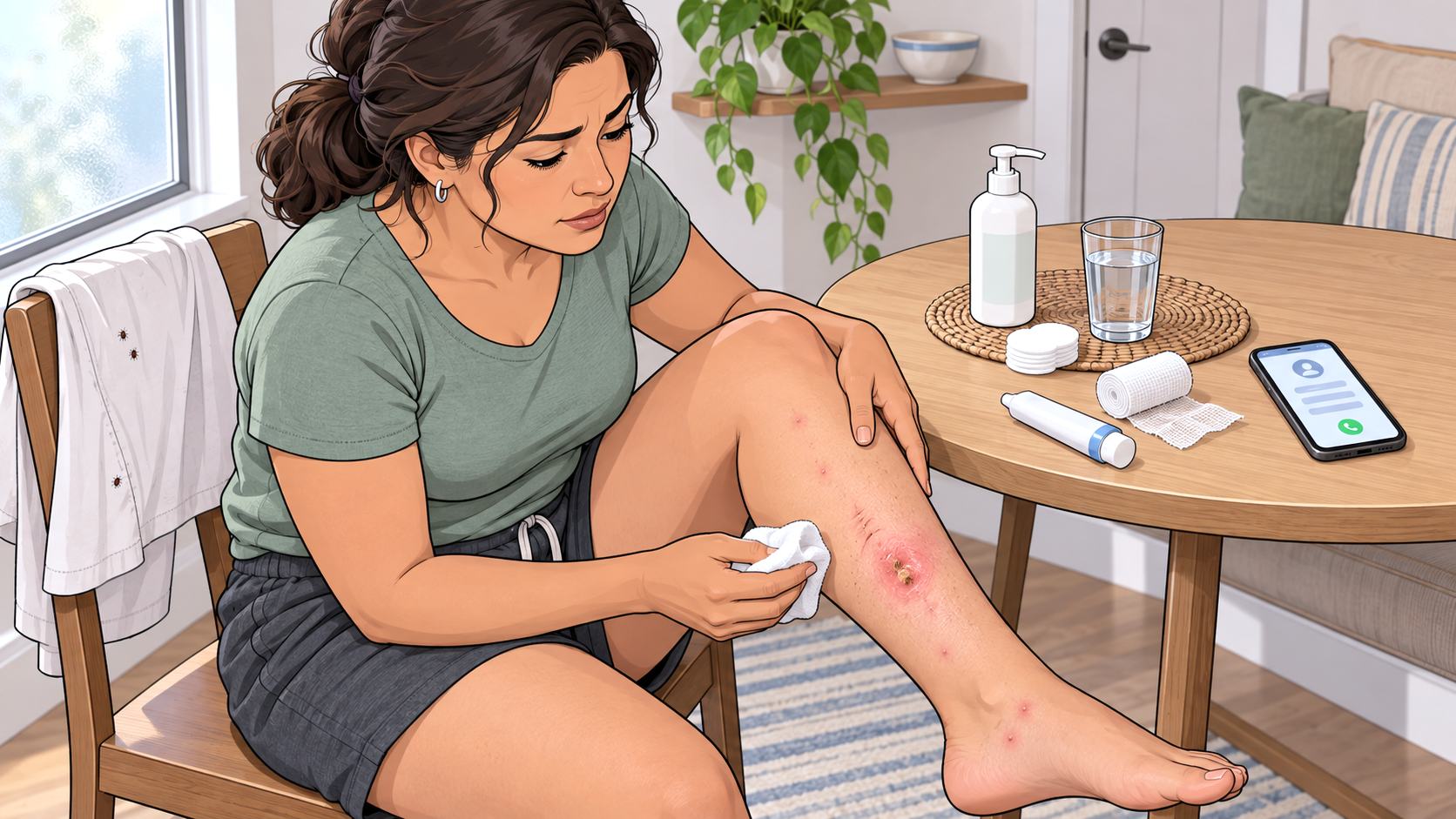
Bed bug bites can become infected. The main concern is secondary bacterial infection after the skin barrier is damaged, particularly when intense itching leads to repeated scratching. Most bed bug bites don’t become infected. However, increasing pain, warmth, swelling, spreading redness, pus, or other worsening symptoms deserve more attention than ordinary itching alone.
Why Bed Bug Bites Can Become Infected
Bed bug bites often itch, and scratching can break the skin. The CDC specifically advises avoiding scratching and maintaining good hygiene to reduce the risk of secondary infection.
Clinical reviews have reported secondary infections including cellulitis, impetigo, folliculitis, ecthyma, and lymphangitis following bed bug bites and scratching. How commonly these complications occur hasn’t been well established.
Keeping the skin clean and controlling the itch can reduce the temptation to scratch. If itching is the main problem and there are no signs of infection, bed bug bite itching can usually be managed with simple symptomatic care.
What Does an Infected Bed Bug Bite Look Like?
Itching, redness, and swelling can occur with an ordinary bed bug reaction, so redness alone doesn’t prove infection.
More concerning changes include increasing tenderness or pain, warmth, swelling that continues to expand, pus or other discharge, and redness spreading beyond the original area. The American Academy of Dermatology recommends medical evaluation when a bed bug bite becomes tender or produces discharge such as pus.
Cellulitis typically causes an area of skin that becomes painful, warm, swollen, and discolored or red and may spread. Impetigo can produce sores that rupture and develop characteristic crusting.
Because allergic and inflammatory bite reactions can also cause considerable redness and swelling, appearance alone doesn’t always distinguish infection from a strong reaction.
Can Scratching Cause Cellulitis or Impetigo?
Yes. Scratching can damage the skin sufficiently for bacteria to enter and cause a secondary infection.
Cellulitis affects deeper layers of the skin and surrounding tissue, while impetigo is a more superficial bacterial infection. Both have been reported as complications associated with scratching bed bug bites.
That doesn’t mean every scratched bite will become infected. The CDC notes that most bed bug bites require only minimal symptomatic treatment, with secondary infections representing a complication rather than the expected outcome.
Can Bed Bugs Transmit MRSA?
Bed bugs aren’t currently established as vectors that transmit MRSA to people in real-world settings.
A 2024 study did provide an interesting reason for continued research. Under laboratory conditions, researchers found that bed bugs could acquire MRSA externally and internally and retain viable bacteria for seven days. Bugs transferred MRSA to an uncontaminated membrane feeder in two of three experimental trials.
The researchers explicitly cautioned that their experiment doesn’t establish bed bugs as relevant MRSA vectors in nature. Clinical and epidemiological evidence would be needed to demonstrate that transmission occurs between bed bugs and people under real-world conditions.
For now, the established health concern remains secondary infection of irritated or scratched skin rather than assuming that a bed bug transmitted MRSA during feeding.
What Should You Do If a Bite Looks Infected?
Avoid further scratching and gently wash the area with soap and water. Don’t squeeze, pick, or repeatedly disturb the affected skin.
If the bite becomes increasingly painful, tender, warm, swollen, or begins producing pus, have it evaluated by a healthcare professional. Secondary bacterial infections may require antibiotics, but whether an antibiotic is necessary depends on the infection and its severity.
Seek prompt medical attention for rapidly worsening symptoms or signs that you’re becoming systemically unwell. Difficulty breathing or swelling involving the mouth, tongue, or throat requires emergency medical care because these symptoms can indicate a severe allergic reaction rather than a routine skin infection.
For a broader explanation of when symptoms warrant medical attention, see when to see a doctor for bed bug bites. Uncomplicated bites without infection can generally be managed with basic at-home bed bug bite care.
Questions About Infected Bed Bug Bites
How long does it take a bed bug bite to become infected?
There is no reliable fixed timeline. Bed bug reactions themselves can also appear or change after the initial bite, so timing alone cannot diagnose infection. Worsening pain, warmth, spreading redness, swelling, or pus are more meaningful reasons to seek medical advice.
Can an infected bed bug bite spread?
A bacterial skin infection can extend beyond the original bite. Increasing or expanding symptoms should be medically assessed rather than assumed to be a normal bite reaction.
Does every infected bed bug bite need antibiotics?
No. Treatment depends on the type and severity of the infection. The CDC notes that secondary infections may require topical or systemic antibiotics, so suspected infection should be evaluated rather than self-treated with leftover antibiotics.
3 thoughts on “Can Bed Bug Bites Get Infected? Here’s What That Looks Like”