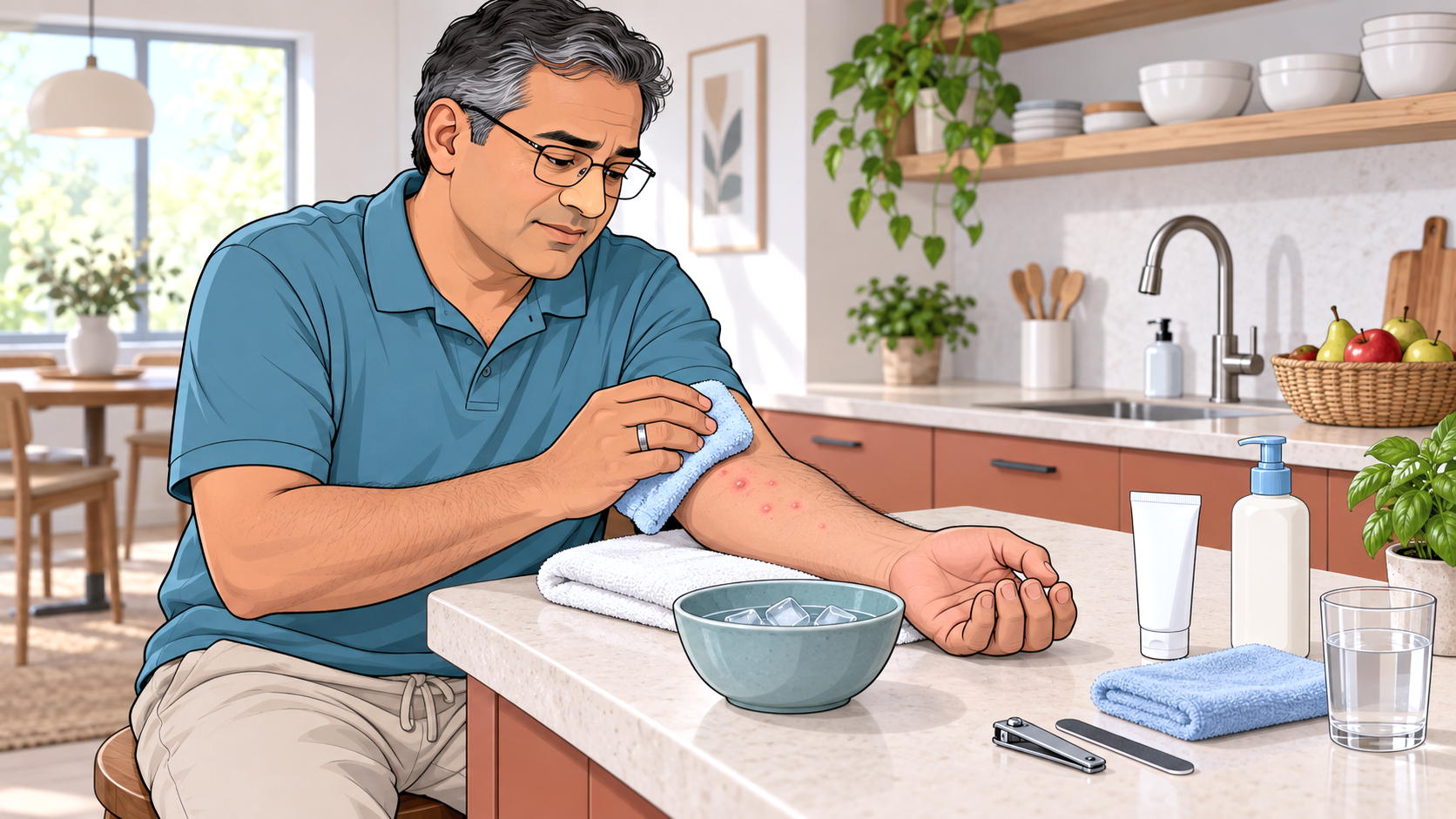
Most bed bug bites need little more than basic skin care. Wash the area gently with soap and water, use a cold compress for swelling or discomfort, and avoid scratching. If itching is bothersome, an over-the-counter hydrocortisone cream or oral antihistamine may help.
There isn’t a special medicine specifically for bed bug bites. Treatment is aimed at controlling the itching and inflammation while the skin heals.
Wash the Bites and Keep Them Clean
Start by gently washing the affected skin with soap and water. The American Academy of Dermatology recommends washing bed bug bites as part of home care, particularly because damaged skin can become infected.
For swelling or discomfort, apply a cold, damp cloth or an ice pack wrapped in fabric. Mayo Clinic recommends cold application for 10 to 20 minutes for mild insect-bite reactions.
Most uncomplicated bed bug bites gradually disappear without medical treatment, commonly within a week or two.
Hydrocortisone or an Antihistamine Can Help With Itching
A weak over-the-counter hydrocortisone cream can reduce itching and inflammation. Apply it according to the product label rather than using more or applying it more frequently in an attempt to speed healing.
An oral antihistamine is another option when itching is troublesome. The CDC notes that antihistamines may help control itchy inflammatory reactions, while topical steroid creams may be useful for more extensive reactions.
These treatments relieve symptoms. They don’t make the bite disappear immediately, and they don’t affect the bed bugs responsible for it.
Try Not to Scratch
Scratching doesn’t make bed bug bites multiply or spread across your body. The concern is damage to the skin.
Repeated scratching can break the skin and create an opportunity for a secondary bacterial infection. Keep fingernails short, continue basic hygiene, and use itch relief when necessary rather than repeatedly scratching the area.
Watch damaged bites for increasing pain, warmth, swelling, pus, or worsening redness or discoloration. Bed bug bites can become infected when scratching or other skin damage compromises the protective surface.
Know When Home Treatment Isn’t Enough
Seek medical advice if the bites are becoming increasingly painful or swollen, develop signs of infection, produce significant blistering, or are accompanied by symptoms that concern you. A persistent rash that isn’t behaving like an ordinary insect-bite reaction also deserves evaluation because skin appearance alone can’t confirm that bed bugs caused it.
Serious allergic reactions are uncommon but require prompt attention. Difficulty breathing, swelling of the lips, face, tongue, or throat, dizziness, or fainting can indicate a medical emergency. Allergic reactions to bed bug bites can vary considerably in severity.
Treating Your Bites Won’t Stop New Ones
Hydrocortisone, antihistamines, and cold compresses treat symptoms on your skin. They don’t eliminate an infestation.
If new marks continue appearing, don’t rely on the bites themselves to diagnose the cause. Inspect the sleeping area for physical evidence and confirm whether you actually have bed bugs before beginning pest treatment.
For itching that remains the main problem, there are additional ways to reduce itching from bed bug bites without experimenting with unproven remedies.
Questions About Treating Bed Bug Bites at Home
Can you use hydrocortisone on a child’s bed bug bites?
Age restrictions and directions vary between hydrocortisone products, so don’t assume an adult product or dose is appropriate for a child. Follow the label and ask a pediatrician or pharmacist when you’re uncertain, particularly for babies and young children. Bed bug bites on babies and infants deserve additional care because other childhood rashes can also resemble insect bites.
Should you cover a scratched-open bed bug bite?
If scratching has broken the skin, gently clean the area and protect it from further rubbing or contamination when necessary. Seek medical advice if signs of infection develop.
Do home remedies make bed bug bites heal faster?
There is little evidence that popular home remedies speed healing. The CDC notes that treatments for bed bug bite reactions haven’t been evaluated extensively in clinical trials. Basic hygiene, avoiding scratching, and appropriate symptom relief are usually enough while uncomplicated bites heal.
3 thoughts on “How to Treat Bed Bug Bites at Home”