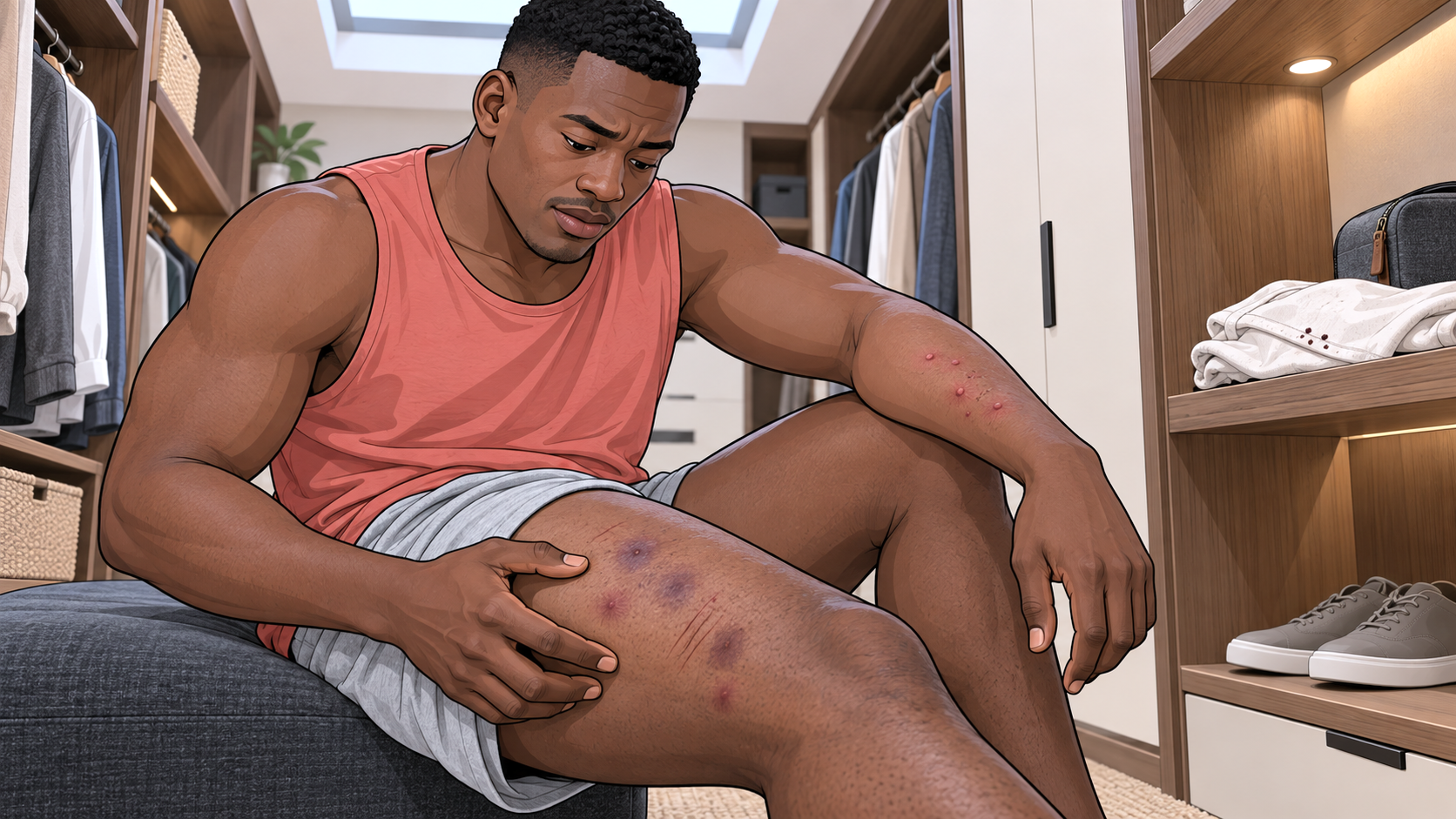
Seeing a bed bug bite change from red to purple can make an ordinary-looking welt suddenly seem much more serious. The difficult part is that “purple” can describe several different skin changes. A purple welt, a true bruise, tiny areas of bleeding beneath the skin, and a dark mark left after inflammation are not the same thing.
Bed bug bites can sometimes appear red or purple because the skin develops an inflammatory reaction to the bite. Less commonly, bed bug bites can produce purpuric or hemorrhagic lesions involving bleeding beneath the skin. Scratching can further injure irritated skin, while inflammation can leave darker pigmentation after the active bite reaction begins to settle.
That distinction matters more than the color alone. Instead of asking only why the bite turned purple, it is more useful to look at what the purple area is actually doing.
A Purple Bed Bug Bite Is Not Necessarily a Bruise
Typical bed bug bite reactions vary considerably between people. Some develop little or no visible reaction, while others develop itchy, swollen welts. Red or purple swollen skin can occur as part of an allergic skin reaction, and reactions can become much more pronounced in some people.
The color by itself therefore does not establish that blood has collected beneath the skin. A true bruise develops when small blood vessels break and blood leaks into tissue beneath the skin. Bruises commonly change color during healing and can become blue or purple.
Bed bug bites have a different starting point. The insect pierces the skin to take a blood meal and introduces salivary substances during feeding. The resulting skin problem is primarily an inflammatory reaction to components of that saliva, which is why itching and swelling are so common. This inflammation can look quite different from one person to another.
That variability is one reason we would not use purple coloration alone to decide whether a mark came from a bed bug. Even ordinary bed bug bite photos cannot confirm the source of a skin lesion without other evidence of an infestation.
Sometimes There Really Is Bleeding Beneath the Skin
There is an important exception to the simple red-welt picture. Bed bug bites can occasionally produce purpura, petechiae, and other hemorrhagic skin reactions. Clinical reviews of bed bug bites include purpura and petechiae among documented presentations, although the usual reaction is much closer to an itchy papule or welt.
Purpura means that blood has leaked from small blood vessels beneath the skin, producing purple-colored spots or patches. Very small spots of this type are called petechiae, while larger areas of bleeding beneath the skin can be classified differently depending on their size. This is actual bleeding into the skin rather than ordinary surface redness.
A small hemorrhagic point can also occur at the feeding site. Bed bug bite lesions have been described with a central hemorrhagic punctum where the insect’s feeding structures entered the skin. However, not every bite develops one, and seeing a dark center does not prove that a lesion came from a bed bug.
We think this is where the word “bruise” can become misleading. A person may reasonably call any blue-purple patch a bruise when looking at it in the mirror, but medically, several different processes can produce similar colors. The appearance alone cannot tell you which one occurred.
Scratching Can Change What the Original Bite Looks Like
An intensely itchy bite rarely stays untouched. Repeated scratching can scrape and erode the skin, so the lesion you see two days later may no longer represent the original bite reaction.
That matters because bed bug bites can itch intensely, and scratching creates additional mechanical injury. Broken or irritated skin can look darker, crusted, raw, or more inflamed than the initial welt. Scratching also increases the risk of secondary bacterial infection, which is one reason avoiding excessive scratching and maintaining good hygiene are part of basic bite care.
This creates a useful distinction when a bite seems to be “getting worse.” A changing appearance does not necessarily mean the bed bug injected something dangerous or that the bite is somehow spreading. The skin may be reacting to the bite, being repeatedly traumatized by scratching, or developing another complication.
Increasing tenderness, warmth, drainage, or pus deserves more attention than a simple change in color. Those findings can accompany a secondary skin infection, particularly when scratching has damaged the skin barrier. Our guide to infected bed bug bites covers those signs separately.
A Dark Purple-Brown Mark May Be Pigment, Not Blood
There is another reason a bite can remain dark after the swelling and itching improve. Skin inflammation can trigger post-inflammatory hyperpigmentation, which means increased pigment remains where the inflammation occurred.
Insect-bite reactions are among the skin injuries that can produce post-inflammatory hyperpigmentation. The change results from increased or irregular melanin production after inflammation rather than blood collecting under the skin. It can occur in any skin type, but post-inflammatory hyperpigmentation is more prominent and persistent in darker skin tones.
That distinction becomes especially useful when evaluating an older mark. A true bruise changes as trapped blood and its components break down. Post-inflammatory pigmentation, meanwhile, can remain after the active inflammation has resolved. Depending on the depth of the pigment and the person’s skin tone, the residual mark can appear brown, gray, blue-gray, or otherwise darker than the surrounding skin.
This also helps explain why bed bug bites can look different on Black skin. Redness may be less visually obvious on darker skin, while changes in pigmentation can be more noticeable. Looking only for the bright-red welts shown in many online photographs can therefore give an incomplete picture.
Purple Marks Do Not Confirm That You Have Bed Bugs
This is probably the most important diagnostic point in the article. Purple spots, bruises, and darkened bite-like marks have many possible causes. Bed bugs cannot be identified reliably from a skin reaction alone.
Even the inflammatory reaction produced by bed bug bites is not considered diagnostic for bed bugs. Other arthropod bites and several skin conditions can produce lesions that overlap in appearance. That remains true even when several marks occur together.
Instead, confirmation should shift away from your skin and toward the place where you sleep. Look for live bed bugs, shed skins, eggs, fecal spotting, and other physical evidence around mattresses, box springs, frames, headboards, and nearby hiding areas. Our guide to how to tell if you have bed bugs explains how to combine those clues.
This is also why we would not treat a purple mark as proof of an infestation and immediately start applying pesticides. Someone who has bites but no other signs of bed bugs still needs to establish what is actually causing the skin reaction.
When a Purple or Bruised-Looking Bite Needs Medical Attention
A small bite reaction that is improving is very different from widespread unexplained purple patches. Because purple coloration can represent several processes unrelated to bed bugs, unusual bleeding beneath the skin should not automatically be blamed on an insect bite.
Seek medical evaluation when you develop significant blistering, signs of infection, or a substantial allergic reaction. Bed bug bites can rarely produce serious allergic reactions, and red or purple swollen skin or hives can accompany an allergic response. Difficulty breathing, tongue swelling, or other signs of a severe allergic reaction require urgent medical care.
Unexplained bruising or numerous purple spots elsewhere on the body also deserves medical attention rather than a bed bug diagnosis made at home. Purpura can have many causes, including conditions involving blood vessels, platelets, infections, medications, and clotting. Bleeding into the skin has causes far beyond insect bites, so a new or extensive pattern should be assessed on its own merits.
For an ordinary uncomplicated reaction, most bed bug bites need only symptomatic care and good hygiene. However, the threshold changes when the reaction is severe, unusual, infected, or accompanied by symptoms beyond the bite sites. Our guide to when to see a doctor for bed bug bites goes deeper into those decision points.
What to Do When a Bed Bug Bite Changes Color
Take a clear photograph of the area rather than relying on memory of how it looked yesterday. Avoid scratching it, keep the skin clean, and watch whether the swelling and irritation are improving. Most uncomplicated bed bug bites eventually resolve, although the timing and appearance vary between people.
At the same time, investigate the possible infestation separately. A dermatologist can evaluate the skin reaction, but the skin itself cannot tell you with certainty that bed bugs are present. Physical evidence from the sleeping area is what connects the medical problem to the pest problem.
We would treat those as two parallel questions. First, does the skin change require medical attention? Second, can you actually confirm bed bugs in the environment? Keeping those questions separate prevents a purple mark from becoming the sole basis for either a medical conclusion or a pest-control treatment.
Other Questions About Purple Bed Bug Bites
Do purple bed bug bites mean you are allergic?
Not necessarily. Allergic reactions can include red or purple swollen skin and hives, but purple coloration can have other explanations. The severity of swelling and any accompanying symptoms matter more than color alone.
Do bed bug bites cause permanent dark spots?
Inflammation from insect bites can produce post-inflammatory hyperpigmentation, and these marks can persist after the original reaction settles. Persistent pigmentation is not the same thing as an active bed bug bite.
Should purple spots turn pale when I press them?
Ordinary redness caused by increased blood flow can blanch under pressure, while bleeding beneath the skin does not. However, a home blanching test cannot establish why a purple lesion appeared or diagnose bed bug bites. Unexplained non-blanching purple spots should be medically evaluated.
Can medication make a bed bug bite look more bruised?
Some medicines can increase a person’s tendency to bruise or bleed. If you take medication that affects clotting and develop unusual bruising or purple skin changes, discuss the finding with a healthcare professional rather than assuming the appearance is simply part of a bed bug bite.