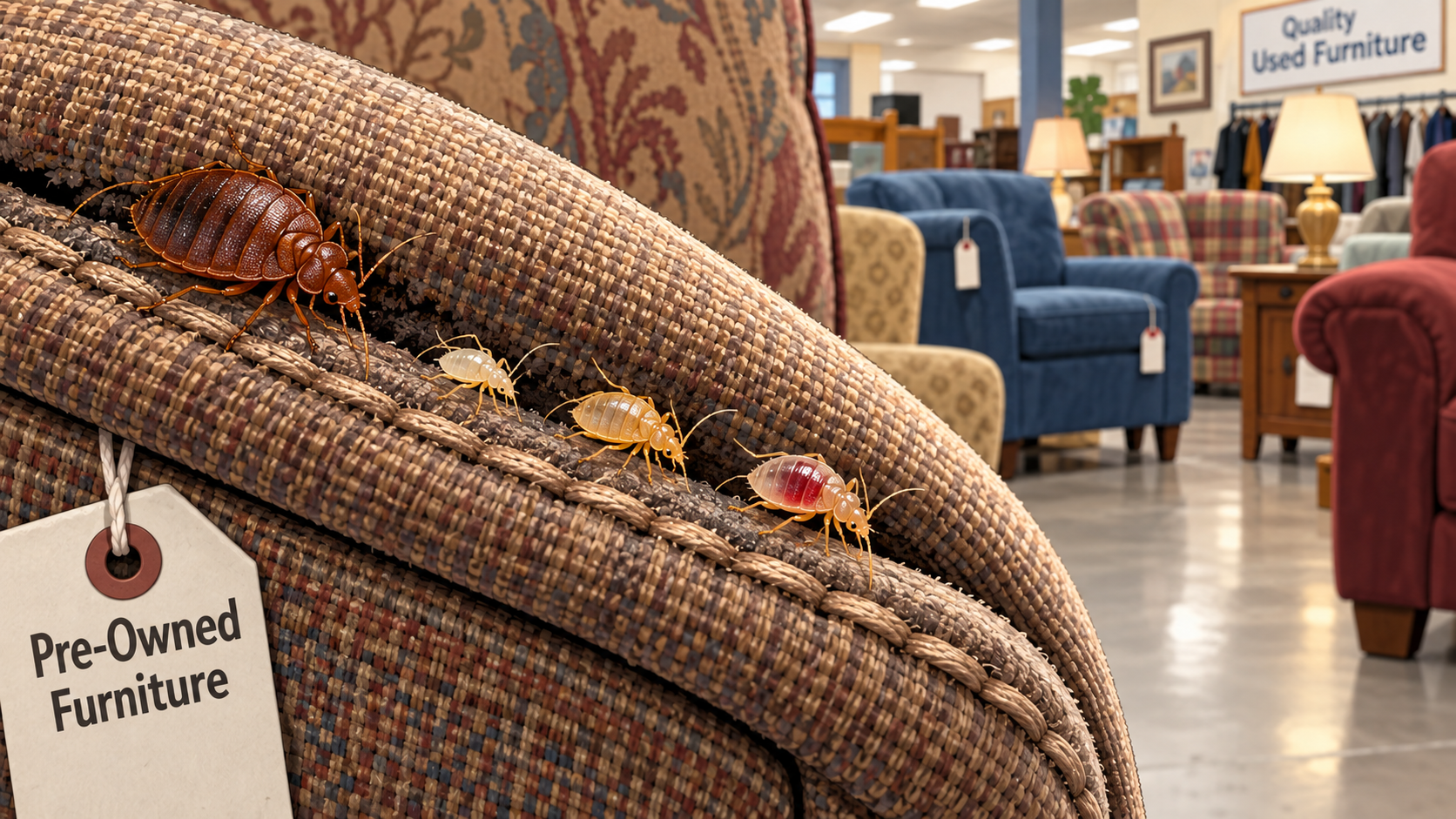
Baby bed bugs, properly called nymphs, look like smaller, paler versions of adult bed bugs. They have six legs, two antennae, a broad oval abdomen, and the same generally flattened body shape as adults. The youngest nymphs can be particularly difficult to recognize because they are tiny and nearly translucent before feeding.
Bed bugs pass through five nymphal stages before becoming adults, growing larger with each molt. Their appearance also changes considerably after feeding. An unfed first-instar nymph may be pale enough to blend into light-colored fabric, while the blood inside a recently fed nymph can make its abdomen appear bright red. This variation means size or color alone isn’t enough to identify a baby bed bug confidently.
What Does a Baby Bed Bug Look Like?
The CDC describes bed bug nymphs as smaller and paler versions of adults. They retain the basic bed bug body shape throughout development, but the youngest stages are much lighter and smaller. First-instar nymphs are around 1.5 mm long, while later instars progressively approach adult size. Penn State Extension describes nymphs as yellowish-white and ranging from roughly 1/16 inch in the first instar to 1/6 inch in the fifth.
A newly hatched nymph can therefore look surprisingly different from the reddish-brown bed bug most people picture. Before feeding, hatchlings are yellowish-tan to nearly translucent and can be difficult to see. After feeding, the abdomen expands and the ingested blood becomes visible through the relatively pale body. Cornell’s bed bug identification guidance shows this contrast particularly clearly, with unfed hatchlings appearing yellowish-tan and fed nymphs becoming conspicuously darker as the blood meal shows through the abdomen.
The change is temporary, so bed bug color shouldn’t be used by itself for identification. A pale nymph, a bright-red freshly fed nymph, and a darker nymph digesting a previous meal can all be the same species at similar developmental stages.
How Do Baby Bed Bugs Change as They Grow?
There are five nymphal stages, called instars, between the egg and adult. Each nymph needs a blood meal before it can successfully molt into the next stage. The shed exoskeleton is left behind while the insect emerges slightly larger, repeating the process until the fifth instar molts into an adult.
The progression is therefore gradual rather than a dramatic transformation. First-instar nymphs are the smallest and palest, while fifth-instar nymphs can be almost as large as adults. North Carolina State Extension describes first instars as tan to nearly clear and difficult to see, with later nymphs becoming progressively larger and darker. All juvenile stages become swollen and red after taking a blood meal.
The complete bed bug life cycle covers how these five stages fit between hatching and adulthood, while how big bed bugs get provides the size differences in more detail. For identification, the useful point is that a baby bed bug doesn’t have one fixed appearance. Its size changes with each instar, while its color and body shape can change noticeably depending on whether it has recently fed.
How Can You Tell a Baby Bed Bug From a Booklouse?
Booklice are easy to confuse with young bed bug nymphs because both can be extremely small and pale. Size alone isn’t enough to separate them, particularly when you’re dealing with a first- or second-instar bed bug.
Body proportions provide better clues. Booklice typically have a conspicuous head, long slender antennae, and a relatively narrow thorax behind the head. A bed bug nymph has the broader, flatter outline associated with bed bugs, including a comparatively broad thorax and abdomen. A recently fed nymph may be easier to distinguish because blood becomes visible through its abdomen.
Head shape can therefore help, but it shouldn’t be treated as a single definitive test. A tiny insect with a relatively large head isn’t automatically a booklouse, just as a narrow-looking head doesn’t independently prove that something is a bed bug. Look at the entire insect, including the head, thorax, abdomen, antennae, legs, overall outline, and whether its appearance matches other evidence of an infestation.
Magnification makes these differences much easier to judge. A hand lens, macro camera, or clear close-up photograph can reveal proportions that are nearly impossible to assess accurately when the insect is only a millimetre or two long.
How Can You Confirm That a Tiny Bug Is a Bed Bug Nymph?
Start with the overall body rather than trying to identify the insect from color alone. An unfed nymph should have the flattened bed bug shape, six legs, two antennae, and a broad abdomen. The youngest stages can be nearly translucent, while older nymphs become progressively easier to see. A freshly fed nymph becomes swollen and red as the blood meal fills its abdomen.
The antennae on a bed bug can provide another feature to examine under magnification, but no single small anatomical detail should carry the entire identification. Location also provides useful context. Finding a suspicious insect tucked into a mattress seam alongside characteristic fecal spots, shed skins, eggs, or other bed bugs provides much stronger evidence than finding one unidentified pale insect elsewhere in the house.
If you’re uncertain, capture the insect intact instead of crushing it. A preserved specimen or sharp close-up photograph can be examined by a pest professional or entomologist. The CDC notes that confirmation of a bed bug problem is best achieved by identifying an adult or nymph collected from a sheltered area near where people are being bitten.
Questions About Baby Bed Bugs
Can you see baby bed bugs with the naked eye?
Yes. Even first-instar bed bugs are visible to the naked eye, but their tiny size and pale coloration can make them difficult to notice, especially against light bedding. Magnification makes identification considerably easier.
Are baby bed bugs always white or clear?
No. Young unfed nymphs can be nearly translucent or yellowish-white, but their appearance changes after feeding. Blood becomes visible through the abdomen, making a freshly fed nymph appear bright red before it gradually darkens as the meal is digested.
Do baby bed bugs bite people?
Yes. Every nymphal stage feeds on blood, and a blood meal is required before a nymph can molt into the next stage.
Do baby bed bugs look exactly like adults?
They have the same general body plan, but they aren’t identical. Nymphs are smaller and usually much paler, and they lack the fully developed reproductive characteristics of adults. The youngest stages can consequently look quite different from the reddish-brown adult bed bug most people recognize.
12 thoughts on “What Do Baby Bed Bugs (Nymphs) Look Like?”