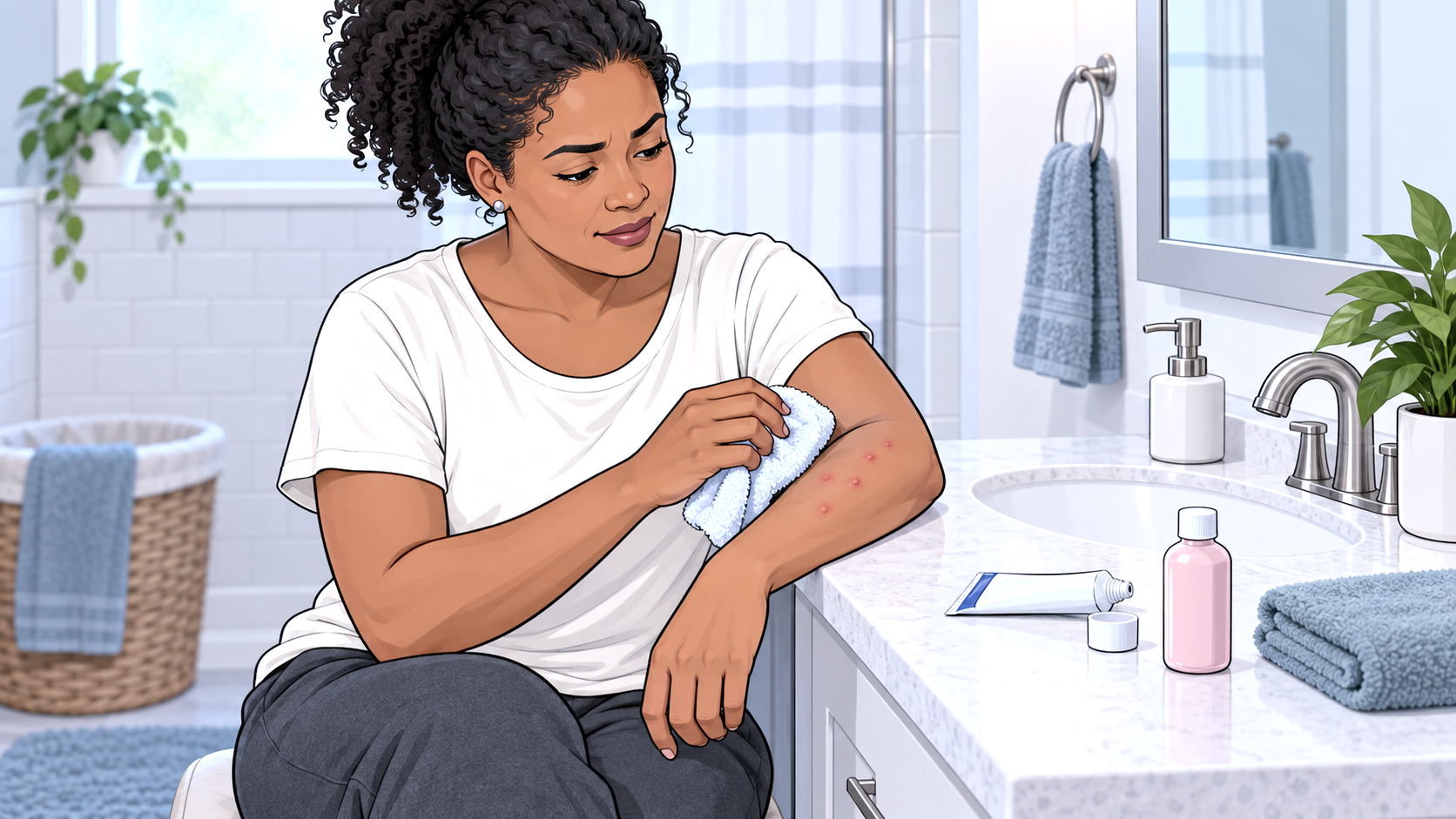
Bed bug bites can itch intensely, but scratching them usually makes the situation worse. It can damage the skin, prolong irritation, and increase the chance of a secondary infection. Research published in Science in 2025 also identified a biological pathway through which scratching can amplify allergic skin inflammation, although that study examined allergic dermatitis in mice rather than bed bug bites specifically.
To relieve itchy bed bug bites, keep the skin clean, use a cool compress, and avoid scratching. An over-the-counter hydrocortisone cream or oral antihistamine can help when needed, while products containing ingredients such as calamine, menthol, or pramoxine may provide temporary itch relief. Most bites improve without medical treatment.
If the reaction is extensive, severe, infected, or accompanied by significant swelling or other concerning symptoms, medical advice is more appropriate than continuing to add over-the-counter products.
Start With a Cool Compress and Leave the Bite Alone
One of the simplest ways to calm an itchy bite is also one of the least complicated. Apply a cool, damp cloth or a wrapped cold pack to the affected skin for short periods. Cooling can temporarily reduce itching and swelling without introducing another medication.
The American Academy of Dermatology recommends an ice pack for itchy insect bites, along with hydrocortisone cream or an oral antihistamine when additional relief is needed. Keep a layer of cloth between an ice pack and your skin rather than holding bare ice against the bite.
Keeping the area clean is useful too. The CDC recommends good hygiene and avoiding scratching, particularly because repeated scratching can break the skin and allow a secondary bacterial infection to develop.
Scratching Can Make the Inflammation Worse
The advice not to scratch isn’t just about preventing cuts from your fingernails.
A 2025 study published in Science investigated what scratching does during allergic skin inflammation. In mouse models, scratching activated pain-sensing nerve cells called nociceptors. Those nerves released the neuropeptide substance P, which activated mast cells through a receptor called MrgprB2 and increased inflammation.
When the researchers prevented the mice from scratching, inflammation was reduced. Interfering with the substance P pathway also reduced the additional inflammation produced by scratching.
The experiment wasn’t performed on bed bug bites, so it doesn’t establish that every itchy bed bug bite follows exactly the same molecular sequence in humans. What it does provide is strong mechanistic evidence that scratching can actively amplify certain allergic inflammatory reactions rather than simply irritating the skin mechanically.
For bed bug bites themselves, the clinical advice remains straightforward. CDC guidance specifically recommends avoiding scratching, both to limit irritation and to reduce the chance of secondary infection.
Keeping your fingernails short can limit skin damage if you scratch unintentionally, especially during sleep.
Hydrocortisone Can Help With More Intense Itching
For an itchy inflammatory reaction, an over-the-counter topical corticosteroid such as hydrocortisone is one established option.
The American Academy of Dermatology recommends over-the-counter hydrocortisone for itchy insect bites, while the CDC notes that topical steroid creams may be helpful for more extensive or severe bed bug reactions. Bed-bug-specific treatment hasn’t been extensively studied in clinical trials, so these treatments are primarily intended to control symptoms while the reaction resolves.
Use hydrocortisone according to the product label rather than applying it more frequently or for longer than directed. Whether it is appropriate can also depend on the person’s age, the condition of the skin, and where on the body the bites are located.
Our separate look at the best creams and lotions for bed bug bites covers topical options in more detail.
An Oral Antihistamine Is Another Option
Antihistamines can help some people with itchy inflammatory reactions to bed bug bites. The CDC specifically notes that antihistamines may help control itching, and its clinical guidance says systemic anti-H1 antihistamines may be useful when reactions are more extensive or severe.
Different antihistamines have different side effects, dosing instructions, age restrictions, and potential medication interactions. Some can cause substantial drowsiness. Follow the label, and ask a pharmacist or healthcare professional before combining medications when you’re unsure whether their ingredients overlap or interact.
An antihistamine may reduce the reaction you’re experiencing, but it doesn’t affect the bed bugs themselves. Continued appearance of new bites requires attention to the infestation rather than progressively stronger symptom treatment.
Calamine, Menthol, and Pramoxine Can Provide Temporary Relief
Hydrocortisone and oral antihistamines aren’t the only over-the-counter options for itching.
Calamine is commonly used as a soothing skin protectant, while menthol-containing anti-itch products create a cooling sensation that can temporarily distract from or reduce itch. Pramoxine works differently. It is a topical external analgesic that temporarily reduces sensation in the skin.
Current pramoxine drug labeling specifically includes insect bites among the conditions for which it can temporarily relieve pain and itching. Some current OTC products also combine pramoxine with calamine or menthol.
These ingredients are options, not a reason to layer several products over the same bite. Check the active ingredients and follow the individual label, particularly when using more than one medication.
Colloidal Oatmeal Can Soothe a Larger Itchy Area
When many bites are scattered across the body, repeatedly treating each individual spot can become impractical. A cool or lukewarm bath containing colloidal oatmeal may provide temporary relief over a larger area of itchy skin.
The American Academy of Dermatology includes oatmeal baths among its methods for soothing itchy inflammatory skin. Colloidal oatmeal also has established skin-protectant uses and contains compounds, including avenanthramides, that have been studied for anti-inflammatory and anti-itch activity.
Keep the water comfortably cool or lukewarm rather than very hot. Hot water can leave already irritated skin feeling drier and more uncomfortable afterward.
Don’t Treat Nighttime Itching by Automatically Combining Medications
Nighttime can be particularly frustrating because unconscious scratching is harder to control. Cooling the skin before bed, keeping nails short, wearing loose clothing that limits easy access to the bites, and using one appropriate anti-itch treatment according to its label can make the night more manageable.
We wouldn’t automatically recommend combining an oral antihistamine with a topical antihistamine, hydrocortisone, pramoxine, menthol, and other products simply because the itching is severe. More products don’t necessarily mean better relief, and duplicate active ingredients or medication interactions can become easy to miss.
If ordinary measures aren’t controlling the reaction, that’s a better reason to speak with a pharmacist or healthcare professional than to keep adding treatments.
Treating the Itch Doesn’t Stop New Bites
Everything above addresses the skin reaction. None of it removes bed bugs from your home.
That distinction matters if fresh marks continue appearing. Hydrocortisone, antihistamines, calamine, cold compresses, and other itch-relief methods can make existing bites easier to tolerate, but they cannot prevent another bed bug from feeding.
Our guide to treating bed bug bites at home covers the broader care of uncomplicated bites, while the infestation itself requires separate control.
Most bites need only basic symptomatic care. If you develop substantial swelling, blistering, signs of infection, or another unusually severe reaction, see the guidance on when to see a doctor for bed bug bites.
Questions About Stopping Bed Bug Bites From Itching
How long does the itching from a bed bug bite last?
Reactions vary considerably from person to person. Some people develop little or no reaction, while others experience persistent itchy inflammation. Rather than using a fixed number of days as a cutoff, pay attention to whether the reaction is improving or becoming more painful, swollen, infected-looking, or otherwise worse.
What should you do if you scratch bed bug bites in your sleep?
Keep your nails short and consider covering irritated skin with loose, breathable clothing when practical. Reducing the itch before bed with an appropriate treatment can also reduce the urge to scratch. Check the skin for breaks, bleeding, or signs of infection if you know you’ve been scratching heavily overnight.
Can you use hydrocortisone and an antihistamine together?
They work differently and may sometimes be used as part of the same treatment plan, but the right combination depends on the products, your age, medical conditions, and other medications. Follow each label and ask a pharmacist or healthcare professional when you’re unsure rather than combining several itch treatments automatically.
Does menthol actually stop a bed bug bite from itching?
Menthol can temporarily relieve itching by producing a cooling sensation in the skin. It doesn’t treat the underlying bed bug exposure or make the bite heal instantly, but temporary relief can make it easier to avoid scratching.
When is itching no longer something to treat at home?
Seek medical advice when the reaction is severe or worsening, when you develop extensive swelling or blistering, or when scratching has produced signs of infection such as increasing pain, warmth, spreading redness or discoloration, or pus. Severe allergic symptoms such as trouble breathing or swelling of the mouth or throat require emergency medical care.
6 thoughts on “How to Stop Bed Bug Bites From Itching”