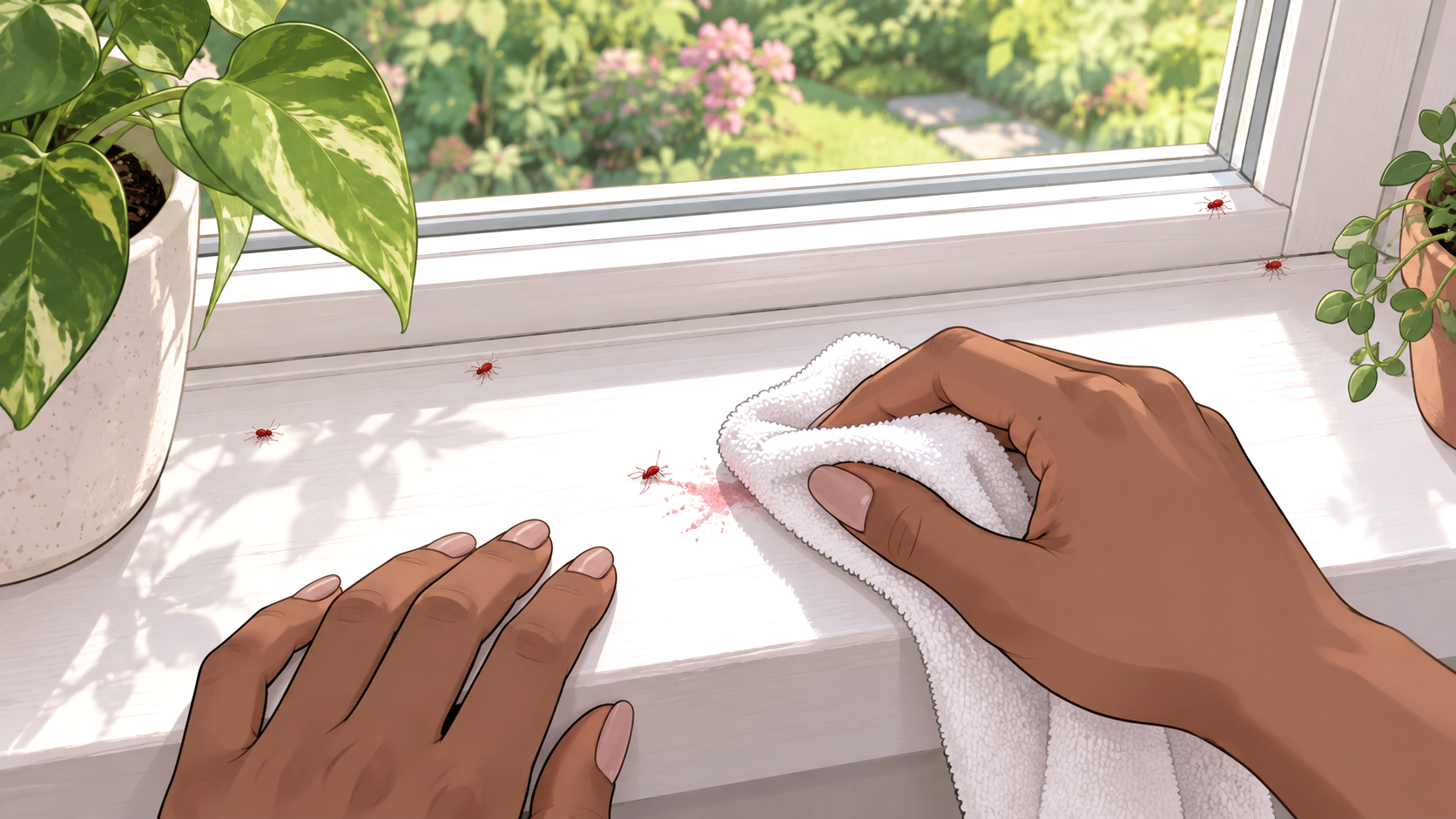
Clover mite stains should be treated gently rather than attacked with the strongest cleaner available. Start by lifting any loose mite material without rubbing, then clean the remaining mark with the mildest method appropriate for the stained surface. A soft cloth with mild soapy water is a sensible starting point for many washable hard surfaces, while carpet, upholstery, clothing, unfinished materials, and delicate finishes require more care.
Fresh marks are preferable to old ones because stains generally become harder to remove as they age. Before applying anything beyond plain water, test it somewhere inconspicuous. The cleaner can sometimes alter a dye, coating, or finish more noticeably than the original tiny red spot.
Do Not Turn One Spot Into a Red Streak
If intact mites are still surrounding the stain, remove them before cleaning. Clover mites are easily crushed, so scrubbing across several live mites can enlarge the area that needs attention. Vacuuming indoor clover mites allows them to be collected without grinding their bodies across the surface, and a moist cloth can also lift small numbers when used carefully. Both approaches are recommended specifically because crushing clover mites can stain surfaces.
Once only the existing stain remains, work on that small area rather than vigorously rubbing around it. On absorbent materials, blotting transfers staining material into a clean absorbent cloth instead of spreading it through a larger patch. Textile-conservation guidance similarly favors repeated controlled applications and warns that rubbing can abrade or damage fabric.
Painted Walls and Window Frames Need a Light Touch
For washable painted surfaces, begin with a soft cloth or sponge dampened with mild soapy water. Wring it out well rather than saturating the wall, gently work the stained spot, then remove detergent residue with a clean damp cloth. Non-abrasive cleaners and mild soapy water are generally suitable for painted surfaces, while harsh chemicals and excessive water can damage the paint film.
Flat and matte finishes deserve particular restraint because repeated rubbing can change their appearance. Always test an inconspicuous area first, especially if the paint is old, newly applied, or its formulation is unknown. A stain left after gentle cleaning may be less conspicuous than a shiny patch, faded area, or exposed undercoat created by aggressive scrubbing.
Blot Carpet and Upholstery Instead of Scrubbing
A red spot on carpet or upholstered furniture should be treated according to the material rather than as though it were a painted surface. First remove any loose material without crushing additional mites into the fibers. For a washable textile that tolerates water, a small amount of mild detergent solution applied with a clean cloth can be blotted into the mark and then blotted out again. General textile stain guidance recommends pretesting cleaning agents for colorfastness and avoiding unnecessary saturation.
Upholstery is particularly vulnerable to over-wetting because moisture can penetrate the padding or leave a visible ring as the fabric dries. If the furniture has a manufacturer cleaning code or care instructions, follow them instead of improvising a household mixture. Valuable, antique, silk, wool, or otherwise delicate textiles deserve professional attention when the mark does not respond to a conservative first attempt.
Washable Clothing Should Follow Its Care Label
A stained garment has one advantage over a wall or sofa: its manufacturer may provide specific washing, drying, and bleaching restrictions. Follow those instructions before selecting a stain treatment. Care labels are designed to identify cleaning procedures that can be used without substantial damage and to warn against processes such as bleaching when they would harm the textile. After removing any mite material from the surface, treat the spot gently before laundering according to the label. Avoid automatically reaching for chlorine bleach simply because the fabric is pale. Some textiles prohibit bleach entirely, while others permit only non-chlorine products, and care instructions can specifically restrict bleaching, washing temperature, or dry cleaning.
Skip Aggressive Homemade Chemical Mixtures
Bleach, ammonia, alcohol, peroxide, vinegar, solvents, and combinations of household cleaners should not be universal recommendations for clover mite stains. Their compatibility depends on the material beneath the stain. A chemical capable of removing color can also remove color from fabric, dull a coating, soften a finish, or otherwise alter the surface.
Mixing cleaners creates an additional and unnecessary risk. A small stain does not justify experimenting with multiple chemicals when mild cleaning may be sufficient. If gentle treatment fails on an expensive carpet, delicate textile, specialty wall finish, or valuable piece of furniture, professional cleaning is safer than escalating through improvised mixtures.
Keeping New Stains Off the Cleaned Surface
Cleaning can remove a mark without stopping more mites from arriving. When clover mites are collecting on window sills or crawling across interior walls, handle the living mites without crushing them before cleaning the remaining spots. Repeated indoor appearances usually originate outdoors, so reducing entry around windows, doors, and the foundation can prevent a freshly cleaned surface from immediately acquiring new marks.
The staining itself does not mean the mites have damaged the material by feeding on it. Clover mites are plant feeders, and clothing is not a food source for them. Any new red marks are more likely to result from additional mites being accidentally crushed.
Clover Mite Stain Cleaning Questions
Can an old clover mite stain become permanent?
Possibly. Stains generally become more difficult to remove with age, and complete removal also depends on the porosity, finish, fiber, dye, and previous cleaning of the material. Repeated aggressive treatment can eventually cause more visible damage than a faint remaining mark.
Should I use hot water on a clover mite stain?
Do not assume hotter is better. Heat can set some types of staining, and textiles may have specific temperature restrictions. Use the temperature permitted by the material’s care instructions rather than applying hot water as a universal stain treatment.
Can I use a magic eraser on a painted wall?
Be cautious with abrasive cleaning products. Friction can alter the sheen or remove part of a paint film, especially on flat or matte finishes. A hidden test area should show whether the cleaning method changes the surface before it is used on a visible stain.
How can I avoid staining while removing live clover mites?
Do not press or wipe across them. Vacuuming is usually the easiest way to collect indoor mites without crushing them, particularly when large numbers have entered the house.