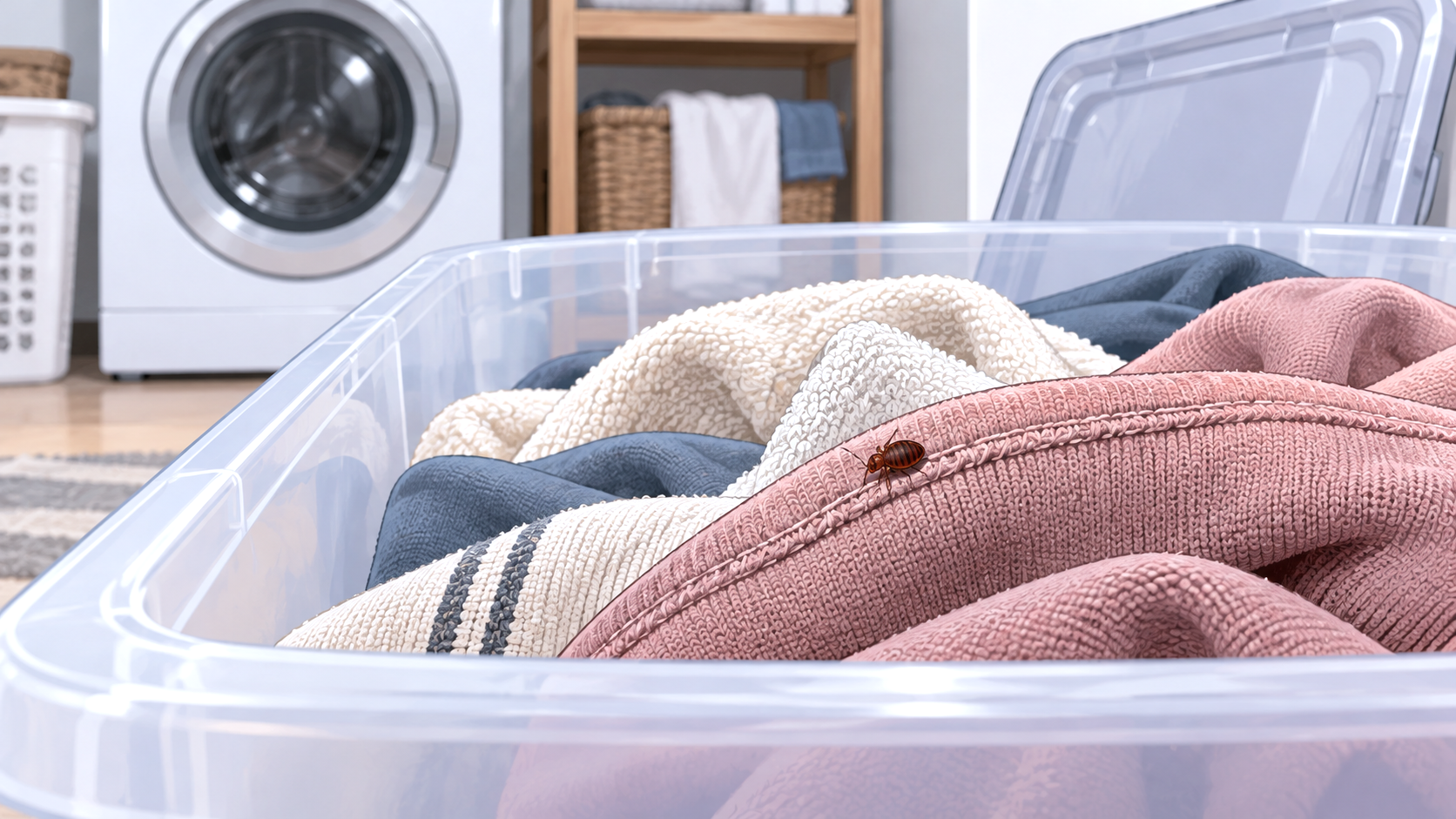
Bed bugs can survive inside a plastic storage bin if they enter before it is closed or can squeeze through gaps around the lid. The plastic itself does not attract or feed them. A smooth bin with a genuinely tight seal is useful because it provides fewer hiding places than cardboard and can prevent contained bugs from spreading to other belongings.
A Plastic Bin Is a Container, Not a Bed Bug Killer
Putting an infested item into a plastic tote does not immediately kill the insects inside. Bed bugs can go for long periods without feeding, so adults and nymphs may remain alive while isolated from a host. Bed bugs can survive extended periods without a blood meal, which makes a few days or weeks inside storage insufficient as a dependable starvation treatment.
Their exact survival time changes with temperature, life stage, and previous feeding history. The broader limits of how long bed bugs can survive without feeding make sealed storage a containment method first and a killing method only when isolation lasts long enough. Household treatment guidance allows untreated belongings to remain sealed in a plastic bag or storage container for as long as a year when no faster treatment is suitable.
A Tight Lid Is More Important Than Thick Plastic
Bed bugs cannot chew through a sound plastic wall. Escape or entry usually depends on an opening that already exists. Snap-on lids can leave gaps at corners, warped edges, handles, hinges, or locking points, and a tote that looks closed may not be airtight enough to function as containment.
A gasketed lid or another design that closes firmly around the entire rim is preferable when potentially infested belongings must remain isolated. EPA bed bug control guidance specifically uses sealed plastic bags and containers for isolating infested items, so the seal rather than the material’s thickness determines whether bugs can move between the contents and the room.
Do not assume a loosely fitted decorative storage box is secure simply because it is plastic.
Smooth Plastic Gives Bed Bugs Fewer Harborages Than Cardboard
Plastic bins are often recommended during bed bug treatment because their smooth walls contain fewer structural crevices than corrugated cardboard. Cardboard contains flutes, rough seams, folded layers, and damaged edges where insects and eggs can remain concealed. Treatment preparation therefore commonly includes replacing cardboard boxes with plastic storage boxes.
A plastic tote can still have hiding places around handles, wheels, ribs, hinge mechanisms, recessed feet, labels, and the underside of the rim. It is simply easier to inspect than a complex cardboard carton. The greater harborage potential of cardboard boxes during a bed bug infestation is why moving belongings into suitable plastic storage can simplify treatment.
Bed Bugs Can Already Be Inside When You Close the Bin
A plastic bin cannot protect contaminated belongings merely by enclosing them. Clothes, books, toys, bedding, or other possessions taken from an infested room may carry adults, nymphs, or eggs into the container. Closing the lid then traps those insects along with the items.
This is useful when the objective is containment, but it does not make the contents clean. During an infestation, processed and unprocessed belongings should be kept separate. Heat-treated clothing should be stored in sealed plastic after treatment so insects from untreated areas cannot reinfest it.
Using separate clearly identified bins for treated and untreated belongings reduces accidental mixing. It also prevents someone from opening a container of exposed possessions and returning them directly to a bedroom before they have been inspected or treated.
Eggs Can Remain on the Contents or the Bin Itself
A female can attach eggs to fabric seams, books, furniture parts, toys, or the surfaces of a storage container. Plastic does not prevent oviposition if an insect has access to the bin. Eggs are only about 1 mm long and can be difficult to notice around molded edges, labels, lid channels, and textured sections.
The small pale appearance of bed bug eggs means inspecting only for adults can miss an exposed life stage. When cleaning an empty bin from an infested area, inspect the rim, lid underside, handles, molded recesses, and any label edges before treating the container as clean.
A transparent tote can make inspection easier, but visibility through the wall does not reveal every egg or insect concealed between tightly packed objects.
Plastic Bins Are Useful for Protecting Clean Belongings
The strongest use for plastic storage during an infestation is protecting items after they have been treated or confirmed clean. Clothes dried at an effective temperature, inspected possessions, and other processed belongings can be placed into securely closed bins so they do not become re-exposed while treatment continues elsewhere in the room.
Public-space prevention guidance similarly recommends storing belongings separately in a plastic bin when bed bugs are a known concern. The same containment principle works at home: keep clean possessions physically separated from mattresses, furniture, floors, and clutter that have not yet been addressed.
That practice supports the broader goal of preventing bed bugs from spreading through household belongings without requiring pesticides on clean personal items.
Do Not Open a Suspect Bin in an Uninfested Room
If a bin contains possessions removed from an infested bedroom, opening it in a clean room can release a surviving bed bug that was successfully contained until that moment. Keep suspect containers in the treatment area or another controlled location until the contents can be handled safely.
When sorting, use a hard, uncluttered surface where escaping insects are easier to see. Process contents according to material. Dryer-safe textiles can be heat-treated, while books, electronics, artwork, and other heat-sensitive belongings may need inspection, professional treatment, or prolonged isolation.
Reducing unnecessary movement between rooms is part of preparing a home for bed bug extermination because transporting belongings can expand the infestation beyond its original harborages.
Clear Plastic Is Better for Monitoring, Not Because It Repels Bed Bugs
Opaque and transparent plastic are equally capable of containing insects when their seals are equivalent. Clear bins simply make it easier to see the contents, notice movement near the walls, and confirm which items are stored without repeatedly removing the lid.
Bed bugs are not repelled by transparent plastic or light passing through the container. A bin kept dark in a closet is not inherently more attractive either. Their presence depends on whether they entered with the belongings or can gain access through an opening.
Clear containers can therefore be useful organizational tools during treatment, particularly when numerous belongings are being separated into treated, untreated, and inspected groups.
Smooth Bin Walls Can Be Difficult for Bed Bugs to Climb, but Do Not Rely on That
Very smooth plastic can reduce traction for bed bugs, which is why plastic-sided interceptor devices can trap them. EPA instructions for bed bug interceptors use smooth plastic containers and slippery inner surfaces to make escape difficult.
A household storage tote is not designed as an interceptor. Molded texture, scratches, dust, labels, ridges, handles, and objects touching the sides can provide climbing assistance. A lid that does not seal also makes the slipperiness of the walls largely irrelevant.
Containment should depend on a secure closure rather than an assumption that bugs cannot climb the plastic.
Spraying Pesticide Inside a Storage Bin Is Usually Unnecessary
Do not place pesticide into a closed tote with clothing, toys, electronics, books, or personal possessions unless a specific EPA-registered product label explicitly allows that treatment method and those contents. Creating an improvised fumigation chamber can expose belongings to pesticide residue without establishing the correct concentration or treatment duration.
Most household possessions can be managed through heat, inspection, cleaning, professional treatment, or containment. Rutgers bed bug guidance recommends plastic bags or bins for separating clutter and infested items without requiring routine pesticide application inside the containers.
When an infestation extends beyond stored items, the complete bed bug treatment process should address the bed, nearby furniture, structural harborages, and other occupied areas rather than focusing pesticide use on storage totes.
An Empty Bin From an Infested Room Can Usually Be Reused
Unlike damaged cardboard, a hard plastic tote is generally easy to inspect and clean. Remove all contents, examine the lid channel, rim, handles, wheels, molded ribs, and underside, then clean accessible surfaces according to the container manufacturer’s instructions.
If physical bed bug evidence is present, deal with that evidence before putting treated possessions back inside. Live insects, attached eggs, shed skins, or fecal spotting around protected edges indicate that the container itself was being used as a harborage.
A reusable bin does not need to be discarded merely because it stood in an infested room. Once it has been properly inspected or treated, it can become useful for keeping processed belongings separated while you monitor for remaining early signs of bed bug activity.
Questions About Bed Bugs and Plastic Storage Bins
Can bed bugs crawl into a closed plastic tote?
They can if the lid leaves a gap large enough for them to enter. A tightly fitting lid with a continuous seal provides much better containment.
Can bed bugs chew through plastic bins?
No. Bed bugs have piercing-sucking mouthparts adapted for feeding on blood, not jaws designed to chew through hard plastic.
Will bed bugs suffocate inside a sealed plastic bin?
Do not rely on suffocation. Ordinary storage containers may contain enough air or exchange small amounts through imperfect seals, while bed bugs have low metabolic requirements when inactive.
Can bed bugs live in a plastic bin for months?
Yes. If they are trapped inside without treatment, their ability to withstand prolonged starvation means survival for months is possible under suitable conditions.
Are plastic totes bed bug-proof?
Only when the construction and lid prevent insects from entering or escaping. The phrase “plastic tote” alone does not guarantee a bed bug-tight seal.
Should clothes be stored loose inside the bin during an infestation?
Only treated or verified clean clothes should be returned to clean storage. Untreated clothing should remain contained separately until it has been processed.
Can bed bugs lay eggs on smooth plastic?
Yes. Smooth plastic is less complicated than cardboard as a harborage, but a female can still attach eggs to plastic or to rougher components such as labels, seams, and molded recesses.
Should you replace cardboard storage with plastic bins during treatment?
Usually yes when practical. Plastic containers reduce hiding places, are easier to inspect, and can protect treated belongings when their lids close securely.