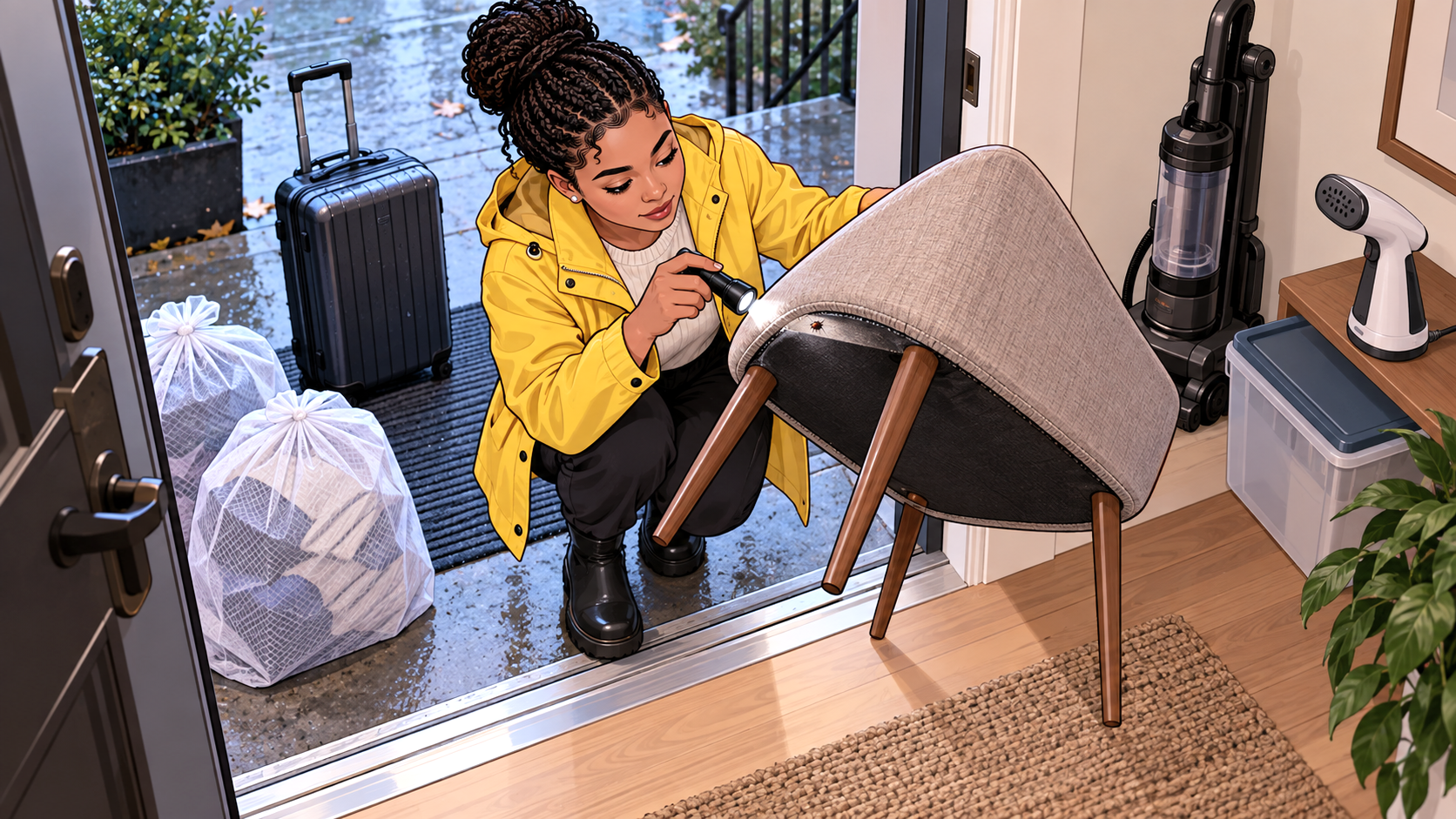
Most bed bug prevention happens before an insect crosses your front door. Bed bugs are effective hitchhikers and can be transported in luggage, bags, clothing, used furniture, and other belongings. In apartments and other multi-unit buildings, they can also move from an infested unit into neighboring spaces. A clean home is not automatically protected because bed bugs are looking for hosts, not dirt or poor housekeeping.
To prevent bed bugs from getting into your home, focus on the situations that commonly bring them inside. Inspect secondhand furniture, protect your luggage while traveling, check belongings after known exposure, and reduce possible movement between neighboring units. Because no prevention method is perfect, regular inspection and monitoring provide an important second layer of protection.
Inspect Secondhand Furniture Before Bringing It Home
Used furniture deserves more than a quick glance before it comes through the door. Bed bugs can hide deep in upholstered furniture, bed frames, headboards, mattresses, box springs, screw holes, joints, seams, folds, and narrow cracks. A couch can look perfectly clean from across the room while still providing numerous concealed spaces for bed bugs. For that reason, used furniture should be carefully inspected before you bring it home.
Use a flashlight and examine seams, folds, joints, undersides, and recessed areas rather than looking only at exposed surfaces. Knowing what bed bugs look like helps, but live insects are only one thing to look for. Dark fecal spotting, shed skins, eggs, and other early signs of bed bugs can reveal activity even when the insects themselves remain hidden.
Be particularly cautious with discarded mattresses, box springs, sofas, upholstered chairs, and bedroom furniture. You usually do not know why an item was discarded or where it has been stored. Passing up questionable furniture is much easier than trying to get rid of bed bugs after carrying them into your home.
Keep Bed Bugs Out of Your Luggage While Traveling
Travel is one of the situations where your belongings spend extended periods close to unfamiliar beds and upholstered furniture. Bed bugs can crawl into luggage, clothing, backpacks, and other personal items and later travel home with you. Your prevention routine should therefore begin when you enter the room rather than when you return home.
Before unpacking, inspect the sleeping area for signs of activity. Check mattress seams, the box spring, bed frame, headboard, and nearby furniture. A proper hotel room bed bug inspection takes only a short time and can reveal obvious evidence before your belongings are spread around the room. Keep luggage off the bed and away from upholstered furniture while you inspect.
During the stay, avoid leaving clothing scattered on the bed, sofa, or floor. Store belongings together rather than giving a hitchhiking bed bug multiple opportunities to hide among them. Keeping luggage separated from sleeping areas reduces unnecessary exposure, although no luggage-placement strategy can guarantee that a bed bug will not reach your belongings.
Your precautions should continue when you arrive home. Inspect the suitcase before storing it, and avoid placing travel bags directly on your bed or upholstered furniture while unpacking. Clothing and other washable items can be handled separately from the rest of your belongings. A dedicated routine for keeping bed bugs out of luggage is especially worthwhile if you travel frequently.
Treat Known Bed Bug Exposure Differently
You do not need to treat every trip outside your home as a bed bug emergency. Known exposure is different. If you have spent time in a home, hotel room, apartment, or other location where bed bugs were confirmed, take precautions before distributing your belongings throughout your house.
Bags, coats, and other belongings should not immediately go onto beds or sofas. Instead, keep potentially exposed items contained while you inspect and handle them. Bed bugs can be transported away from infested locations on personal belongings, which is why public places can occasionally serve as transfer points even though bed bugs are more strongly associated with places where people sleep or remain still for extended periods.
Clothing from a known exposure can also be handled separately rather than mixed immediately with everything else in the home. The precautions you take after visiting an infested home should focus on preventing a hitchhiking insect from moving from your belongings into bedroom furniture and other hiding places.
Reduce Bed Bug Movement Between Apartments
Preventing bed bugs in an apartment can be more complicated because your belongings are not the only potential route into the home. Bed bugs can move between neighboring units through cracks, wall voids, and openings associated with pipes, wiring, and other building features. That means an infestation elsewhere in a multi-unit building can become relevant even when you have not traveled or brought secondhand furniture home.
Where appropriate, seal accessible cracks and crevices around baseboards and openings where utility lines enter walls. Door sweeps can also reduce movement through gaps beneath doors. These measures are part of recommended bed bug prevention in multi-unit housing, although sealing alone cannot stop every possible route through a building.
If bed bugs are confirmed in your apartment building, early reporting and coordinated management become particularly important. Treating one unit without considering neighboring activity can leave another source nearby. Understanding how bed bugs can spread between apartments helps explain why prevention in multi-unit housing sometimes requires action beyond your own bedroom.
Do Not Rely on Repellents or Routine Spraying for Prevention
Spraying pesticides around a bed or throughout a bedroom is not a substitute for controlling how bed bugs enter the home. Preventive pesticide use can expose people and pets unnecessarily, and pesticide products must always be used according to their labels. Bed bug prevention is better centered on travel precautions, inspection, monitoring, reducing cluttered hiding opportunities, and addressing known exposure quickly.
Likewise, devices marketed as repellents should not replace these basic precautions. Bed bugs can be difficult to control once established, so the goal is not to create an invisible chemical barrier around your home. It is to reduce the opportunities for bed bugs to hitchhike inside and to notice them quickly when prevention fails.
Monitor the Places Where Bed Bugs Are Most Likely to Appear
Even careful prevention cannot guarantee that a bed bug will never enter your home. A single insect can be difficult to notice immediately, especially when it reaches a bedroom and finds a protected hiding place. Regular monitoring gives you a chance to discover activity before the infestation becomes easier to see for the wrong reasons.
Periodically inspect mattress seams, bed frames, headboards, and nearby furniture, particularly after travel or known exposure. Bed bug monitors can provide ongoing surveillance around sleeping areas. Pitfall-style bed bug detectors and interceptors beneath suitable furniture legs can also capture insects moving around the bed.
Monitoring is most useful when you know what you are looking for. Bed bugs can be present without being immediately visible, so do not depend entirely on seeing an adult crawling across the mattress. Regular inspection combined with monitoring gives you several opportunities to notice an introduction.
Act Quickly When You Find a Suspicious Bug
Prevention does not end when something suspicious appears. If you find an insect that might be a bed bug, preserve it for identification when possible rather than immediately crushing and discarding it. A clear photograph or intact specimen can make identification much easier.
Finding one insect should trigger a careful inspection of the bed and surrounding furniture. Do not assume that finding one bed bug automatically tells you the size of the problem. Instead, confirm the insect, inspect likely hiding areas, and monitor for additional activity. Catching an introduction early is the reason prevention and monitoring belong together.
Other Questions About Preventing Bed Bugs at Home
Can a clean house still get bed bugs?
Yes. Bed bugs can be carried into clean and cluttered homes alike. Sanitation can make inspection and control easier, but cleanliness does not prevent a bed bug from hitchhiking inside on luggage, furniture, or other belongings.
Can visitors bring bed bugs into your home?
A bed bug can occasionally hitchhike on a visitor’s belongings. Bed bugs do not normally live on people like lice, however, so the concern is primarily with infested bags, clothing, and other objects rather than ordinary physical contact with someone.
Do mattress encasements prevent bed bugs from entering the house?
No. Encasements can simplify mattress management and reduce hiding places associated with the mattress and box spring, but they cannot prevent a bed bug from entering your home on luggage, furniture, or another item.
Can you guarantee that your home will never get bed bugs?
No prevention strategy provides a complete guarantee. The practical goal is to reduce the most common opportunities for introduction and use inspection or monitoring to detect bed bugs quickly if one does make it inside.
One thought on “How to Prevent Bed Bugs From Getting Into Your Home”