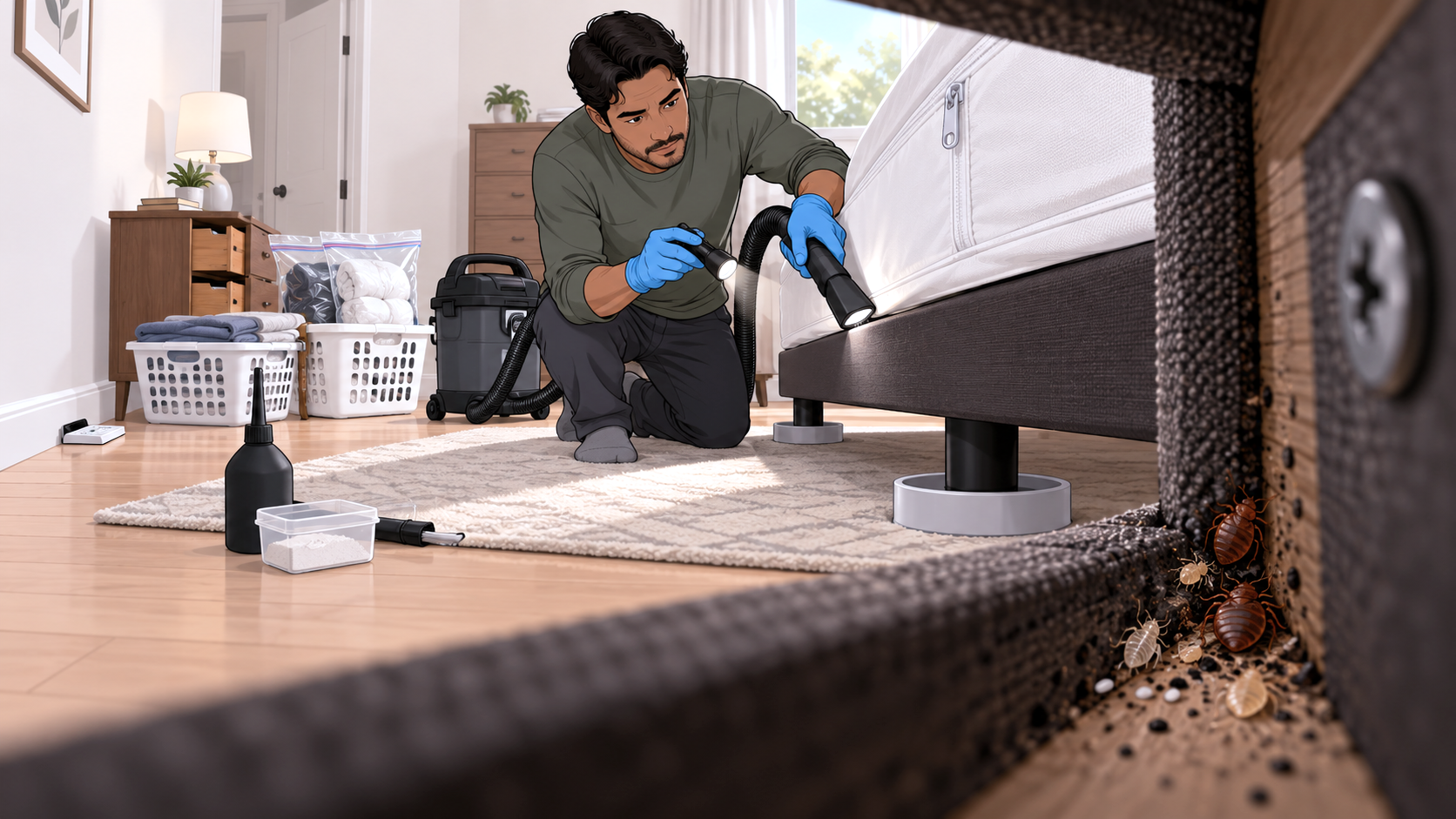
Getting rid of bed bugs usually takes more than one method. The most reliable approach is integrated pest management, or IPM, which combines careful inspection, preparation, physical controls, monitoring, and pesticides when appropriate. There is no universal one-product treatment. The EPA notes that eliminating bed bugs can take weeks to months depending on the infestation, and some steps may need to be repeated.
Make Sure You Actually Have Bed Bugs
Confirm the pest before treating anything. Bed bugs have several look-alikes, and applying pesticides to the wrong insect wastes time while the real problem remains untreated.
Collect a specimen if possible and have it identified if you’re uncertain. Then inspect the affected room and nearby living spaces to determine how far the infestation extends. Mattress seams, box springs, bed frames, headboards, upholstered furniture, baseboards, and nearby cracks deserve particular attention.
A systematic room-by-room bed bug inspection can help establish where treatment is actually needed.
Prepare the Area for Treatment
Preparation makes bed bugs easier to find, treat, and monitor. Reduce unnecessary clutter, contain potentially infested belongings rather than carrying them through the home, and follow any preparation instructions provided by your pest management professional.
Don’t automatically throw away mattresses or furniture. EPA specifically advises against discarding furniture when the bed bugs can be safely eliminated from it.
Preparation can vary considerably with the treatment being used, so prepare your home for bed bug extermination according to the actual treatment plan rather than following a generic checklist.
Use Heat, Vacuuming and Steam Where Appropriate
Non-chemical methods can remove or kill substantial numbers of bed bugs when used correctly.
EPA recommends putting suitable bedding and clothing in a dryer on high heat for 30 minutes, noting that washing alone generally won’t kill bed bugs. Vacuuming can physically remove accessible bugs, while mattress and box-spring encasements can trap bugs already inside and make future inspection easier.
Steam is another useful option for suitable surfaces. EPA recommends steam of at least 130°F without forceful airflow, since a strong air stream can scatter bugs. Steam can reach seams, cracks, bed frames, baseboards, carpets, and upholstered furniture, although it leaves no residual protection after the treated surface cools.
Steam treatment for bed bugs therefore works best as one part of a broader control plan.
Use Bed Bug Pesticides Carefully
Pesticides can be useful, but they should be incorporated into a broader strategy rather than relied upon alone. EPA currently lists more than 300 registered products for bed bug control, with many available for consumer use.
Choose an EPA-registered pesticide that specifically lists bed bugs on its label and follow every direction concerning where, how, and how often it can be applied. Never use an outdoor pesticide indoors or apply a product to mattresses, clothing, furniture, or other surfaces unless the label permits that use.
Foggers deserve particular caution. They shouldn’t be the only treatment because the pesticide may not reach the cracks and crevices where bed bugs hide, and improper use can cause illness, fire, or explosion. Bed bug bombs and foggers have significant limitations even when they’re legally labeled for bed bugs.
Expect to Inspect and Treat Again if Necessary
Check treated areas every few days after the initial cleanup and control measures. If bed bugs continue appearing, some may have been missed, eggs may have hatched, or the treatment may not have reached every harborage.
EPA recommends continued inspection at least every seven days when eggs may remain. Retreatment may be necessary, but don’t automatically apply more pesticide or increase the dose. Follow the product label and determine why the first treatment didn’t completely control the infestation before deciding what comes next.
Know When to Bring in a Professional
Bed bugs are difficult enough to control that professional treatment is often worthwhile, particularly when the infestation is established, extends into multiple rooms, keeps returning after treatment, or occurs in a multi-unit building.
Professional pest management can combine detailed inspection with methods such as targeted insecticides, steam, vacuuming, monitoring, and whole-room or whole-structure heat where appropriate. Calling an exterminator for bed bugs may also prevent repeated DIY treatments from becoming more expensive than professional control.
Don’t attempt whole-room heat treatment with a thermostat, fireplace, propane heater, or improvised space-heater arrangement. EPA warns that these methods may not work and can create a serious fire hazard.
Keep Monitoring After Treatment
Don’t judge success solely by whether bites stop. Skin reactions aren’t a reliable way to measure bed bug activity, and surviving bugs may remain hidden.
Continue inspecting the treated areas and consider interceptor traps beneath bed or furniture legs. EPA recommends monitoring as part of IPM because it provides physical evidence of whether bugs are still moving through the area.
The absence of bed bugs over time is more meaningful than one quiet night after treatment. Knowing how to tell if your bed bug treatment worked can help you decide when continued activity actually warrants another intervention.
Questions About Getting Rid of Bed Bugs
Can you get rid of bed bugs without pesticides?
Sometimes, but EPA notes that relying entirely on non-chemical control is often more difficult and resource-intensive. Heat, steam, vacuuming, encasements, laundering, and monitoring can all contribute to control.
How long does it take to get rid of bed bugs?
There is no fixed timeline. EPA says DIY control can take weeks to months depending on the size of the infestation, available hiding places, neighboring infestations, and how consistently the control plan is followed.
Is seeing a bed bug after treatment normal?
It can happen. A surviving bug may have been missed during treatment, or an egg unaffected by the initial treatment may have hatched. Continued sightings should be tracked and investigated rather than automatically treated with additional pesticide.
Should you throw away furniture with bed bugs?
Usually not as a first response. Many infested items can be treated successfully. If something genuinely cannot be treated and must be discarded, it should be contained and clearly marked or damaged so someone else doesn’t take it home.
15 thoughts on “How to Get Rid of Bed Bugs: The Complete Guide”